
Fritz von Tarlenheim to Rudolph Rassendyl in The Prisoner of Zenda.
The Paternal Ancestry of Barbara Blair
In the third and final part of our review of the heraldry of the ancestors of Barbara Blair’s father, we now look at the tenth generation.
The Arms of the Family and Ancestors of Barbara Blair
The images below show some of the arms possessed by members of the family and ancestors of Barbara Blair.
Tenth Generation
Sir Robert Stewart of Shanbothy & Durisdeer
Sir Robert Stewart of Shanbothy & Durisdeer was a grandson of Sir John Stewart of Bonkyl, who was killed at the 1298 Battle of Falkirk, making Sir Robert a third cousin of King Robert III, the second of the Stewart monarchs.
His father was Sir Robert Stewart of Innermeath, and an unknown mother. He married Janet MacDougall, daughter and co-heiress of Ewan MacDougall, 7th of Dunollie and of Lorn. However, in 1388, he and his wife resigned the Lordship of Lorn in favour of his brother, John, in exchange for the lands of Durrsideer, which was confirmed by King Robert II.
His daughter, Elizabeth Stewart, married Sir Michael Mercer.
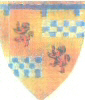
Image credit: Unknown.
Sir William Ruthven of that Ilk
Sir William Ruthven (pronounced “Riven“) of that Ilk was the son of Sir Walter of Ruthven and Cecily of Strathearn, the daughter of Gille Brigte (Gilbert), 3rd Mormaer or Earl of Strathearn and Maud d’Aubigny.
He is believed to be the William of Ruthven, who was chamberlain to Malise, Earl of Strathearn and who witnessed a charter in 1270. As Sir William of Ruthven, he witnessed two charters in January 1268 (1267 Old Style), and a third in 1290.
Sir William did homage to Edward 1. in 1291 and in 1296.
Around 1298, as William of Ruthven, “Lord of that ilk“, he confirmed the charter of his father, Walter, son of Alan, regarding the lands of Scone.
At the successful siege of Perth in 1297, Sir William Wallace substituted his own garrison for that of the English. Sir William Ruthven joined Wallace at this engagement with thirty followers, and it is said that he “fought with determined energy“. For his gallant conduct, William Wallace appointed Sir William Ruthven as hereditary Sheriff of Perth.
Sir William Ruthven died in the following year, 1298.
He married Margaret, daughter of Ramsay of Auchterhouse and they had two sons, Walter and Gilbert.
Sir William was the ancestor of two notorious Ruthvens who contributed to the fall of their house. The first was Patrick, 3rd Lord Ruthven, one of the assassins on David Rizzio in 1586. The second was his son, William Ruthven, 1st Earl of Gowrie, who was the leader of a Protestant faction known as the “Lords Enterprisers“. They included Francis Stewart, Earl of Bothwell; James Cunningham, Earl of Glencairn; Laurence, Master of Oliphant and John, Master of Forbes. In 1582 they kidnapped the 16-year-old King James VI and held him at Ruthven Castle (now Huntingtower). In July 1583, King James VI escaped and in May 1584, the Earl of Gowrie was tried, convicted of treason, and beheaded at Stirling Castle.
Photo credit: Edinburgh University Savoy Opera Group.
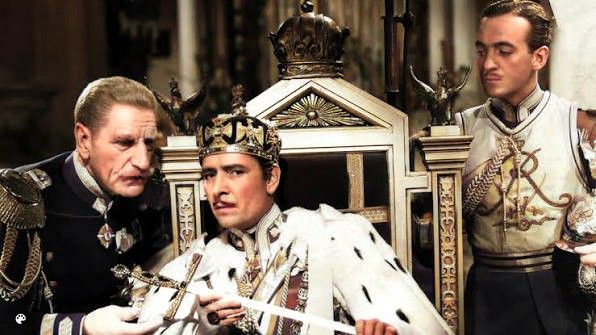
Gilbert and Sullivan seem to have known their history as they used the name “Ruthven” in their Savoy opera, “Ruddigore“: Long ago, a witch cursed all of the Baronets of Ruddigore and each must commit some kind of a crime every single day, or die in terrible agony. Sir Ruthven, the true current Baronet, hides from this curse under the disguise of Robin Oakapple…
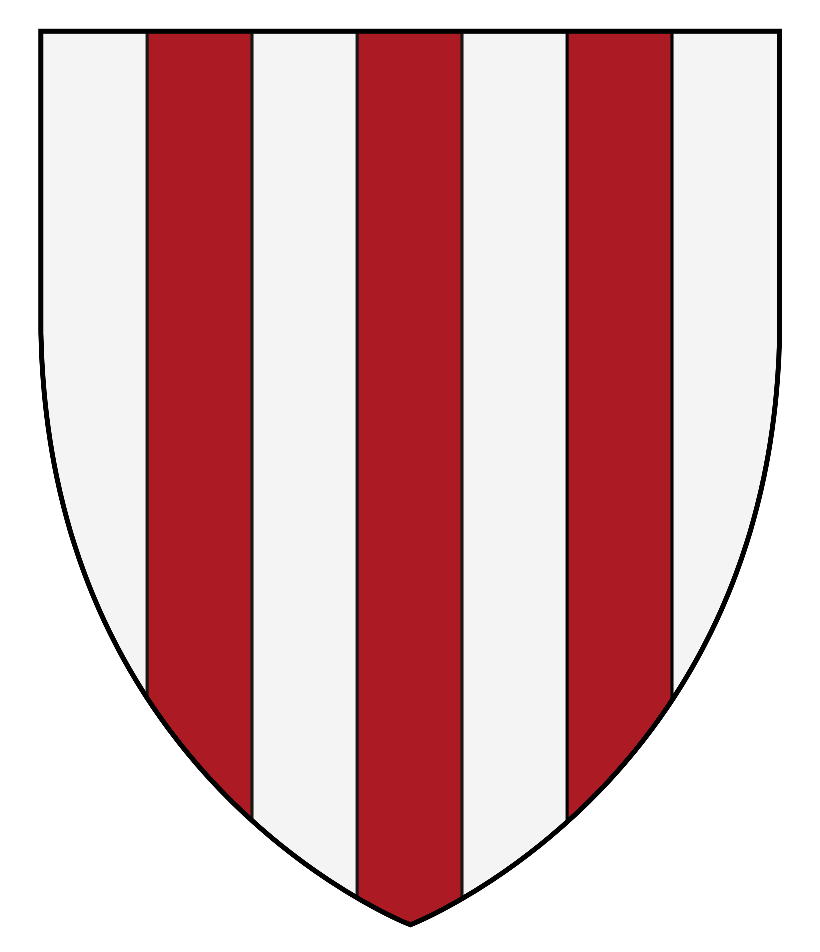
Image credit: Wappenwiki.
Sir Andrew Wardlaw, 4th of Wilton & 1st of Torrie, jure uxuris
As noted in The Royal Stewart ancestry of Barbara Blair, wife of John Drummond, 8th of Colquhalzie: Part 3a The Heraldry of Barbara Blair’s Ancestors, the arms above were those of Wardlaw of Torrie before Sir Andrew Wardlaw, 4th of Torry married Christian de Valognes (or de Valoniis), the Baroness of Wester Lochore & Torrie suo jure, after which the arms above were quartered with three water carriers representing Valonges.
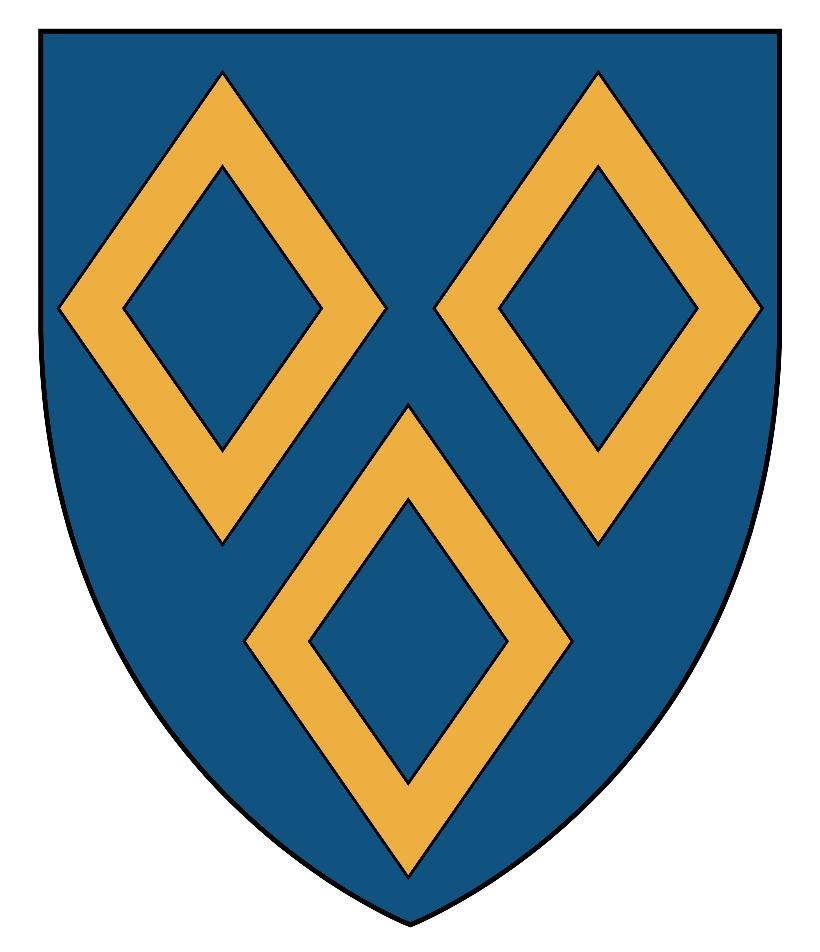
Image credit: Wappenwiki.
Sir David Lindsay, 1st Earl of Crawford
David Lindsay, 1st Earl of Crawford (circa 1360 – 1407), was the son of Sir Alexander Lindsay of Glenesk and Katherine Stirling, daughter of Sir John Stirling of Edzell. He was initially known as Sir David Lindsay of Glenesk, 10th baron of Crawford.
It is believed that Sir David organised the Battle of the Clans at North Inch, by Perth in September 1396, where thirty champions of Clan Chattan fought thirty from “Clan Quhele“, whose identity is unclear. Twenty-nine of “Clan Quhele” were killed for the loss of nineteen of Clan Chattan, and the latter were awarded the victory.
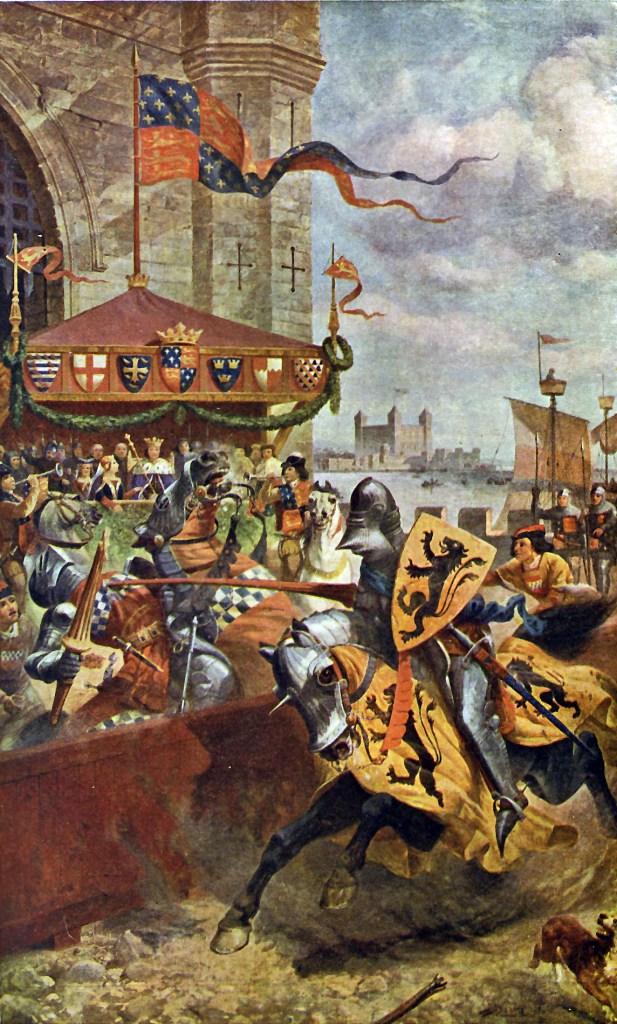
Sir David Lindsay became famous for his joist with the English champion John Welles which took place on London Bridge in the presence of King Richard II of England and a large crowd of nobles and commoners on 23rd April 1390 (Saint George’s Day). The joisting match was arranged because Welles was challenged by Sir David Lindsay for boasting that English knights were far superior to Scots. The tourney consisted of three jousts with lances. On the first two, neither knight was unseated. Sir David Lindsay’s skill was said to be such that some of those watching claimed that he must had been tied to his horse. To demonstrate that this was not so, Sir David dismounted and remounted his horse. On the third joust, Sir David Lindsay struck the English knight with such force that Welles was unhorsed and seriously injured. Sir David dismounted and went to help Welles, which was widely praised amongst the English audience as an example of chivalric conduct.
Upon his return to Scotland in April or May 1398 Sir David was created 1st Earl of Crawford by his brother-in-law, King Robert III.
Sir David Lindsay, 1st Earl of Crawford died in 1407 at his home of Finavon Castle and was interred at Greyfriars Kirk in Dundee.
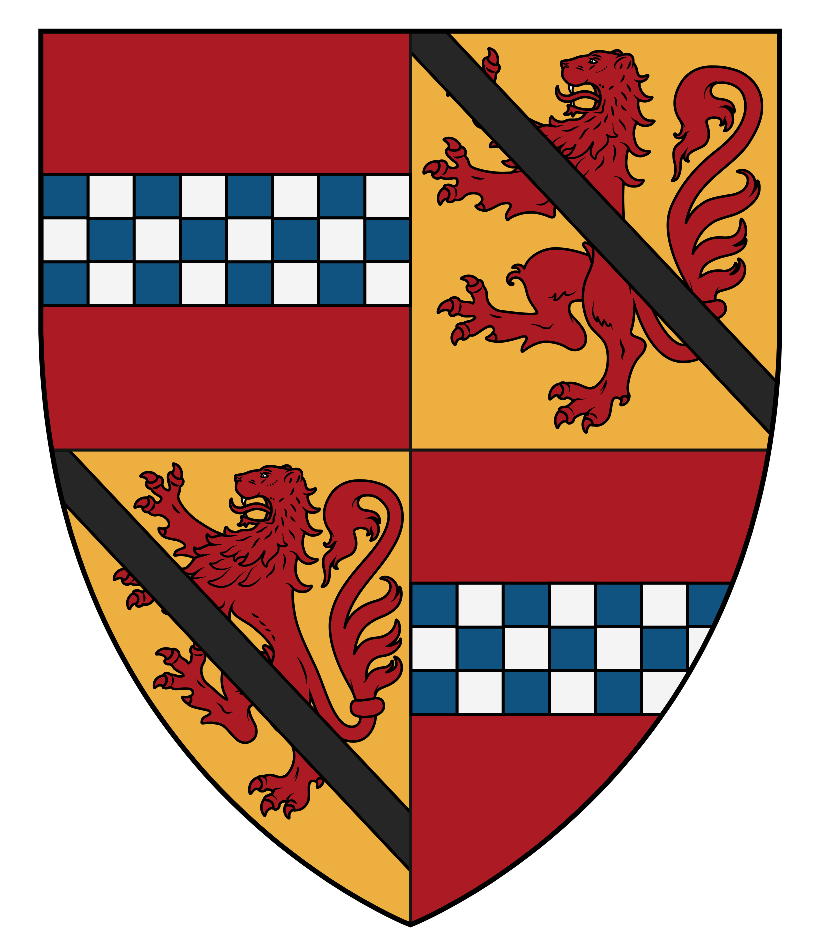
Image credit: Wappenwiki.
Sir William Hay of Lochorwart & Yester
The Hays of Yester were a junior branch of the family. The senior line became Earls of Errol, while the the Hays of Yester became Marquises of Tweedale.
Sir William Hay of Lochorwart & Yester was the son of Sir Thomas Hay of Lochorwart and Joanna Gifford (or Giffard), the eldest daughter and co-heiress of Sir Hew Gifford of Yester and his wife Johanna Douglas.
It was in Sir William’s day that the ancient arms of the Hays of Lochowart became the centrepiece of new arms that quartered the arms of the Giffords of Yester.
Sir Hugo de Giffard was known as the “Wizard of Yester“, and was said to be a powerful warlock and necromancer who had summoned an army of hobgoblins to construct what came to be known as the “Goblin Ha” at his Castle of Yester.
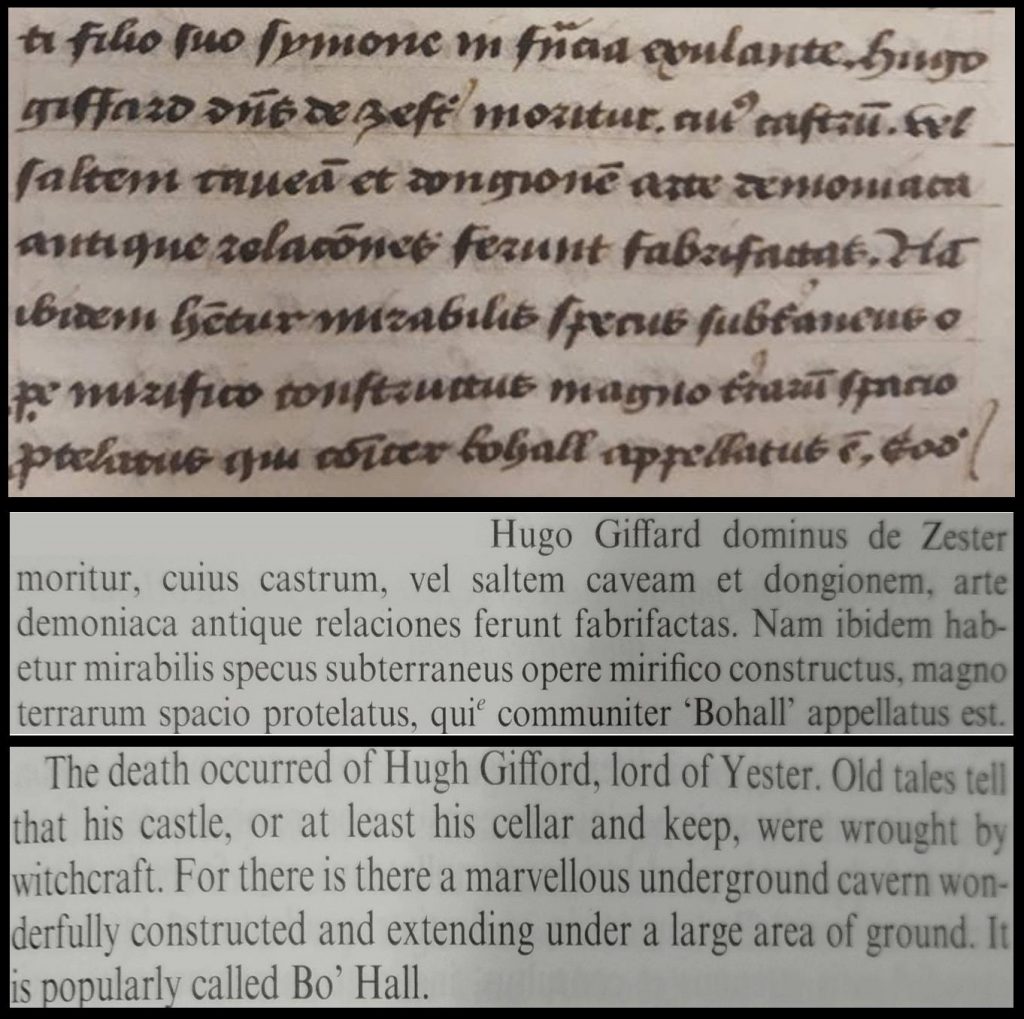
Image Copyright Edinburgh University Archives.
In his Marmion (1808), Sir Walter Scott mentions Hugo de Giffard and his Goblin Hall. Aline Brodin, cataloguing archivist at the Centre for Research Collections discovered an entry, in Latin, in the Scotichronicon that may have inspired Scott.
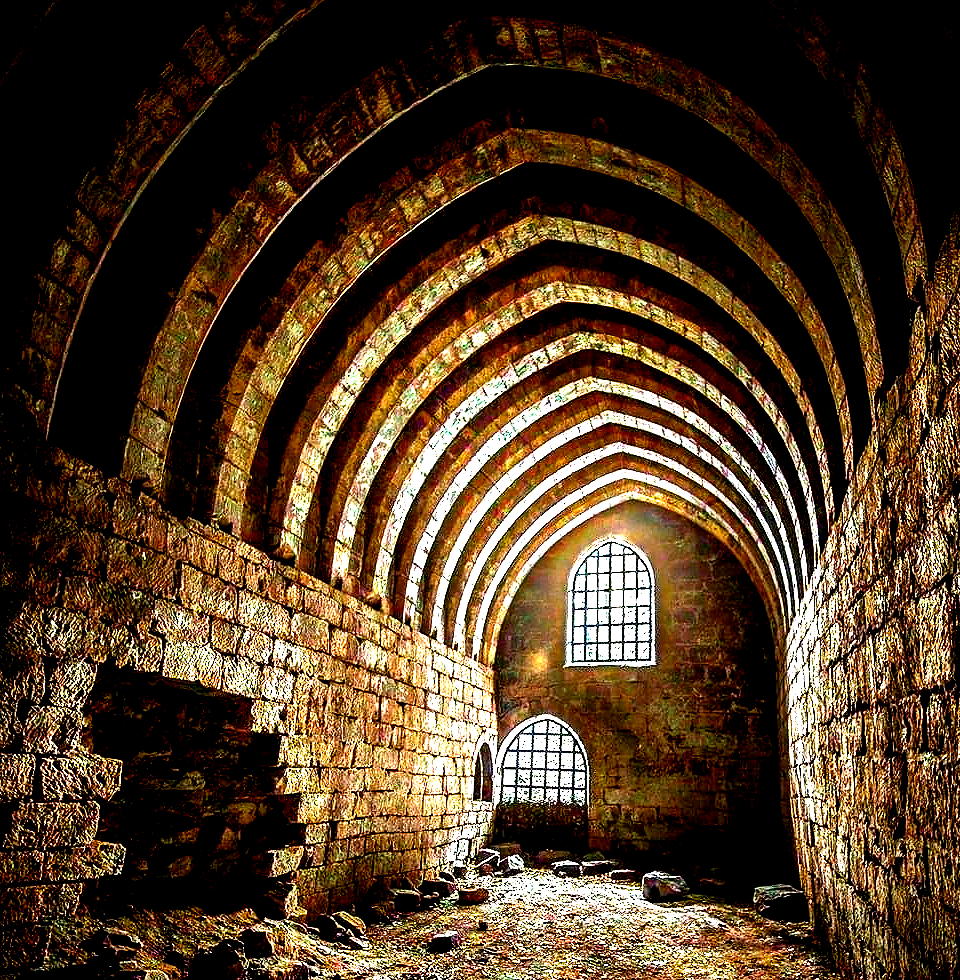
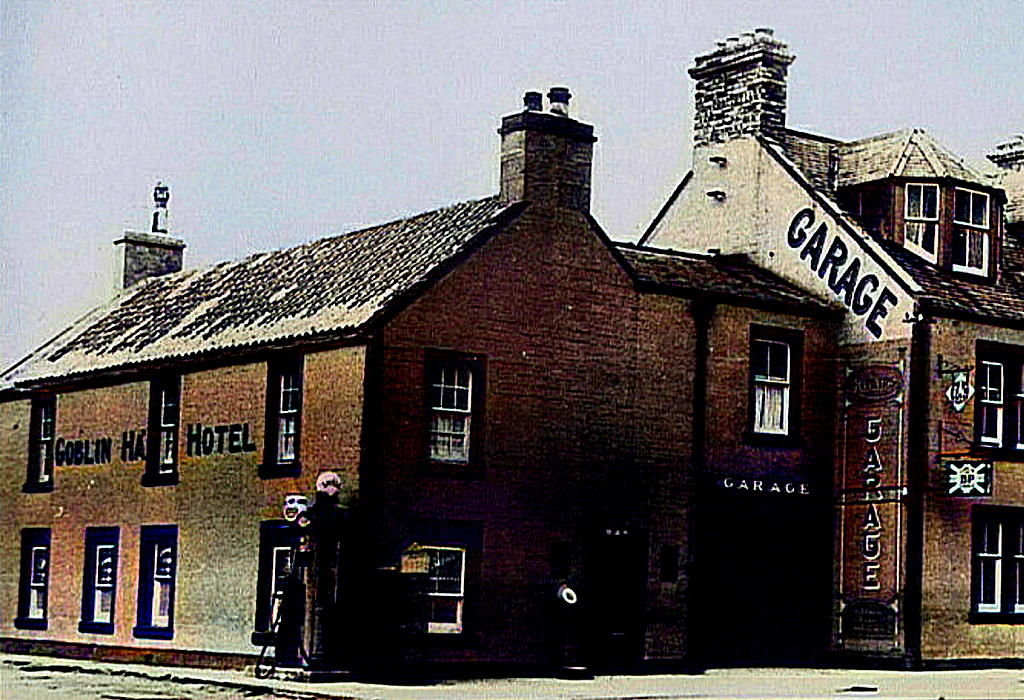
Although the Hays of Yester long since abandoned Yester Castle for a more comfortable mansion, the Goblin Ha’ still stands, and the Hay Marquises of Tweeddale and the Goblin Ha’ are still commemorated in the names of Gifford’s two local hostelries, the Goblin Ha’ and the Tweeddale Arms.
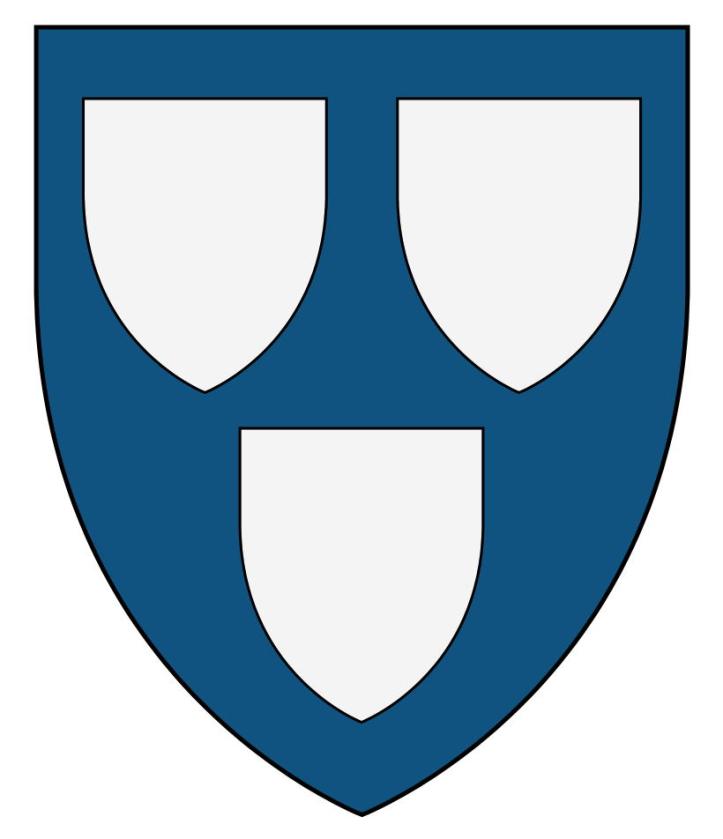
Image credit: Wappenwiki.
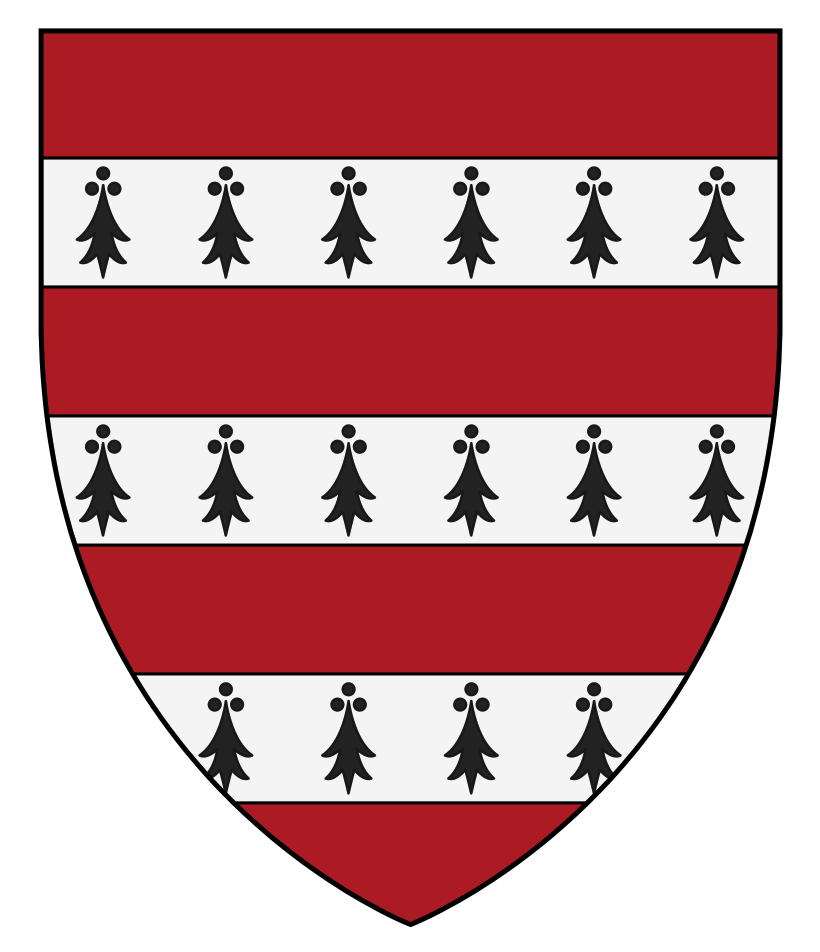
Image credit: Wappenwiki.
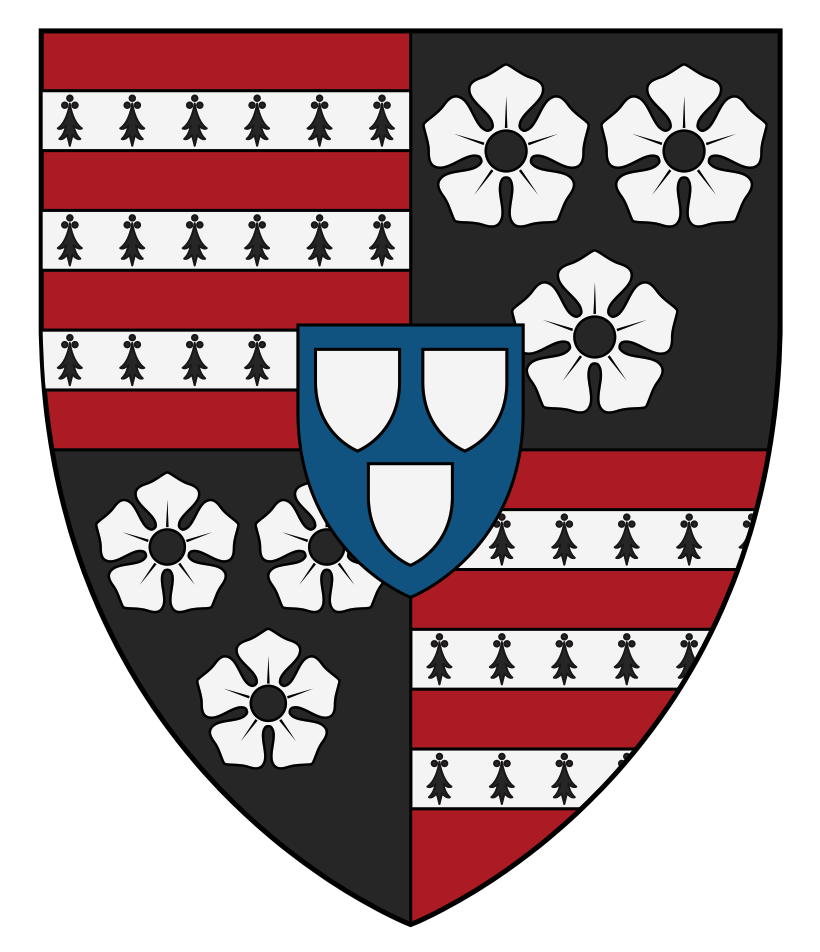
Image credit: Wappenwiki.
Archibald “the Grim“, 3rd Earl of Douglas, 1st Earl of Wigtown, Lord of Galloway
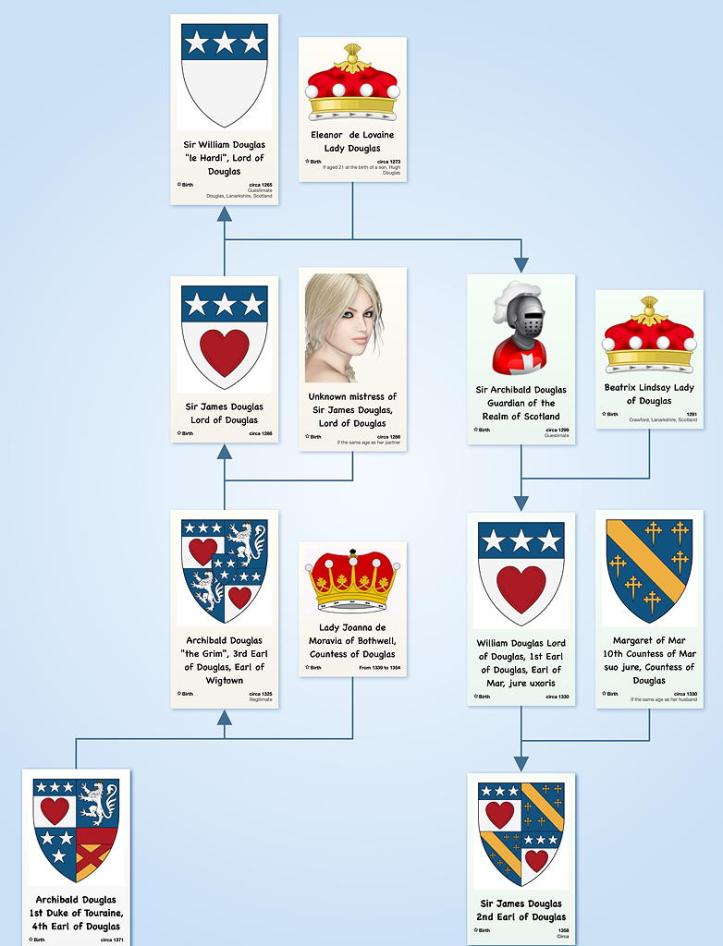
Although Archibald Douglas, known as “the Grim”, was the son of Robert the Bruce’s most loyal companion, Sir James Douglas. However, Archibald was illegitimate and upon the death of his father while crusading in Spain with Bruce’s heart, the Lordship of Douglas was inherited instead by Sir James’ younger half brother, Hugh.
In 1342, Hugh renounced his feudal Lordship of Douglas in favour of his nephew, William, son of his full brother, Sir Archibald Douglas, Guardian of Scotland, who had been killed at the disastrous Battle of Hallidon Hill on 19th July 1333.
This William Douglas was created 1st Earl of Douglas by King David II (Bruce) on 26th January 1358, and as he was married to Margaret, Countess of Mar in her own right, he became the most powerful noble in Scotland. His son, James, 2nd Earl of Douglas was the victor of the 1388 Battle of Otterburn, but he died in the battle and this created somewhat of a succession crisis as he left only three illegitimate sons.
His two illegitimate sons became the barons of Drumlanrig and of Cavers, while his sister, Isabel inherited the Earldom of Mar. Meanwhile, the Earldom of Douglas went to his cousin, Archibald “the Grim“, who was already a powerful force in the kingdom.
In 1362, Archibald the Grim further married the widow and heiress Joanna de Moravia, the daughter of Maurice de Moravia, Earl of Strathearn. Although Joanna did not inherit the Earldom of Strathearn, through her second marriage to Archibald, she brought the Douglases vast lands in Lanarkshire, Roxburghshire, Ross, Moray and Aberdeenshire including the then ruined Bothwell Castle, which Archibald immediately began to restore.
In 1369, King David II created Archibald Douglas Lord of Galloway. Galloway required a strong man to rule it as it had previously been an independent kingdom and still tended to look to its own local rulers rather than the Kings of Scots. Most recently, it had belonged to the sworn enemies of the Bruces, King John Balliol and his son, Edward. The latter had contested the rule of David Bruce for many years during the Second Wars of Independence using Galloway as his power base. King John Balliol had inherited Galloway from his mother, Dervorguilla, eldest daughter and co-heiress of Alan, Lord of Galloway.
Archibald Galloway also came to control the west of Galloway when he purchased the Earl of Wigtown from Thomas Fleming. Archibald was confirmed as Earl of Wigtown by King David II on 7th November 1372, thus becoming the first person to control the entirety of the province of Gallow since the death of Alan, Lord of Galloway in 1234.
In 1390 Archibald’s son and heir, Archibald, later 4th Earl of Douglas, married the Lady Margaret, daughter of King Robert III and then in 1399, he further cemented the Douglas links to the crown when his daughter Marjorie married the heir to the throne, David, Duke of Rothesay.
However, the latter marriage and increased influence for Archibald “the Grim” came with a heavy price for Scotland.. David, Duke of Rothesay had been bethrothed to Elizabeth, the daughter of George, Earl of Dunbar, who had become commander of the Scots army at the Battle of Otterburn following the death of James, 2nd Earl of Douglas. The breaking of the Dunbar marriage contract led to the Earl of Dunbar renouncing his allegiance to the Stewarts and offering it instead to King Henry IV of England. Just fourteen years after Otterburn, on 18th August 1402, George, Earl of Dunbar was a senior commander of the army of King Henry IV that defeated the Scots at the Battle of Homildon Hill, while on 24th June 1403, the Earl of Dunbar helped King Henry IV win the Battle of Shrewsbury.
Archibald “the Grim” died at Christmas 1400 at his castle of Threave in Galloway and was buried at Bothwell.
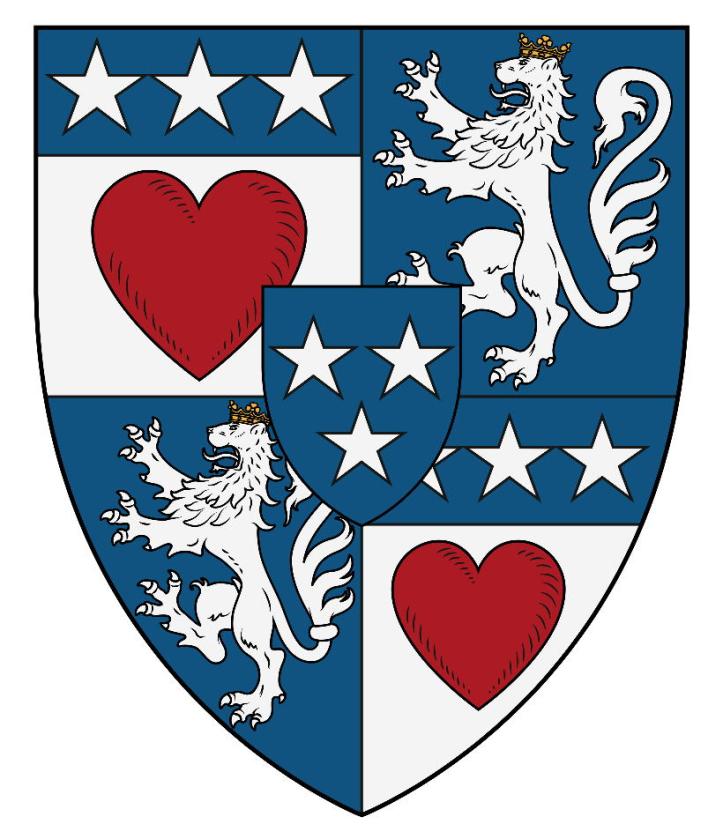
Image credit: Wappenwiki.
Robert Stewart, 1st Duke of Albany & Governor of Scotland
Robert Stewart, Earl of Menteith, Earl of Fife and 1st Duke of Albany (1339 – 3rd September 1420) was the third, but second surviving son of King Robert II and his first wife, Elizabeth Mure of Rowallan. Robert was the great nephew of King David II, son of Robert the Bruce and his father, Robert Stewart, son of King David II’s elder half-sister, was the heir presumptive to the throne. Although not destined to rule, Robert, Duke of Albany became the power behind the throne during much of the reigns of his father, King Robert II, his elder brother, King Robert III, and his nephew King James I and was known as “Scotland’s Uncrowned King“.
There was no love lost between King David II, who reigned from 7th June 1329 until 22nd February 1371, and his Stewart relatives. In or around September 1361, when Robert Stewart became the fourth husband of Margaret Graham, Countess of Menteith, suo jure (in her own right), he should have become Earl of Menteith jure uxoris (in right of his wife). However, King David II refused to allow his great nephew to become an Earl and instead Robert was obliged to use the lesser title of Lord of Menteith until the death of King David II some ten years later.
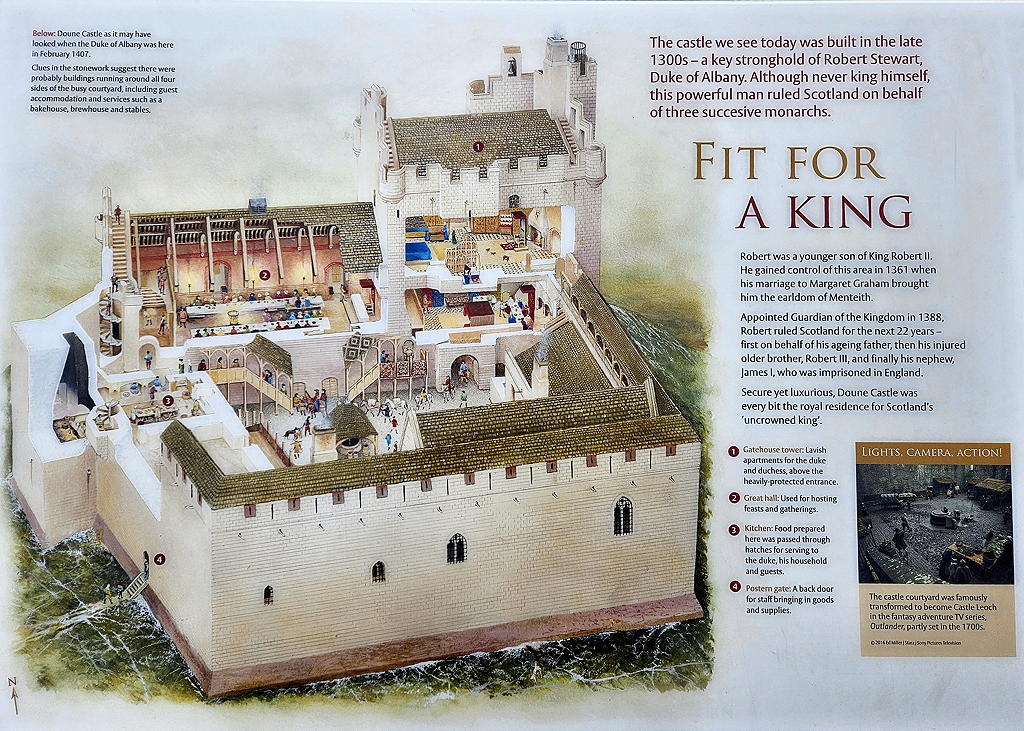
Image Copyright: Historic Environment Scotland.
In order to find allies against his Stewart rivals, King David II allied himself to the Drummonds, as detailed in The Drummonds of Colquhalzie. In 1364, David Bruce married, as his second wife, Margaret Drummond, who became the first Drummond to be Queen of Scots. She was the sister of Sir John Drummond, who, with the king’s approval had become the third husband of Margaret Graham, Countess of Menteith, suo jure, and who would have become Earl of Menteith had he not died soon after the wedding. However, alliances change and in 1367, Sir John Drummond’s daughter, Annabella Drummond married Robert Stewart’s elder brother John, who would, somewhat confusingly, go on to become the second Stewart monarch as King Robert III. John was deemed to be an unlucky name for a King following the reigns of John Balliol and King John of Bohemia.
On 22nd February 1371, King David II died, ending the reign of the House of Bruce and the start of the 343 year reign of the House of Stewart as monarchs of Scotland, until 1603, and subsequently of Great Britain. For over 21 of those years, Robert Stewart was Governor of Scotland.
Before he became Governor, Robert Stewart rapidly rose to became one of the most powerful men in Scotland. His father, now King Robert III, granted Robert the right to use the title Earl of Menteith. But Robert’s ambitions did not stop there. His elder brother, Walter, had been briefly married to Isabella, Countess of Fife in her own right. Robert somehow secured his sister-in-law’s agreement that he should become Earl of Fife, as heir to his brother Walter. The agreement led to a legal battle with the next heir, John Dunbar. After John Dunbar’s uncle John Randolph had been killed at the Battle of Neville’s Cross on 17th October 1346, the Earldom of Moray had reverted to the crown. Therefore, King Robert II created John Dunbar as Earl of Moray in compensation. By April 1372, Robert Stewart was not only Earl of Menteith, but also Earl of Fife, and controlled two important fortresses, Falkland castle in Fife and Doune castle in Fife. (The latter may be familiar to fans of the TV series Outlander where it was used as Castle Fraser.
Robert Stewart was first appointed as Governor of Scotland by the Council of the Realm on 1st December 1388 due to the poor health of his father, and of his elder brother, John, Earl of Carrick, who had been kicked by a horse and lamed. The Governorship theoretically ended with the death of his father, King Robert II, on 19th April 1390, but only a month later, in May 1390, before his elder brother John could be crowned taking the regnal name of King Robert II, Robert, Earl of Fife was reappointed as Guardian. Fife was forced to resign as Guardian in February 1393. Power passed back to King Robert III and his son, David, Earl of Carrick, but Robert, Earl of Fife was allowed to retain some of his royal offices including that of Chamberlain of Scotland.
On 28th April 1398, King Robert III raised his son David to Duke of Rothesay and his brother Robert to Duke of Albany. It was perhaps symbolic that David’s dukedom was based on Rothesay on the Island of Bute, an ancient Stewart stronghold, while Robert’s dukedom was based upon Alba, the Gaelic name for Scotland.
It seemed almost inevitable that David, Duke of Rothesay and Robert, Duke of Albany would clash. For example Albany appears to have used his office of Chamberlain as a means to withhold the annual pension that was due to his sister-in-law, Queen Annabella Drummond, David’s mother. The inevitable showdown happened in late 1401. “For the good of the Kingdom” Albany had Rothesay arrested and imprisoned him, in Fife, firstly at Saint Andrews Castle, and later at Albany’s own castle of Falkland. On 26th March 1402, David, Duke of Rothesay, died in mysterious circumstances while imprisoned in Falkland Castle. The official account was that the heir to the throne had died of dysentery, buy many believed that he had been starved to death. Although Albany had not been present at Falkland when his nephew died, his reputation undoubtedly suffered, and he is still seen by many to be the archetypical “wicked uncle“.
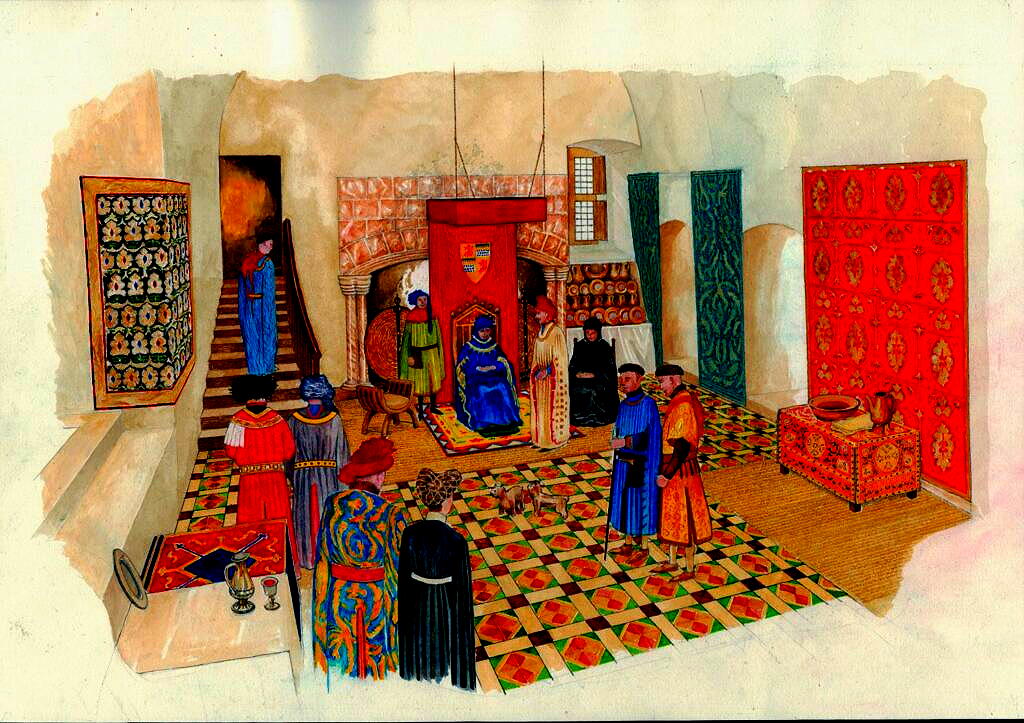
Image Copyright: Historic Environment Scotland.
Nevertheless, following an investigation into his nephew’s death in May 1402, Robert, Duke of Albany was appointed for a third time as Governor of Scotland, and this time his hold on power would continue uninterrupted until his death on 3rd September 1420 at Stirling Castle at the grand old age of 81.
Robert was succeeded as Governor and Duke of Albany by his eldest son, Murdoch, Earl of Fife. However the second duke was not as talented at holding on to power as his father had been. In August 1423 it was agreed that an embassy should be sent to England to negotiate the release of his cousin, King James I. On 5th April 1424 the newly released King James I met Murdoch, 2nd Duke of Albany at Melrose where the latter surrendered his office as Guardian of Scotland.
When the King felt secure, his cousin Murdoch Stewart, Murdoch’s sons Walter and Alexander, and his father-in-law Duncan, Earl of Lennox were arrested. At a parliamentary trial on 18th May 1425, they were found guilty of treason by a jury that included Murdoch Stewart’s half-uncle, Walter Stewart, Earl of Atholl, his first cousin Alexander Stewart, Earl of Mar, his first cousins once removed Archibald Douglas, 5th Earl of Douglas, and Alexander, Earl of Ross and Lord of the Isles. The four prisoners were beheaded in front of Stirling Castle and the duchy of Albany along with the earldoms of Fife, Menteith and Lennox were forfeited and returned into the crown.
Robert Stewart would no doubt had been relieved that he had not lived to witness the Fall of the House of Albany. Whether he was an evil kin-slayer and schemer or a powerful ruler and the best man for his times, Robert Stewart, 1st Duke of Albany was undoubtedly the early royal Stewart who left the biggest mark on history.
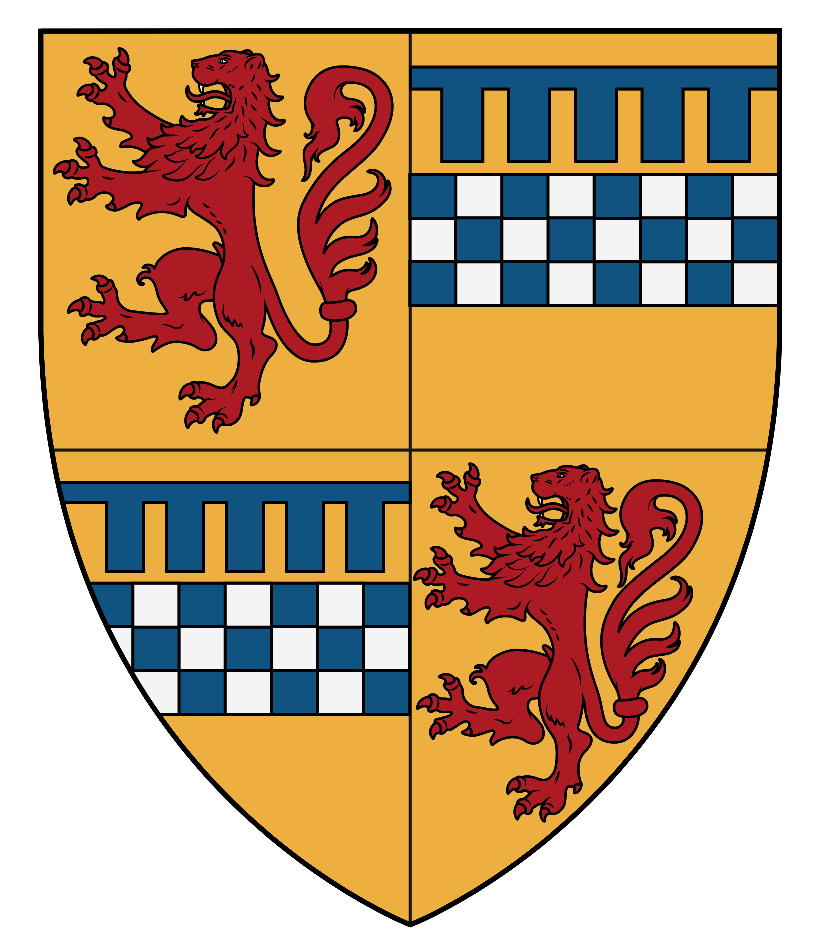
Image credit: Wappenwiki.
Margaret Graham, Countess of Menteith, suo jure
Margaret Graham (circa 1334 to circa 1376) was Countess of Menteith suo jure (in her own right). She was married four times, but only had surviving children with her fourth and final husband, Robert Stewart, Earl of Fife (see above).
She was born at Doune Castle (see above) and was the daughter of Mary, Countess of Menteith, in her own right and her husband, Sir John Graham. When her mother died some prior to 29th April 1360, Margaret became, in her turn, Countess of Menteith suo jure. Through her marriages Margaret Graham became successively Lady of Bothwell, Countess of Mar, Lady Drummond, and Countess of Fife. She was never Duchess of Albany as she died many years before her fourth husband was granted his ducal title in 1394.
Consanguinity and Dispensations
The early canon law of the Roman Catholic Church followed Roman civil law, which decreed that couples were not permitted to marry if they were related within four degrees of consanguinity. The number of degrees was calculated by counting each generational link up to the common ancestor and then down again to the proposed spouse.
However, around the ninth century, the number of prohibited degrees were increased to seven. In addition, the new method by which they were calculated counted back only the number of generations to the common ancestor.
These new rules meant that intermarriage was prohibited to anyone who was more closely related than seventh cousins. They posed significant problems for royal and noble families whose genealogies tended to be well documented.
The way around the rules was to seek a dispensation. Depending on how close the relationship was, these might be granted at parish, diocesan (bishop) or papal level. The new rules also increased church revenues as the granting of a dispensation required paying the church a significant sum.
Degree of Consanguinity Common Ancestor Relationship Marriage 1st degree Parents Siblings Forbidden 2nd degree Grandparents First cousins Forbidden 3rd degree Great grandparents Second cousins Forbidden 4th degree Great (x2) grandparents Third cousins Forbidden 5th degree Great (x3) grandparents Fourth cousins Forbidden 6th degree Great (x4) grandparents Fifth cousins Forbidden 7th degree Great (x5) grandparents Sixth cousins Forbidden 8th degree Great (x6) grandparents Seventh cousins Permitted
Margaret Graham’s first husband was Sir John Moray, Lord of Bothwell, who was the son of Sir Andrew Moray and Lady Christina Bruce, sister of King Robert I (the Bruce). Because she and Moray were third cousins once removed a papal dispensation was requested and granted in 1348. Following her first marriage, Lady Margaret became known as Margaret of Moravia. However, the couple had no known children and Sir John Moray died towards the end of 1351, leaving a widow of around 17 years old.
Margaret Graham’s second husband was Thomas, 9th Earl of Mar. As the couple were fourth cousins, another papal dispensation was requested and granted. However, after four years as Countess of Mar, her husband Thomas divorced her, claiming that she was unable to have children. However, Thomas had no children with his second wife, Margaret Stewart, Countess of Angus, suo jure, while Margaret Graham proved her fertility was not at fault by going on to bear a number of children with her fourth husband.
Around 1360, Margaret Graham married her third husband, Sir John Drummond of Stobhall and became known as Lady Drummond. This marriage was favoured by King David II (Bruce) and was meant to end a feud between the Grahams and the Drummonds. Margaret was by then the new Countess of Menteith, suo jure (in her own right), but her husband Sir John Drummond died soon after the wedding and thus he never became Earl of Menteith jure uxoris (in the right of his wife). The couple had no known surviving children.
Margaret Graham’s fourth husband was Robert Stewart (see above) third son of Robert Stewart, Earl of Atholl, who would later become King Robert II. Margaret and her fourth husband were fourth cousins, so a fourth papal dispensation was required.
Margaret Graham was the mother of Murdoch Stewart, 2nd Duke of Albany, who succeeded his father as Governor of Scotland, but was executed for treason in 1425.
Margaret Graham, Countess of Menteith in her own right, died sometime between 20th July 1372 and 4th May 1380 and was buried at Inchmahone Priory.
Following the execution of Margaret’s son, Murdoch for Treason in 1425, the Earldom of Menteith was forfeited and reverted to the crown. In 1427, King James I granted the Earldom of Menteith to his first cousin once removed Malise Graham. Malise was not permitted to inherit the Earldom of Strathearn from his mother, Euphemia Stewart, Countess Palatine of Strathearn in her own right, on the basis that the Strathearn earldom was only inheritable through the male line. Malise Graham was the fourth cousin twice removed of Countess Margaret of Menteith.
Margaret Graham was also the mother of a number of daughters including Beatrice, who married James Douglas, 7th Earl of Douglas & 1st Earl of Avondale; Isabel, who married Alexander Lelsie, 7th Earl of Ross and then Walter Haliburton; Margaret who married Sir John Swinton of that Ilk; Marjorie who married Sir Duncan Campbell, 1st Lord Campbell; Mary, who married Sir William Abernethy, 6th of Salton; and Joan, who married Robert Stewart, 1st Lord Lorne. Through these daughters she became the ancestor of many of the noble families of Scotland.
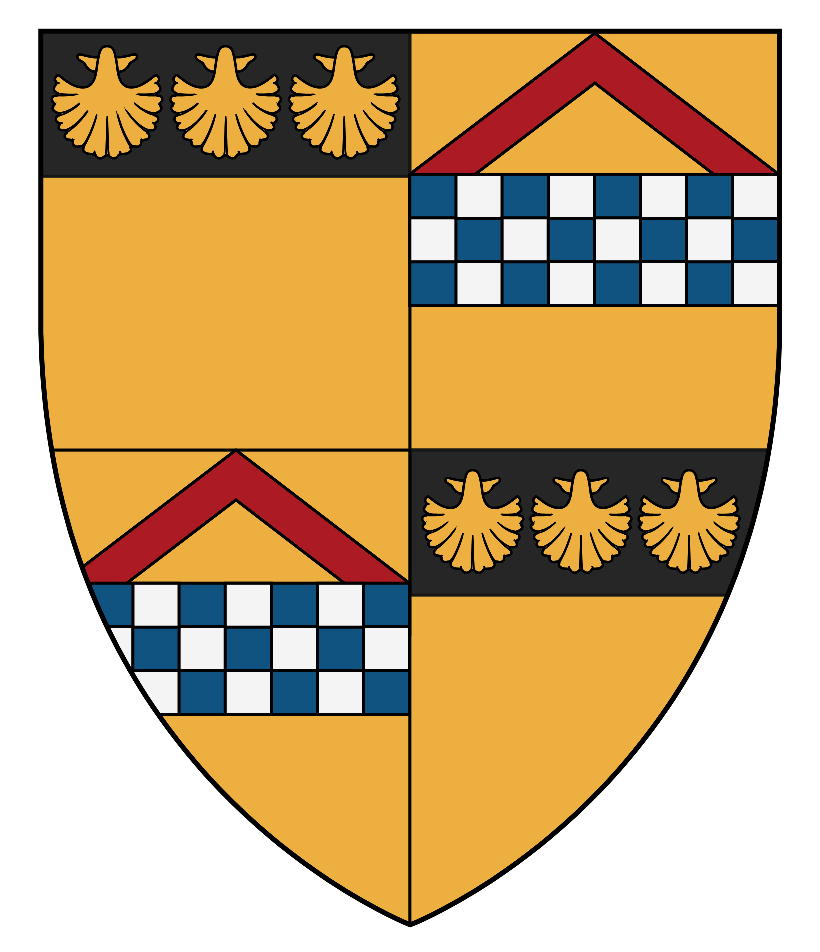
Image credit: Wappenwiki.
Roger Mortimer, 1st of Earl of March
Roger Mortimer (25th April 1287 – 29th November 1330) was the 3rd Baron Mortimer of Wigmore and the 1st Earl of March. He was the son of Edmund Mortimer, 2nd Baron Mortimer of Wigmore and Margaret de Fiennes.
Roger Mortimer married Joan de Geneville (born 1286), the daughter of Sir Peter de Geneville, on 20th September 1301 when he was fourteen and she was fifteen.
Through his eldest son Sir Edmund Mortimer, Roger Mortimer, Earl of March is an ancestor of the final two Plantagenet monarchs, King Edward IV and King Richard III of England. Via Edward IV’s daughter, Elizabeth of York, he is an ancestor of King Henry VIII of England, King James V of Scotland, and all subsequent Scottish, English and British monarchs.
Roger Mortimer was one of the principal barons who opposed King Edward II of England and the influence that the Despensers had over the king. In 1323, Roger Mortimer fled to France and a year later was joined by Isabella de France, estranged wife of King Edward II of England and sister of King Charles IV of France. The two became lovers and in 1326 they invaded England accompanied by Edward, Prince of Wales (later King Edward III of England) and Edward II’s cousin, Henry, Earl of Lancaster. London rose in revolt and King Edward II fled to Wales where he was captured on 16 November 1326, and forced to abdicate in favour of the fourteen year old Prince of Wales, who became King Edward III.
On 21st September 1327, King Edward II died in captivity in mysterious circumstances, with some believing that he had been murdered on the orders of Roger Mortimer.
In September 1328, Roger Mortimer was created 1st Earl of March and he was the de facto ruler of England before being himself overthrown by Queen Isabella and King Edward III. Mortimer was accused of assuming royal power and other crimes, and was executed, without being tried, by hanging at the “Tyburn Tree” on 29th November 1330.
Edwardum occidere nolite timere bonum est
Roger Mortimer features in Christopher Marlowe’s 1594 play Edward II (Full title: The Troublesome Reign and Lamentable Death of Edward the Second, King of England, with the Tragical Fall of Proud Mortimer), which results in the King being executed. Deliberately left “unpointed”, or unpunctuated, it both saves and kills the King:
“This letter written by a friend of ours,
Containes his death, yet bids them save his life.
Edwardum occidere nolite timere, bonum est.
Feare not to kill the king tis good he die.
But read it thus, and thats an other sence:
Edwardum occidere nolite, timere bonum est.
Kill not the king tis good to feare the worst.
Unpointed as it is, thus shall it goe,
That being dead, if it chaunce to be found,
Matrevis and the rest may beare the blame,
And we be quit that causde it to be done.“
Christopher Marlowe, Edward II. Act Five, Scene Four.
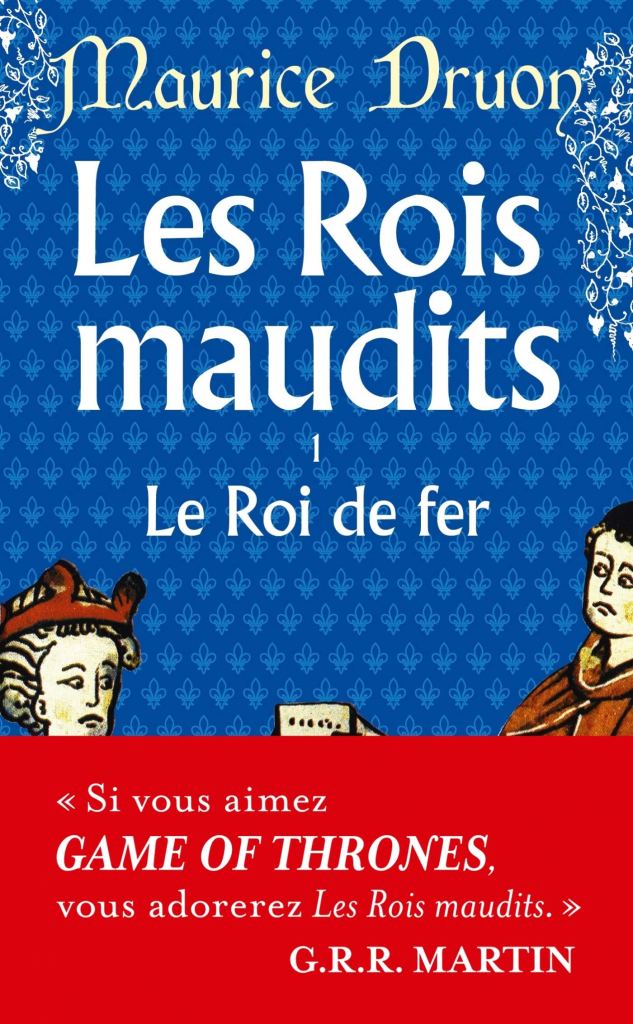
Roger Mortimer also featured in The Accursed Kings (French: Les Rois maudits), a series of historical novels by French author Maurice Druon about the French monarchy in the 14th century. Published between 1955 and 1977, the series has been adapted as a miniseries twice for television in France.
American author George R. R. Martin called The Accursed Kings “the original game of thrones“, citing Druon’s novels as an inspiration for his own series A Song of Ice and Fire.
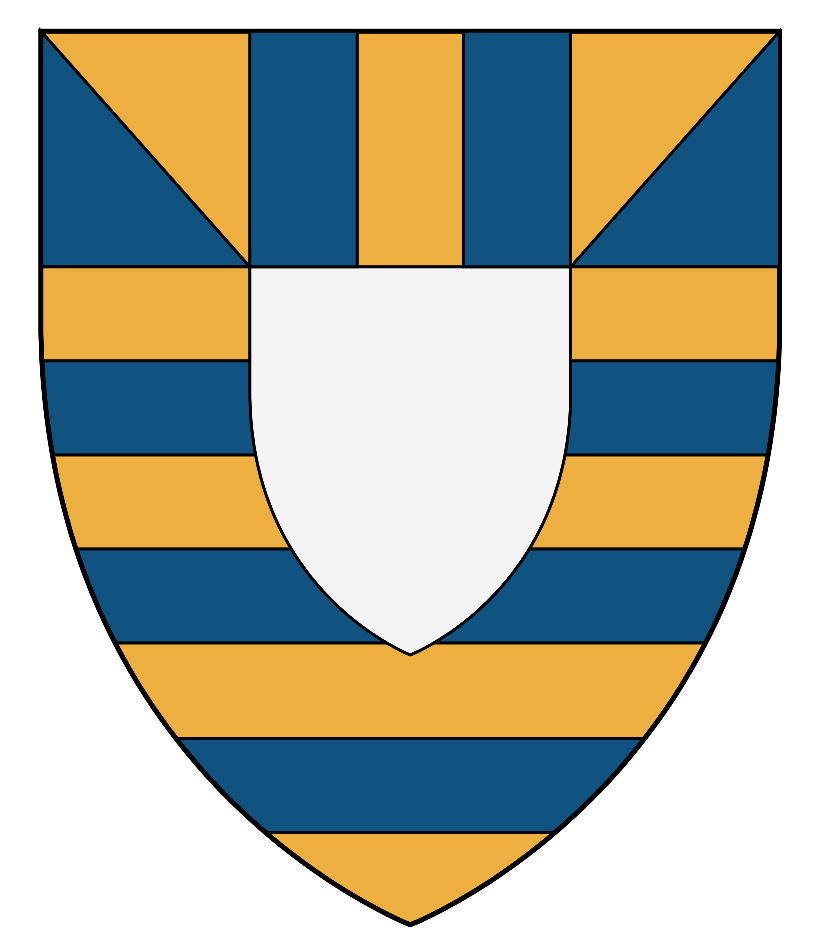
Image credit: Wappenwiki.
Joan de Greville, 2nd Baroness Greville, suo jure
Joan de Greville (2nd February 1286 – 19th October 1356), wife of Roger Mortimer, Earl of March, was a powerful woman in her own right. She was also known as Jeanne de Joinvilleand was born at Ludlow Castle in Shropshire, the daughter of Sir Piers de Geneville and Joan of Lusignan. Her mother’s great (x4) uncle, Guy de Lusignan was the husband of Sibilla d’Anjou, Queen regnant of Jerusalem and through her was the King of Jerusalem when the city fell in 1187.
On 21st October 1314, upon the death of her grandfather, Geoffrey de Geneville, Joan de Greville succeeded as 2nd Baroness Geneville, suo jure (in her own right).
When her husband, Roger Mortimer rebelled against King Edward II of England, Joan de Greville was imprisoned in Skipton Castle for two years. After the execution of her husband on 29th November 1330, she was again taken into custody, but in 1336, her lands were restored to her and she received a full pardon from Edward II’s son and successor, Edward III of England.
Joan de Greville died on 19 October 1356, aged seventy and was buried in Wigmore Abbey beside her late husband.
Joan de Greville and her husband had twelve surviving children and her descendants include King Edward IV of England, King Richard III of England, King Henry VIII and all subsequent English and British monarchs, British Prime Minister Sir Winston Churchill, and American Presidents George Washington, Thomas Jefferson, William Howard Taft, Calvin Coolidge and Franklin D. Roosevelt.
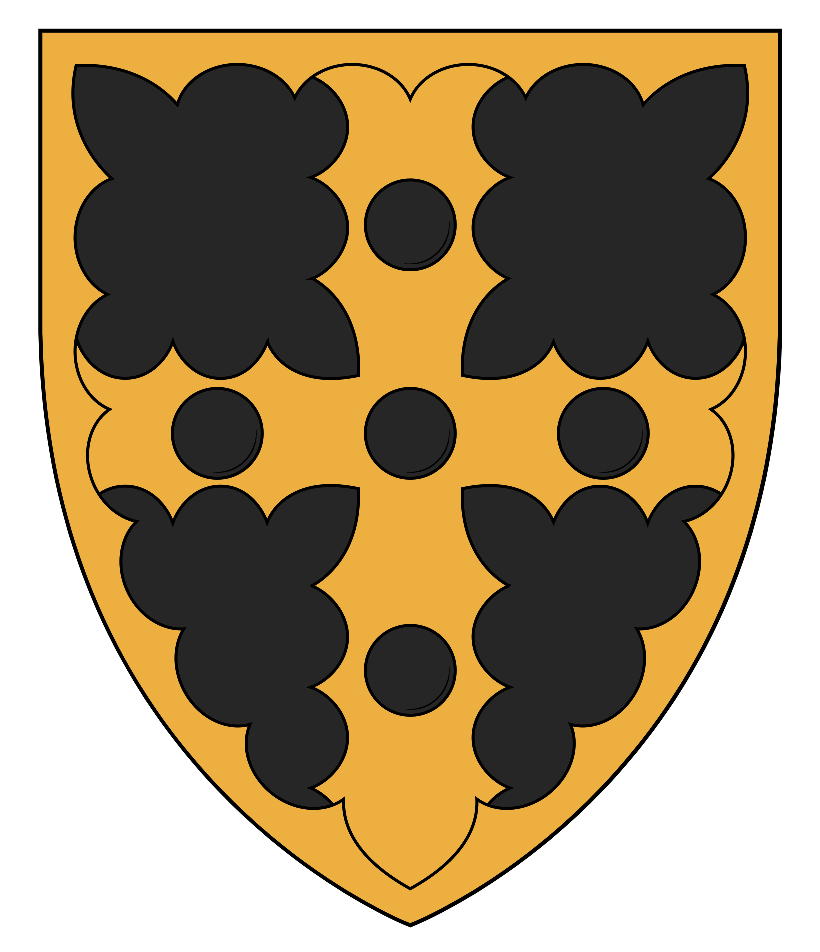
Image credit: Wappenwiki.
King Robert II of Scots
The first Stewart King, Robert II (2nd March 1316 – 19th April 1390) was King of Scots from 1371 to his death in 1390. He was the grandson of the hero King Robert the Bruce. However he was older than King David II, his half-nephew, who was a late-born son of Robert the Bruce and his second wife, Elizabeth de Burgh.
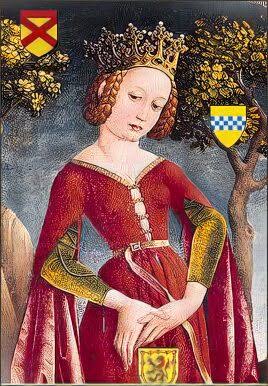
Robert II was the son of Marjory Bruce, and her husband Walter Stewart, 6th High Stewart of Scotland. Marjory was the daughter of Robert the Bruce and his first wife, Isabella of Mar, and was named after her paternal grandmother, Marjory, Countess of Carrick suo jure (in her own right). After years of imprisonment in England, Marjory Bruce was released in a prisoner exchange after the Battle of Bannockburn, only to die in a riding accident less than two years later, on 7th February 1316. Marjory was just 20 years old, but left behind a son, Robert, who would go on to become King Robert II.
Marjory Bruce’s importance was acknowledged more than 200 years later by her great (x5) grandson, King James V. Following the defeat of the Scots by the English at the Battle of Solway Moss, on 24th November 1542, King James V suffered a nervous collapse. He retired to Falkland Palace in Fife and took to his bed with a high fever. When a messenger arrived to tell him that his pregnant queen had given birth to a daughter instead of the hoped-for son, he believed that the Stewart dynasty was at an end. He is said to have “turned his head to the wall” and six days later, he was dead. His famous last words were reputedly:
“It cam wi’ a lass and it will gang wi’ a lass!“
In 1315, the Scottish parliament, seemingly with Marjory Bruce’s approval, revoked her rights as heir presumptive to her father in favour of the King’s only surviving brother, Edward Bruce. However, Edward Bruce wanted a throne for himself and the Irish were happy to oblige. In 1315, Edward Bruce was proclaimed High King of Ireland, the first since Brian O’Neill (High King from 1258 to 1260) and Edward was crowned in 1316 on the Hill of Tara. However, the English King believed that Ireland, like Scotland and Wales, belonged to him and Edward Bruce, last High King of Ireland, was defeated and killed by English forces at the Battle of Faughart, near Dundalk on 14th October 1318.
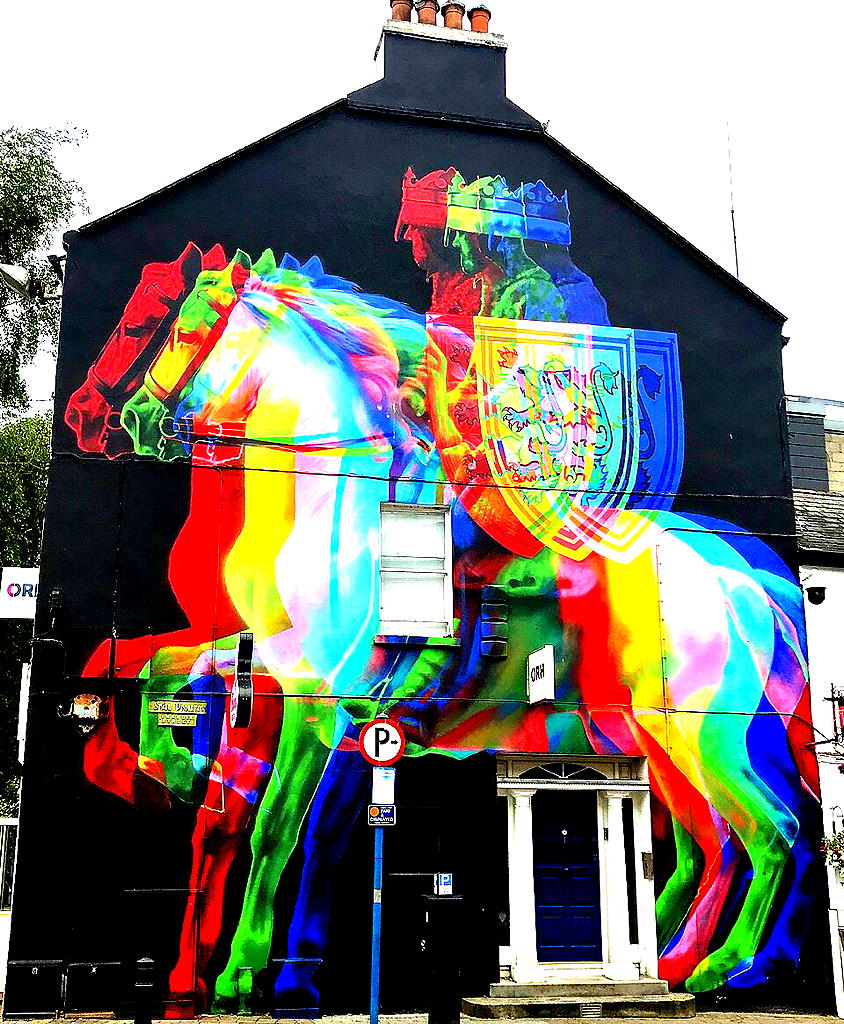
Image credit: D. Sexton.
The death of Edward Bruce, High King of Ireland led to a Parliament in December 1318 which enacted a new tailzie that named Marjory’s son, Robert Stewart as heir presumptive. However, after years of separation, captivity and the birth of daughters, on 5th March 1324, Queen Elizabeth de Burgh finally delivered Robert Bruce his long awaited son and heir. He was named who was named David and became the heir apparent, meaning that Robert Stewart was no longer the heir presumptive. However, Robert the Bruce, himself the only survivor of five Bruce brothers, knew how fickle fate could be. He wished to secure the Scottish succession without the terrible dynastic chaos and civil wars of previous decades. Therefore, in July 1326 a Parliament at Cambuskenneth officially restored Robert Stewart to the Scottish line of succession as heir presumptive to David Bruce, then aged just two years old, should he die childless.
King Robert the Bruce himself died on 7th June 1329, aged 54, at his favourite Manor of Cardross in Dunbartonshire leaving his now three year-old son David Bruce to succeed as King David II. Despite his young age, David had been married the previous year to Princess Joanna Plantagenet, daughter of King Edward II of England and sister of King Edward III. This marriage had intended to bind England as Scotland’s ally following the years of conflict. However, having David II as his brother-in-law did not prevent the English King Edward III from supporting Edward Balliol, son of King John in his attempts to secure the throne of Scotland. On the condition that Balliol acknowledged he was the vassal of King Edward III of England.
Thus began the Second War of Independence, which would start disastrously for the Scots. Sir James Douglas had left on a crusade to Spain with the Bruce’s heart and he was killed at the Battle of Tebu on 1st August 1330. Sir Thomas Randolph, Earl of Moray had been appointed Guardian by the Act of Settlement of 1318, but he died at Musselburgh on 26th June 1332. Walter Stewart, Princess Marjory’s husband had died in 1327, while Angus Og MacDonald, Lord of the Isles had died around 1330 and Gilbert Hay, Constable of Scotland died in April 1333. Thus, within the space of less than ten years, Robert the Bruce and all his senior commanders at Bannockburn had all died, and their experience was sorely missed in the Second War of Independence.
Randolph Earl of Moray was succeeded as Guardian by Donald, Earl of Mar. Donald was the brother of Isabella of Mar, Marjory Bruce’s mother, and so a close connection of the new King. But within ten days of being appointed Guardian of the Realm, he was dead, killed on 11th August 1332 at the Battle of Dupplin Moor, near Perth.
On 24th September 1332, Edward Balliol was crowned as King of Scots at Scone. It must have seemed almost as if Robert the Bruce had never existed and the Battle of Bannockburn had never been fought and won by the Scots.
But the Scots fought on against Edward Balliol and his supporters, the Dispossessed and the English. King David II and Queen Joanna were evacuated to France for safety and Sir Andrew Moray of Bothwell became Guardian of the Realm. Sir Andrew had married Christian Bruce, and so was King David II’s uncle by marriage. However, Sir Andrew was captured in April 1333 while attacking Edward Baliol and so Scotland once more required a new Guardian.
The next Guardian of the Realm was Sir Archibald Douglas, the half-brother of Robert the Bruce’s friend and loyal lieutenant, Sir James Douglas. Sir Archibald was appointed Guardian in April 1333, but like his predecessors did not last long, being killed at the disastrous Battle of Halidon Hill on 19th July 1333.
Sir Andrew Moray, who had been released from captivity was reappointed as Guardian of the Realm, but he fell ill at the siege of Edinburgh castle in early 1338. He retired to Ormond Castle in the lands of the lordship of Avoch where he died around Lent 1338.
The next Guardian of the Realm was Robert Stewart, the future King Robert II. He was guardian on four occasions, sometimes jointly, and latterly twice during the eleven years of the king’s enforced absence as a prisoner in England after the Battle of Neville’s Cross (1346–1357). Robert Stewart used his years as Guardian to secure a power base for the Stewarts, something which did not endear him to the captive King David II.
Robert II was aged almost 55 by the time he inherited the throne from his half- nephew in 1371. He had been very active during the Wars of Independence and had acted as Regent during the captivity in England of David Bruce. But by 1371, he was seen to be elderly and past his prime. David Bruce had died at the age of 44, while Robert the Bruce had been 54 when he died. Nigel Tranter’s 1976 novel, The Lords of Misrule (1976) covers King Robert II’s reign from around 1388 to 1390 and depicts the the elderly king as grown “feeble, weary and half-blind“, with his sons, daughters and other nobles squabbling for power with Scotland being ravaged by their conflicts
Robert II had fathered many children, both with his two wives and with his several mistresses. In 1336, Robert Stewart first married Elizabeth Mure of Rowallan. She was the daughter of Sir Adam Mure of Rowallan and died in 1355. However, it was said by some that their marriage had been “uncanonical“. The couple therefore obtained a papal dispensation in 1347 and remarried in 1349. By Scots law, even if their children had been illegitimate (and this was disputed) their marriage would have legitimised them.
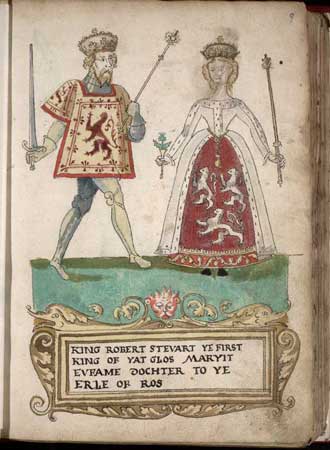
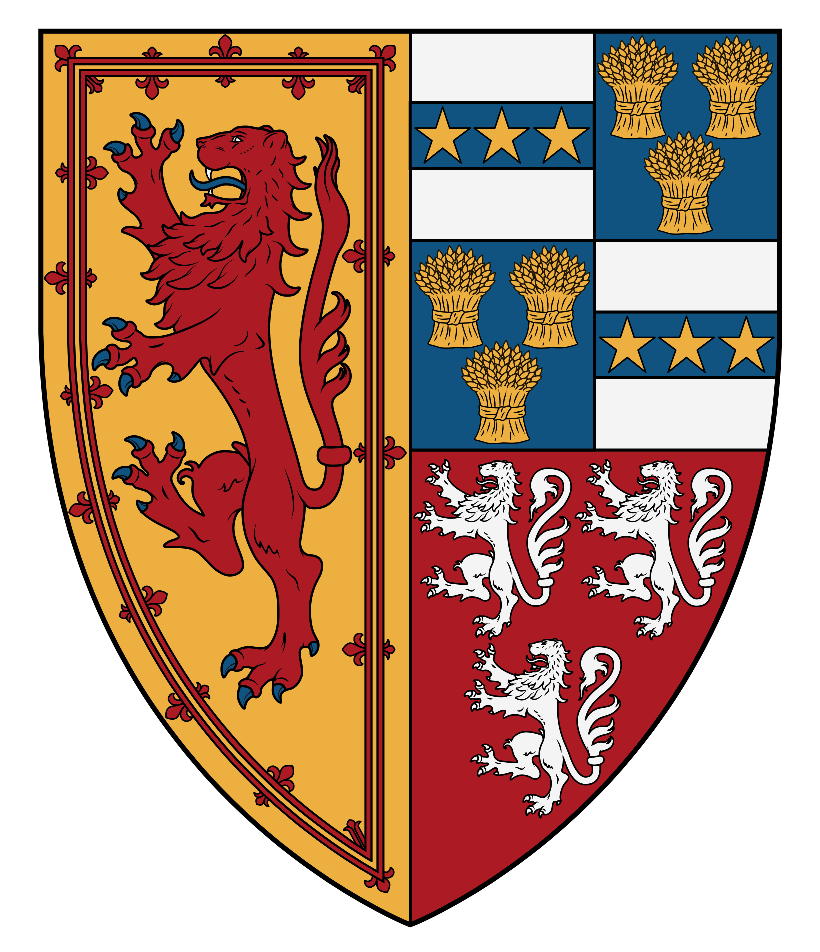
The Royal House of Stewart was as dis-functional as it was large. Elizabeth Mure of Rowallan died in 1355 after giving birth to at least ten children who survived to adulthood. Robert Stewart then married, by dispensation, Euphemia, daughter of Hugh, 4th Earl of Ross and widow of John Randolph, 3rd Earl of Moray. The latter had been killed on 17th October 1346 at the Battle of Neville’s Cross, where King David II had been taken prisoner by the English. By Euphemia Ross, Robert Stewart went on to have a further five children, including David, Earl Palatine of Strathern and Earl of Caithness, and Walter, Earl of Atholl and Earl of Caithness.
King Robert II’s eldest son, John, Earl of Carrick (later King Robert III) had been kicked by a horse and lamed. This prevented him from being as active as he would have liked. He was also of a more retiring nature than his almost larger-than-life younger brothers. This was still a time when Kings were expected to lead their armies into battle. Just a few generations earlier, Tanistry (selecting the most able candidate from the royal derbfine) rather than primogeniture (where the eldest male heir of the previous monarch succeeded) had been the system used to select kings. Under the system of Tanistry, John, Earl of Carrick would undoubtedly have been passed over for a “more suitable” candidate, perhaps one of his brothers, or another close relative.
The second son, Walter Stewart, had married Isabella MacDuff, in 1360. She was an important heiress as she was Countess of Fife in her own right. However Walter had died not long after the marriage, in 1362, while still in his twenties, without leaving any children.
The third, but second surviving son, was Robert Stewart, the archetypical Wicked Uncle. In 1361, he married Margaret Graham, Countess of Menteith in her own right and gained control of that Earldom. In 1371, he somehow managed to persuade his sister-in-law to resign the Earldom of Fife in his favour. In 1398 he was created Duke of Albany by his brother and in 1403, King Robert III granted Albany the Earldom of Atholl.
As if all this was not power enough for just one man, Parliament appointed him as Guardian of Scotland on 1st December 1388, replacing his elder brother, John, Earl of Carrick. John, Earl of Carrick succeeded as King Robert III in 1390, but due to his infirmity, Robert, Earl of Fife continued as regent until 1393, when he was forced to return power to his brother, King Robert III.
After touring the northeast of Scotland in late January 1390, King Robert II returned to Dundonald Castle in Ayrshire, in March 1390. He died there on 19 April 1390 and was buried at Scone on 25 April 1390.
King Robert II’s alleged last words were:
“Here lies the worst of kings and the most miserable of men”.
Mary Montifex, Baroness of Auchterarder & Cargill (Stobhall)
The Barony of Auchterarder was owned by the Crown until the reign of King Robert “the Bruce”, who granted it to Sir William de Montfichet or Montifex, who was later appointed Justiciar of Scotland in 1332. Sir William Montfichet had large possessions, being not only proprietor of the Barony of Auchterarder, but of Cargill and Kincardine in Menteith, and other lands in Perthshire; and also of Kilmahew, in Dumbartonshire, and other lands. He had three daughters, who became his heirs-portioners. To his eldest daughter Marie he left the estates of Auchterarder, Cargill (or Stobhall), and Kincardine in Menteith.
It is appropriate that we should end this survey of the heraldry of the ancestors of Barbara Blair’s father, William Blair, 1st Baron of Tarsappie with Marie de Montifex, Baroness of Auchterarder & Cargill (Stobhall) as it was via her son, Thomas Drummond in Auchterarder, that we are related.
Marie de Montifex is a largely forgotten figure in Scottish history, but she was the mother of Annabella Drummond, Queen consort of King Robert III, and therefore the ancestor of every subsequent Scottish and later British royals and of every current reigning European monarch.
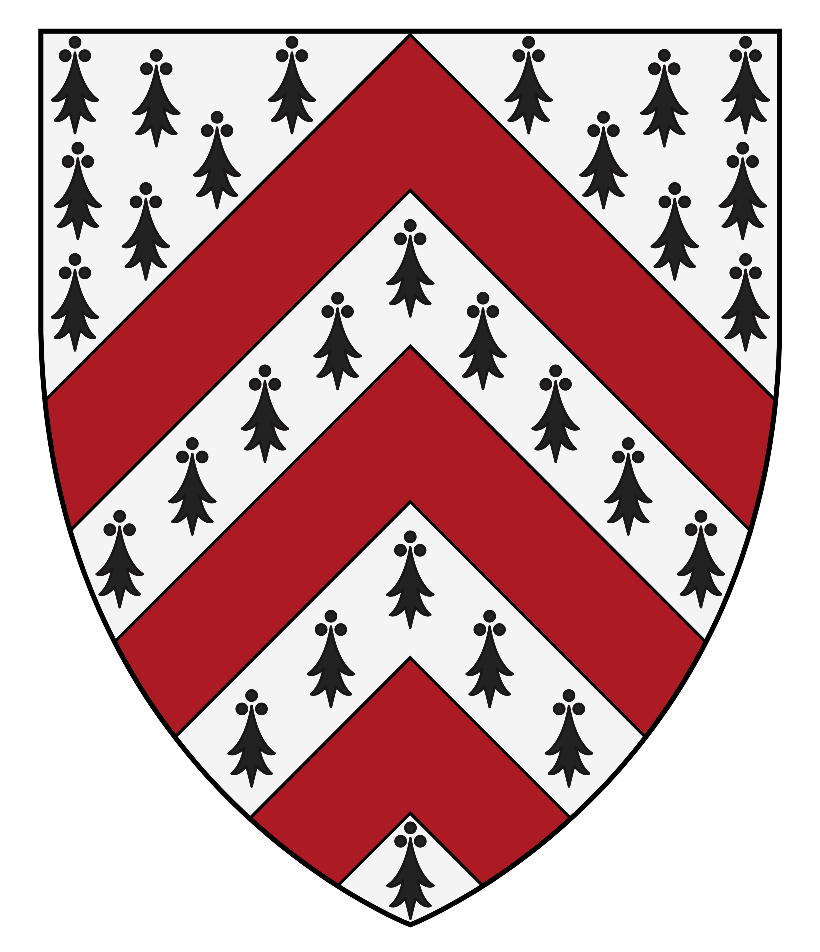
Image credit: Wappenwiki.
The Barony and Castle of Auchterarder
Auchterarder Castle is said to have been a hunting seat of King Malcolm IV “Canmore” who reigned from 1057 to 1097, and to have been visited by King Edward I of England in 1296. Little now remains of the ruined castle, which incorporated into a modern farm building. According to Alexander John Reid’s Annals of Auchterarder (1899) at that time traces of the moat surrounding the castle and part of the keep still remained.
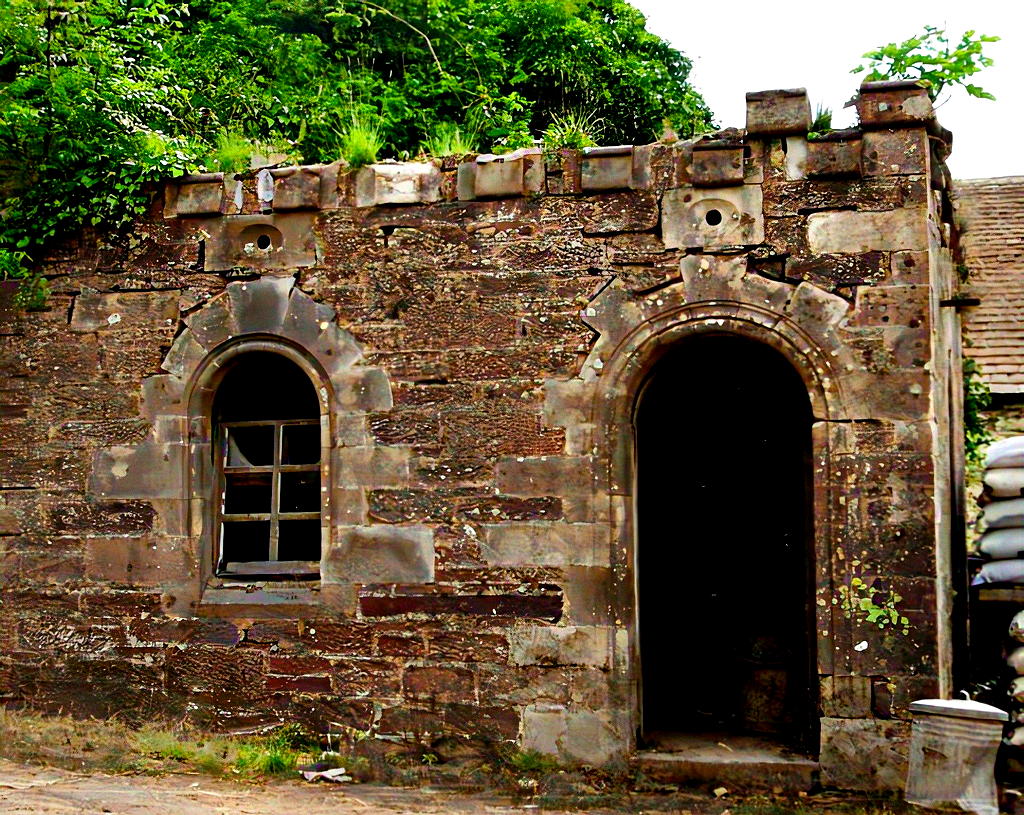
Crown Copyright 1975.
Conclusion
Heraldry, while initially potentially daunting, is not difficult to understand – see Heraldry: its Use & Misuse in Family History with examples from the Drummond family and others.
When correctly used can provide a colourful and interesting addition to a family tree.
For those ancestors who were not entitled to display arms, and where family photos are not available, other systems such as symbols or avatars can add colour and interest to a tree.


