
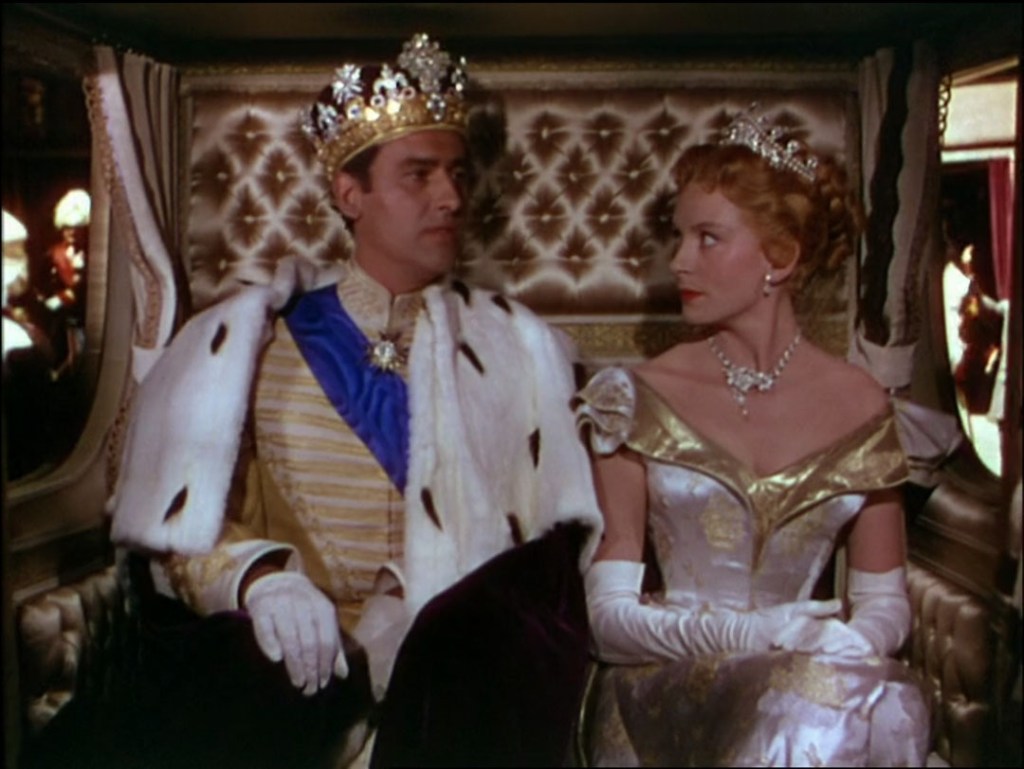
Rudolf Rassendyll: [impersonating King Rudolf V] I probably looked like a prize idiot and talked like one, too.
Princess Flavia: You’re too modest. You really looked and acted like a King today.
Rudolf Rassendyll: Oh, thank you.
Princess Flavia: It was delightfully unexpected.
Rudolf Rassendyll: Oh.
The Arms of the Family and Ancestors of Barbara Blair
In our review of the heraldry of the ancestors of Barbara Blair’s father, we now look at the ninth generation.
Ninth Generation
William Melville, 3rd of Raith
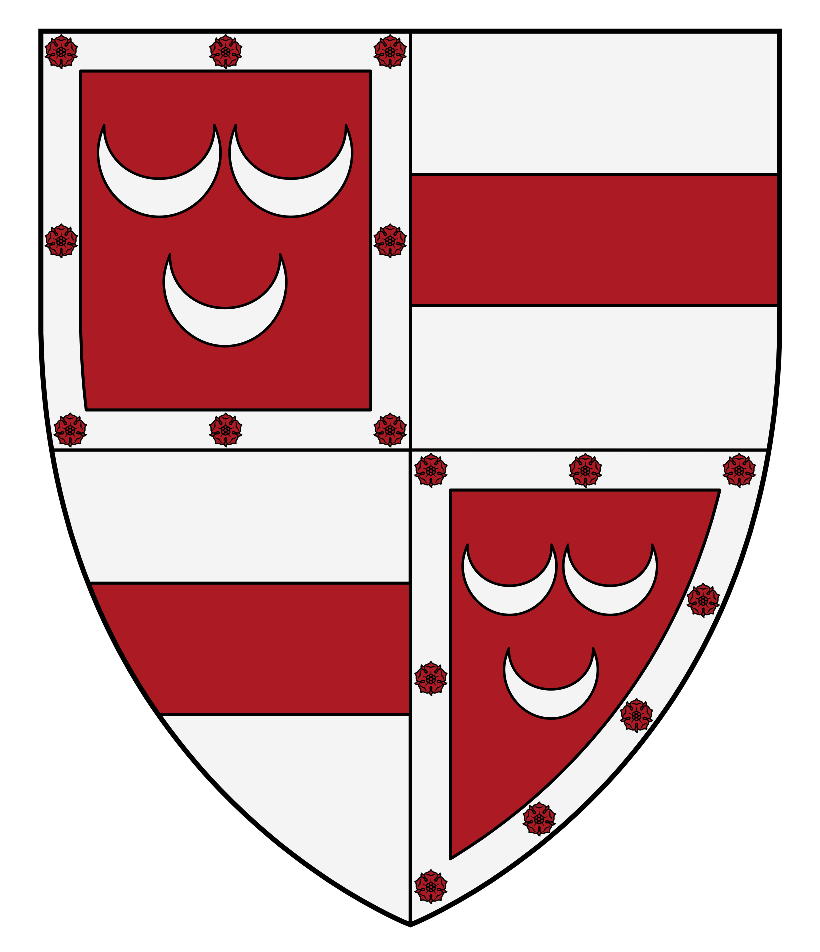
Image credit: Wappenwiki.
William Melville, 3rd of Raith was the son of Sir John Melville, 2nd of Raith and Margaret Scott, daughter of Sir William Scott, 5th of Balwearie.
He married Euphemia Lundie, daughter of Sir Robert Lundie of Balgonie and Jean Lindsay, daughter of Patrick Lindsay, 4th Lord Lindsay of the Byres and Isabella Pitcairn.
William Melville, 3rd of Raith died circa 1502.
Sir Walter Drummond of Cargill & Stobhall
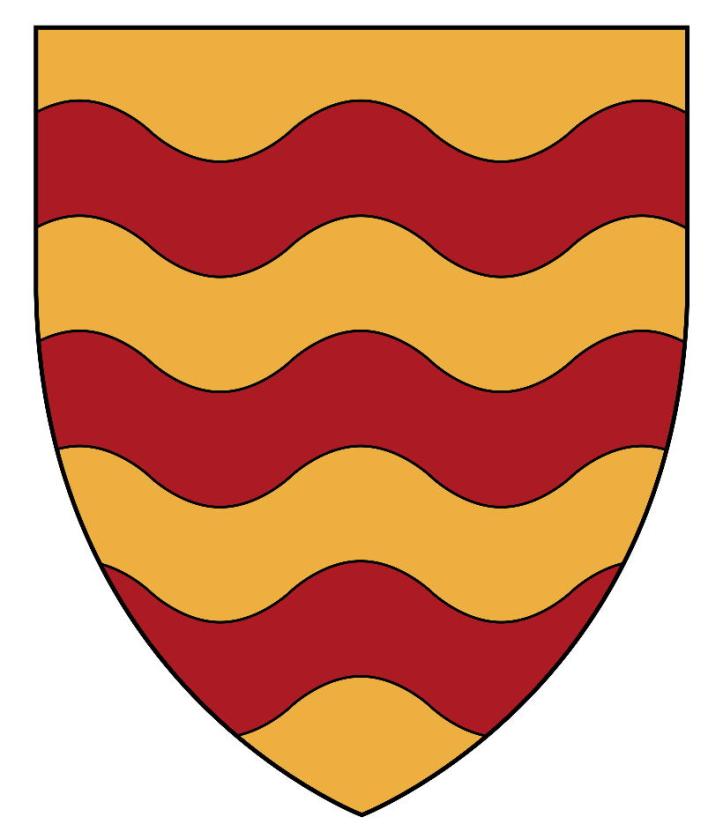
Image credit: Wappenwiki.
Sir Walter Drummond of Cargill & Stobhall was the son of Sir John Drummond and Elizabeth Sinclair.
He married Margaret Ruthven, daughter of Sir William Ruthven of that Ilk and died in 1455.
Sir John Livingston of Callendar
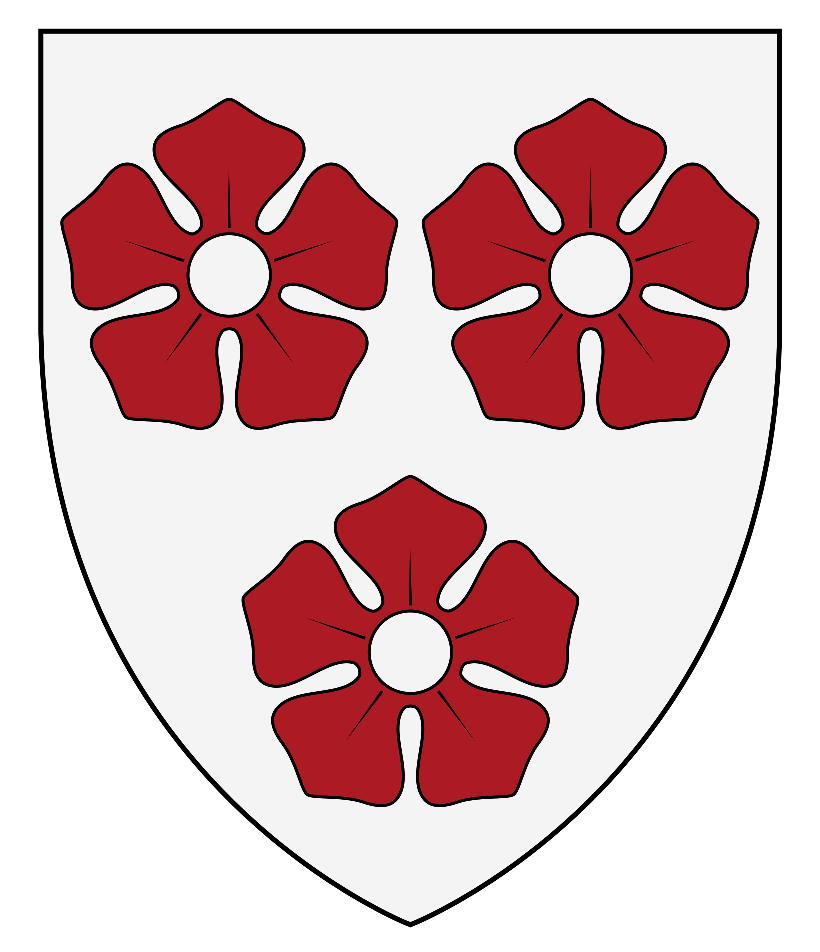
Image credit: Wappenwiki.
Sir John Livingston was the father of Sir Alexander Livingston, Governor of Scotland (see above).
He married Marjorie Menteith, daughter of John Menteith, 1st of Kerse and Marjory Sterling.
Sir John Livingston was one of the many Scots who were killed on 14th September 1402 at the Battle of Homildon Hill, a conflict that appears in William Shakespeare’s Henry IV, Part 1. As at the Battle of Halidon Hill seventy years before, the Scots Schiltrons presented a large target for the English Longbowmen, and they suffered enormous casualties before the Scots commander, William Douglas, 4th Earl of Douglas finally ordered an attack. A number of prominent Scots were captured, including George Douglas, 1st Earl of Angus (see profile above), Thomas Dunbar, 5th Earl of Moray and Murdoch Stewart, Earl of Fife. The Earl of Douglas himself was captured having been wounded five times, including the loss of an eye.
Sir Alexander Ogilvy of Auchterhouse
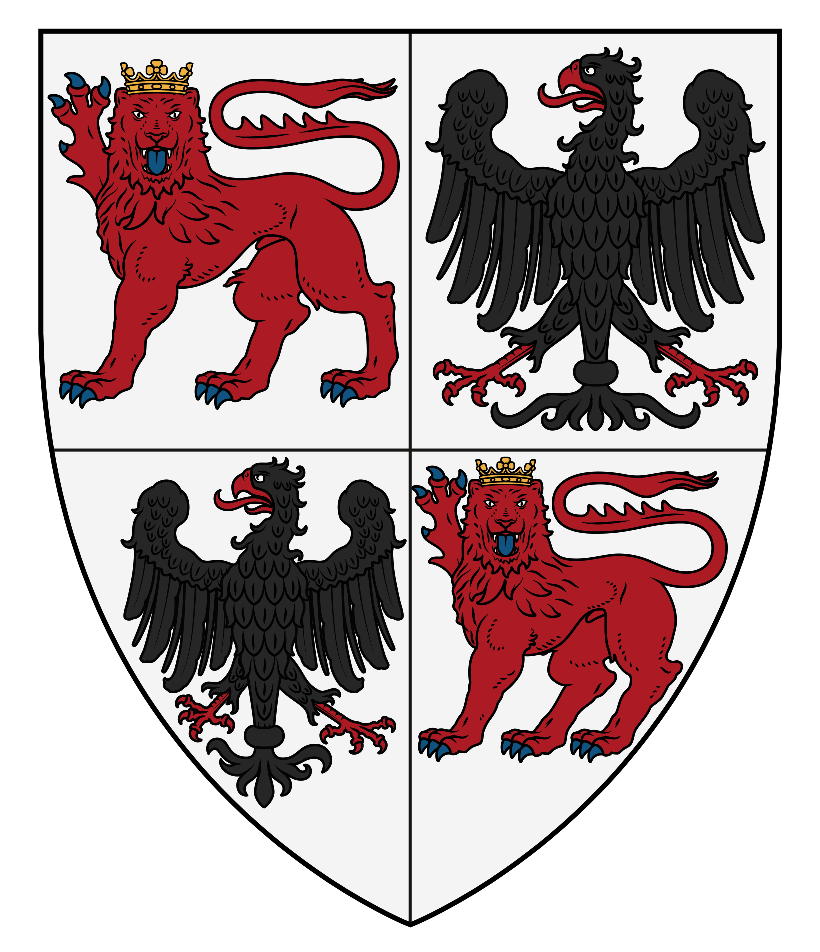
Image credit: Wappenwiki.
Sir Alexander Ogilvy of Auchterhouse was the son of Sir Walter Ogilvy and Isabel Ramsay, daughter of Sir Malcolm Ramsay of Auchterhouse.
Sir Alexander was Sheriff of Angus between 1403 and 1423.
He was a member of the royal army commander by Alexander Stewart, Earl of Mar, which opposed the forces of Donald Lord of the Isles at the Battle of Harlaw on 24 July 1411. Although Mar suffered heavy losses, Aberdeen was successfully defended and the Highland forces returned to the Isles without causing significant destruction in the region.
James Douglas, 7th Earl of Douglas & 1st Earl of Avondale
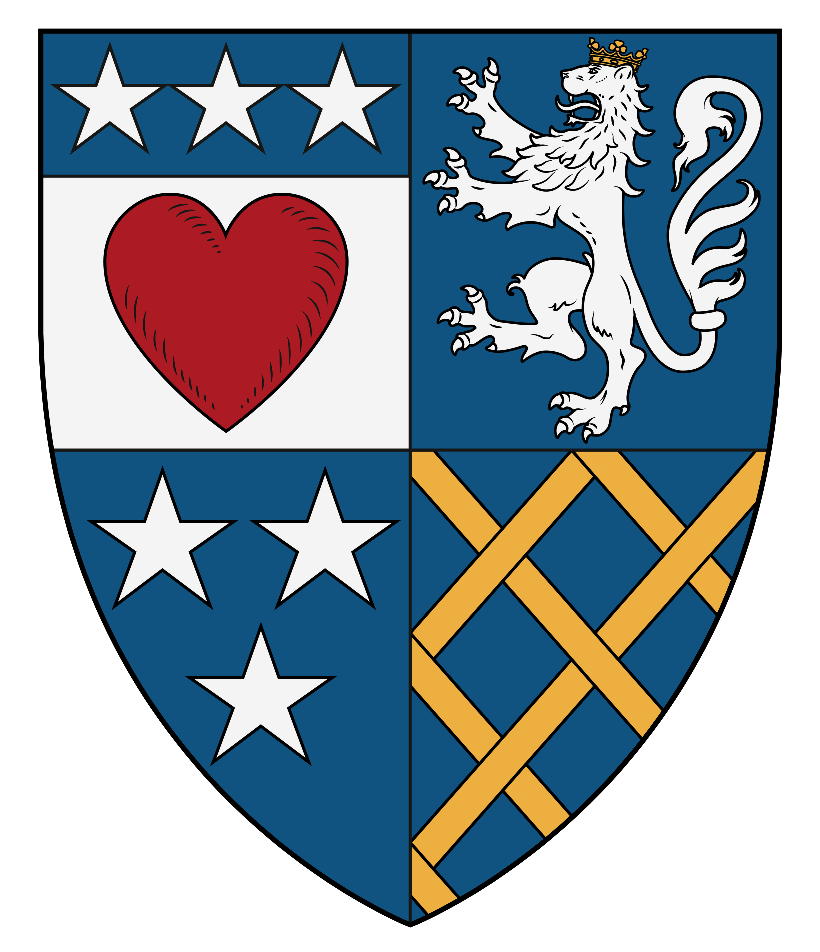
Image credit: Wappenwiki.
James Douglas, 7th Earl of Douglas rose to prominence after his elder brother, Archibald Douglas, 4th Earl of Douglas, and head of the Black Douglases, was defeated and captured at the disastrous Battle of Homildon Hill on 14th September 1402 along with George Douglas, head of the Red Douglases. This left James as the de facto head of the powerful Douglas family until his brother, Archibald was released in 1409.
James Douglas became 1st Earl of Avondale in 1437. It is unclear whether he was ennobled by King James I, who was assassinated on 21st February 1437, or by the instigation of his nephew, Archibald, 5th Earl of Douglas, who James had supported as Governor of Scotland and Regent for the young King James II.
Archibald, 5th Earl of Douglas died of fever in 1439, and was succeeded by his son, William Douglas, 6th Earl of Douglas.
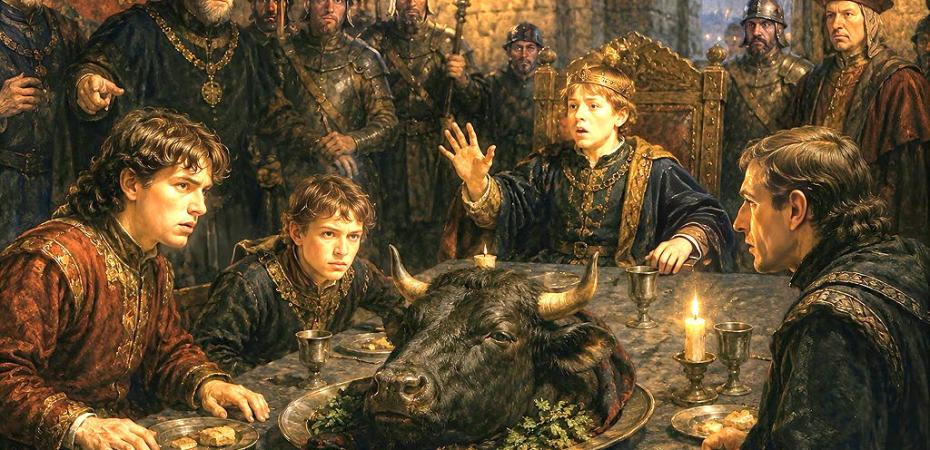
On 24th November 1440, the 16-year-old William Douglas, 6th Earl of Douglas, and his younger brother David were invited to dine with the ten-year-old King James II of Scotland. The event, later known as “The Black Dinner“, was organised by Sir William Crichton, Lord Chancellor of Scotland, along with James Douglas, 1st Earl of Avondale. As he was the great uncle of the two boys, James Douglas was heir presumptive to the Earldom of Douglas should they die childless. During the dinner, a black bull’s head, a symbol of death, was said to have been brought in and placed before the young Earl of Douglas and his brother. Despite the protests of the young King James II, the two young Douglas brothers were then dragged out to Castle Hill, given a mock trial and beheaded.
Thus did James Douglas “the Gross” become 7th Earl of Douglas and the most powerful man in Scotland.
Sir Thomas Erskine of that Ilk
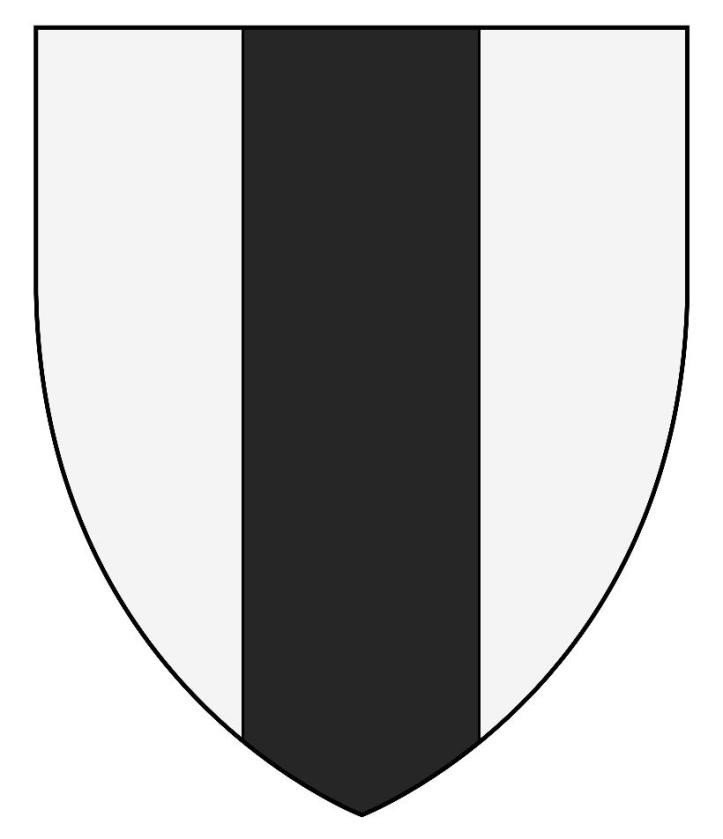
Image credit: Wappenwiki.
Sir Thomas Erskine of that Ilk was the son of Sir Robert Erskine of that Ilk and Beatrice de Lindsay, daughter of Sir Alexander Lindsay of Crawford and Beatrix Stewart.
He married, firstly, a daughter of Sir William Douglas of Liddesdale, and secondly, Janet Keith, daughter of Sir Edward Keith and Christian Menteith. He died circa 1403.
Sir Thomas was the father of Sir Robert Eskine, whose prospective right to the Earldom of Mar, as a descendant of Gartnait, Earl of Mar through his daughter Helen, were recognised by Robert II, King of Scots in 1395. However, King Robert III’s nephew, Alexander Stewart, married Isabella Douglas, countess of Mar and became Earl of Mar in her right. In 1426, Alexander Stewart resigned the Earldom of Mar to the crown in order to receive a regrant in his own right. King James I granted this, with the caveat that the earldom and associated lands would revert to the Crown upon the death of Alexander Stewart, his cousin.
In 1438, Sir Robert was served heir to half the Earldom and declared himself to be Earl of Mar. However, his right to the title was disputed by the crown due to the 1426 patent, and instead Sir Robert was created 1st Lord Erskine circa 1438 by King James II.
The Erskines would have to wait until 1565 when the Earldom of Mar was restored to John Erskine, 6th Lord Erskine by Mary Queen of Scots. In September 1571, the Earl of Mar was appointed as the third Regent for the young King James VI, following James Stuart, Earl of Moray and Matthew Stuart, 4th Earl of Lennox. Mar was Regent for just over a year until October 1572, when he died of natural causes, and was in turn replaced by James Douglas, 4th Earl of Morton.
William Douglas, 1st Earl of Douglas
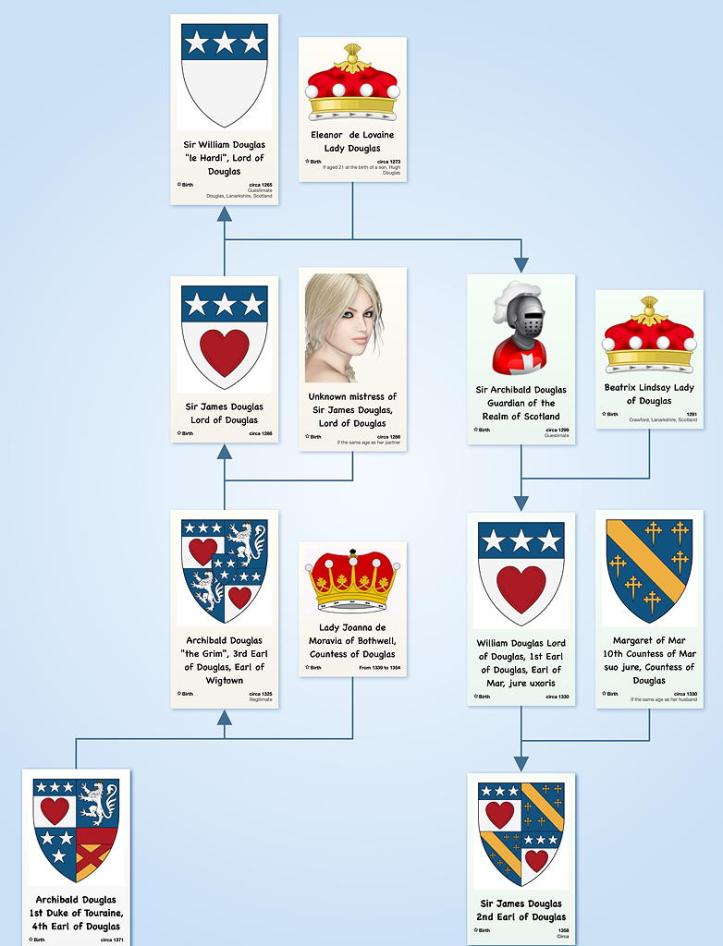
William Douglas, 1st Earl of Douglas and Earl of Mar suo jure, was the head of the most powerful family in Scotland. He married Margaret of Mar, 10th Countess of Mar in her own right.
He was the son of Sir Archibald Douglas, Guardian of the Realm who died in 1333, and Beatrix de Lindsay, daughter of Sir Alexander de Lindsay of Crawford and his wife, Beatrix Stewart. He was also the nephew of “The Good Sir James” Douglas, the trusted companion of King Robert, “the Bruce“.
King Robert “the Bruce” had spent much of his adult life fighting to secure Scotland’s independence from English rule, and therefore had been unable to, as he wished, join a crusade. Therefore, he he asked Sir James Douglas, to take his heart on a crusade on his behalf. To honour Bruce’s wishes, Sir James joined the army of King Alfonso XI of Castile and died at the battle of Tebu in Andalusia in August 1330 along with Sir William St. Clair of Rosslyn, Sir Robert Logan and Sir Walter Logan. Barbour states that, after the battle, Douglas’ body and the casket with Bruce’s heart were recovered. His bones, the flesh boiled off them, were taken back to Scotland by Sir William Keith of Galston in Ayrshire and deposited at St Bride’s Church. The heart of Bruce was taken by Thomas Randolph, Earl of Moray, the Regent, and solemnly interred under the high altar of Melrose Abbey.
The Regent Moray himself died in June 1332, at Musselburgh and was succeeded by Donald, Earl of Mar, who died on 11th August 1332, at the Battle of Dupplin Moor, only nine days after his election as Regent. A month after the first major battle of the Second War of Independence, Edward Balliol, son of John, was crowned as King of Scots at Scone by Bishop Sinclair of Dunkeld. Later that year, by the Roxburgh Declaration, Balliol, recognised Edward III as the feudal superior of Scotland and ceded the town and castle of Berwick-Upon-Tweed and the county of Berwickshire to England. It seemed almost as if Robert the Bruce had never existed and the Battle of Bannockburn had never happened.
Nevertheless, the Scots fought back and Edward Balliol was soon expelled from Scotland following a popular uprising. Edward III used this as a casus belli, invading Scotland in 1333.
Sir Archibald Douglas, father of the future 1st Earl of Douglas, had succeeded the Earl of Mar as Guardian of the Realm, or Regent of Scotland, but his Guardianship was also short-lived. He died on 19th July 1333 at the Battle of Halidon Hill while attempting to relieve Berwick-upon-Tweed. The town surrendered the next day and Balliol was reinstalled as puppet King of Scots with English support. Edward Balliol continued, on and off, to pursue his claim to be King of Scots until 20th January 1356, when he “surrendered” his claim to the Scots throne to Edward III of England in exchange for a pension of £2,000 per year.
Sir James Douglas had been succeeded as Lord of Douglas by his half-brother, Hugh “the Dull“, uncle of William, the future 1st Earl of Douglas. However, in 1342, possibly under pressure from Sir William Douglas of Liddesdale, Hugh “the Dull” resigned the Lordship of Douglas to his young nephew William, who was at that time living in exile in France.
On 17th October 1346, there was yet another disastrous battle for the Scots, this time at Neville’s Cross, close to Durham. King David II (Bruce), and other nobility, including Liddesdale, were captured by the English and Edward Balioll once more used the resulting power vacuum to raid the south of Scotland. In 1346, William Douglas returned to Scotland and immediately started to put his house in order. He gathered an army and drove the English out from his ancestral lands of Douglas-dale. As with his half-uncle, the Good Sir James, William, Douglas, Lord of Douglas waged a guerrilla war against the English in Ettrick Forest and Jedforests.
In July 1352, after eleven years of imprisonment in England, William’s godfather, Sir William Douglas, of Liddesdale was released on three conditions. Firstly, that he surrender Liddel Castle, secondly that he be loyal to the English king; and thirdly that he surrender his daughter and his nephew, James Douglas for a period of two years. However, the Knight of Liddesdale discovered that much had changed in Scotland during his captivity, and that his godson, William Douglas, Lord of Douglas had filled the power vacuum created by his absence. The two men were now enemies as while the Knight of Liddesdale was coming north from England to betray Scotland, Lord Douglas was fighting against the English. The inevitable clash happened the Knight of Liddesdale was hunting in Ettrick Forest, lands belonging to Lord Douglas, and William Douglas the godson killed William Douglas his godfather. It is believed that the murder was either revenge for the Knight’ of Liddesdale having killed Sir Alexander Ramsay and Sir David Barclay and/or that the Lord of Douglas had discovered his godfather’s treachery. In February 1354, William, Lord of Douglas received a new charter from King David II bestowing all the lands held by his uncle Sir James, his father Sir Archibald, and even Liddesdale itself, previously held by his murdered godfather.
William, Lord of Douglas was present at the Battle of Poitiers on 9th September 1356, during the Hundred Years’ War, between a French army commanded by King Jean II of France and an Anglo-Gascon force led by Edward, the Black Prince. King Jean II was captured, along with his 14-year-old son Philippe, later Duke of Burgundy and from 2,000 to 3,000 men-at-arms, while some 2,500 French men-at-arms were reported to have beeb killed in the battle. William, Lord of Douglas had been knighted by King Jean II and fought along side him, but when fighting on appeared to be hopeless he was dragged from the melee by his own men.
William, Lord of Douglas was created 1st Earl of Douglas on 26th January 1358 by King David II (Bruce), who had returned to Scotland in late 1357 after ransom arrangements were finally agreed. The new Earl built Tantallon Castle, and it became the home of his sister-in-law and also mistress, Margaret Stewart, Countess of Angus, the mother of his illegitimate son, George Douglas, who would later be created Earl of Angus by the right of his mother. (see above).
In 1357, William Douglas married in 1357, Margaret of Mar, the daughter of Donald II, Earl of Mar and Isabella Stewart. She had succeeded her brother Thomas as Countess of Mar following his death without issue despite being married twice. The had two children:
- James Douglas, 2nd Earl of Douglas (1358–1388)
- Lady Isabel Douglas, Countess of Mar (1360–1408)
As mentioned previously, he also fathered two illegitimate children by Margaret Stewart, the widow of Thomas, Earl of Mar, who had been Douglas’s brother-in-law. She was also Countess of Angus in her own right:
- Lady Margaret Douglas, who received in 1404, the lands of Bonjedward from her half-sister, Lady Isabel Douglas.
- George Douglas (1380–1403), who inherited the estates of Angus and was later created Earl of Angus, being the heir of his mother.
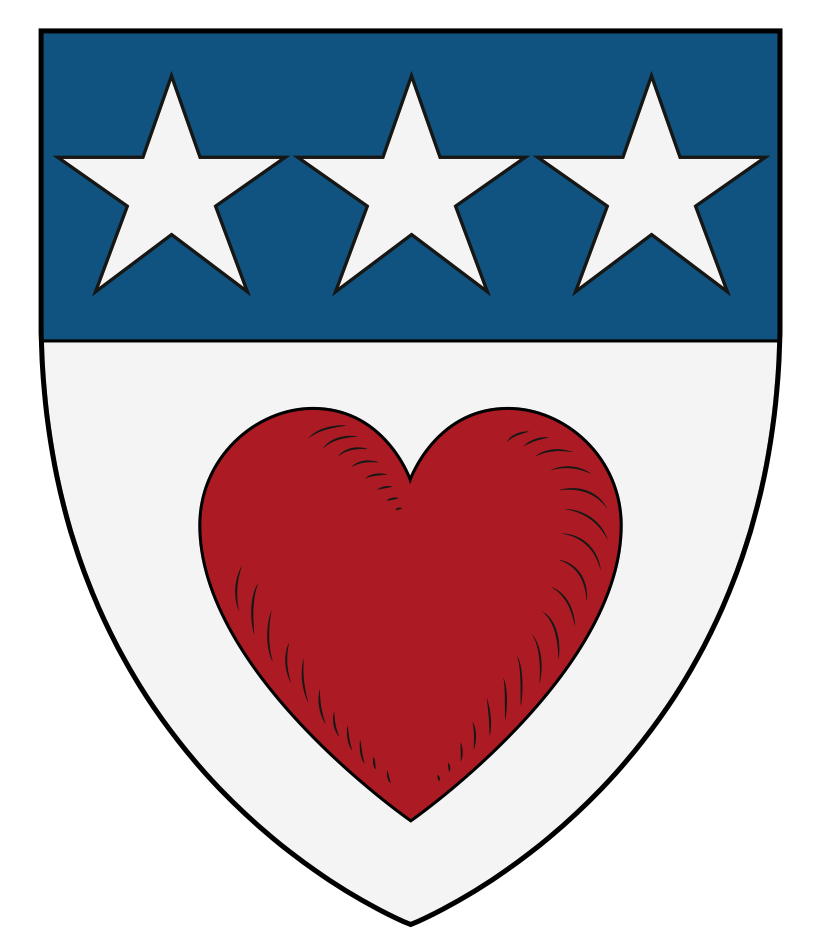
Image credit: Wappenwiki.
Margaret Stewart, 4th Countless of Angus
Margaret Stewart, was Countess of Angus by marriage and Countess of Angus and Lady of Abernethy in her own right.
Margaret was the daughter of Thomas Stewart, 2nd Earl of Angus and Margaret Sinclair, the daughter of Sir Henry Sinclair of Rosslyn, a signatory to the 1320 Declaration of Arbroath, and Alice de Fenton.
Thomas, 2nd Earl of Angus was the son of John Stewart, who in turn was a son of Sir Alexander Stewart of Bonkyll, who died at the 1298 Battle of Falkirk and younger brother of James Stewart, 5th High Stewart of Scotland. In 1328, John Stewart had married Margaret, Lady of Abernethy, suo jure, and a year later, he was created 1st Earl of Angus.
Margaret Stewart married to Thomas, Earl of Mar but had no children with him. Following her husband’s death in 1374, she had an affair with William Douglas, 1st Earl of Douglas, who was married to her late husband’s sister. With the Earl of Douglas, she had two illegitimate children, George Douglas, 1st Earl of Angus (circa 1380–1403) and the Lady Margaret Douglas, who in 1404 received the lands of Bonjedward from her half-sister, Lady Isabel Douglas.
Margaret, Countess of Angus, suo jure, secured a charter bequeathing her estates for her son, George Douglas, and in 1389 he was confirmed as Earl of Angus by King Robert II.
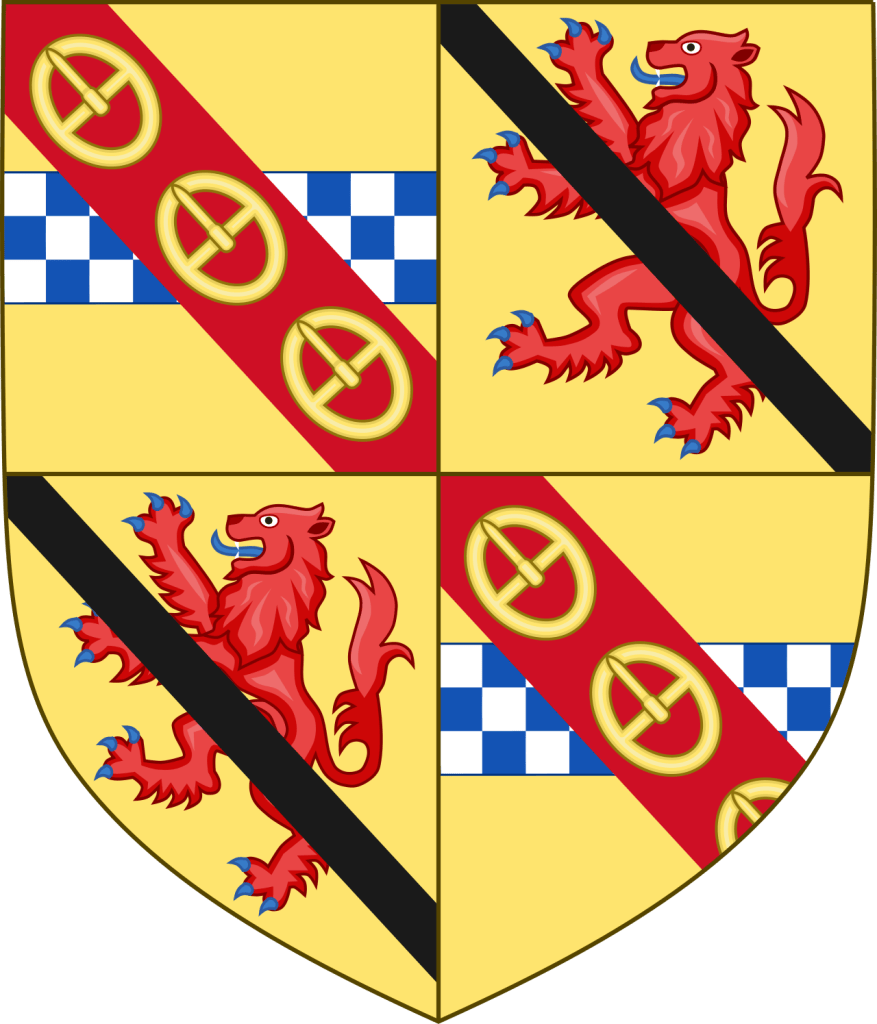
Image credit: Wappenwiki.
John Stewart, King Robert III of Scots
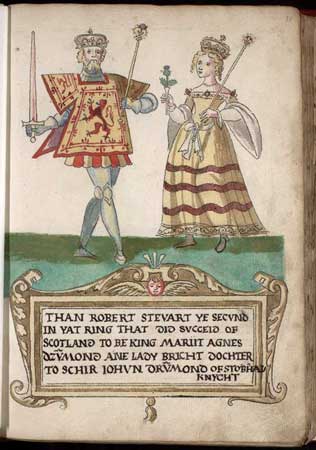
Used with the permission of the National Library of Scotland.
King Robert III has been discussed in previous articles including The Royal Stewart ancestry of Barbara Blair, wife of John Drummond, 8th of Colquhalzie: Part 2 The Royal Stewart Connection and Lords of Misrule and the Barons of Brechin.
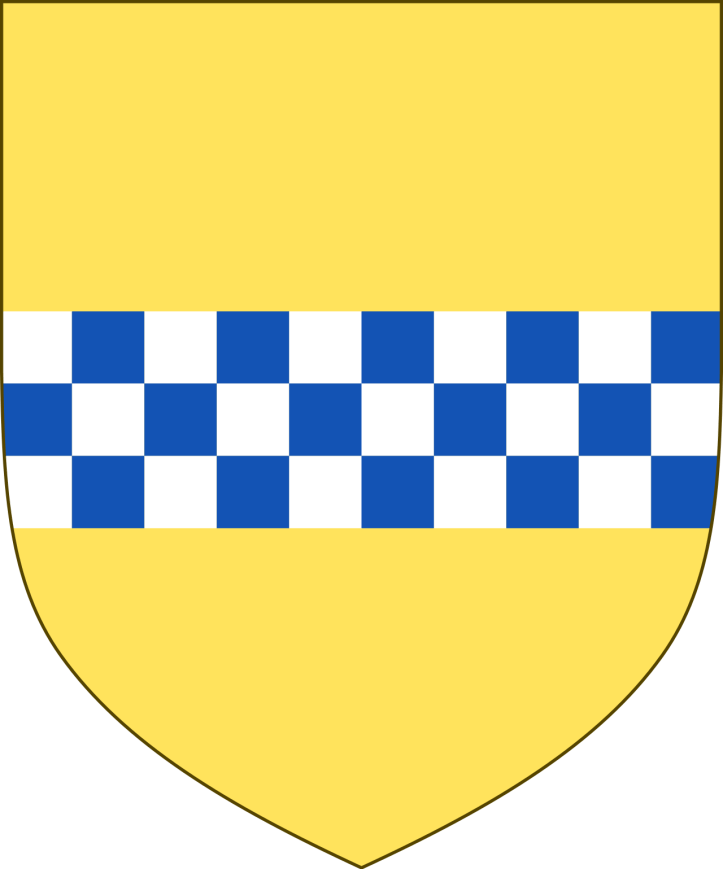
Image credit: Julie Anya Guthrie.
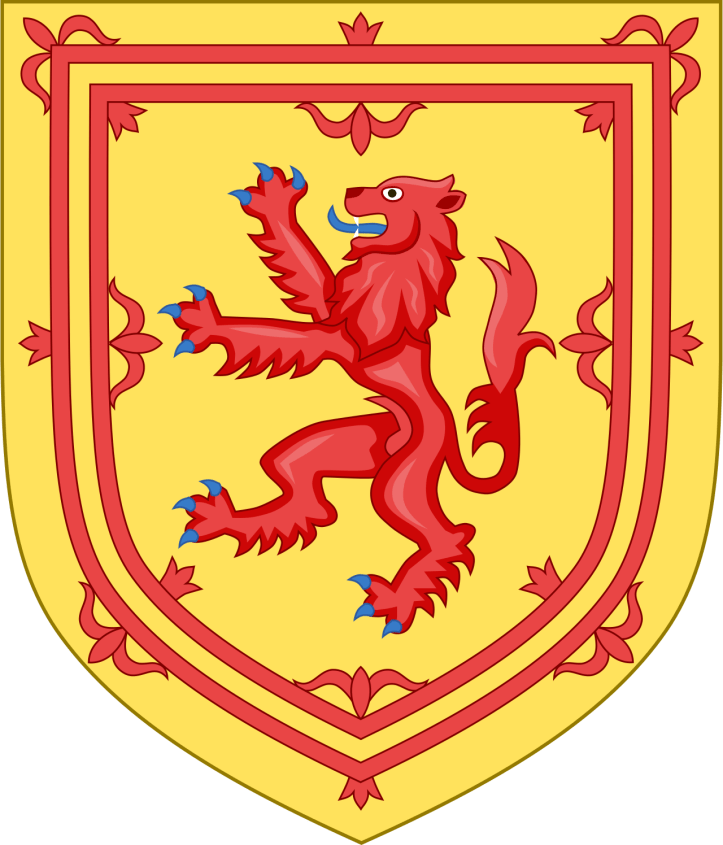
Image credit: Julie Anya Guthrie.
Annabella Drummond, Queen consort of Scots
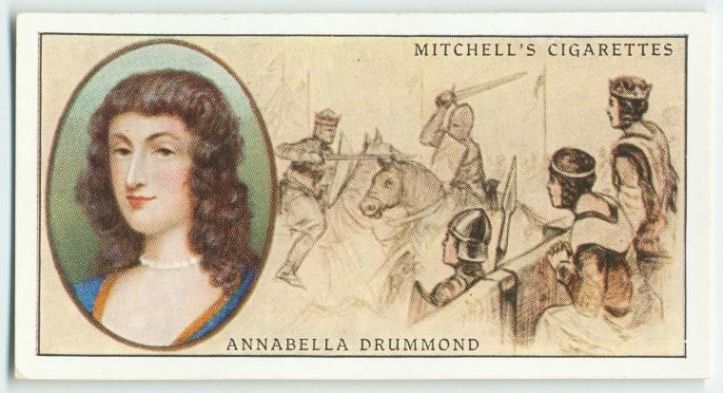
Photo credit: The New York Public Library.
Annabella Drummond, Queen consort of Scots has been discussed in previous articles including The Royal Stewart ancestry of Barbara Blair, wife of John Drummond, 8th of Colquhalzie: Part 2 The Royal Stewart Connection and Lords of Misrule and the Barons of Brechin.
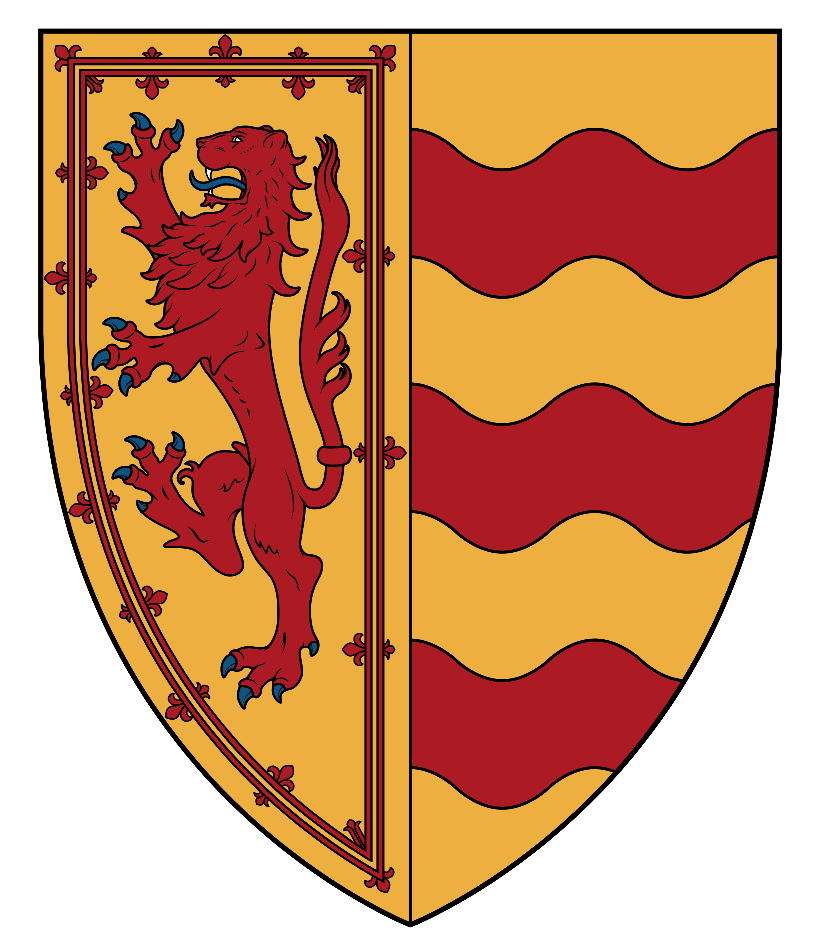
Image credit: Wappenwiki.
Post Script
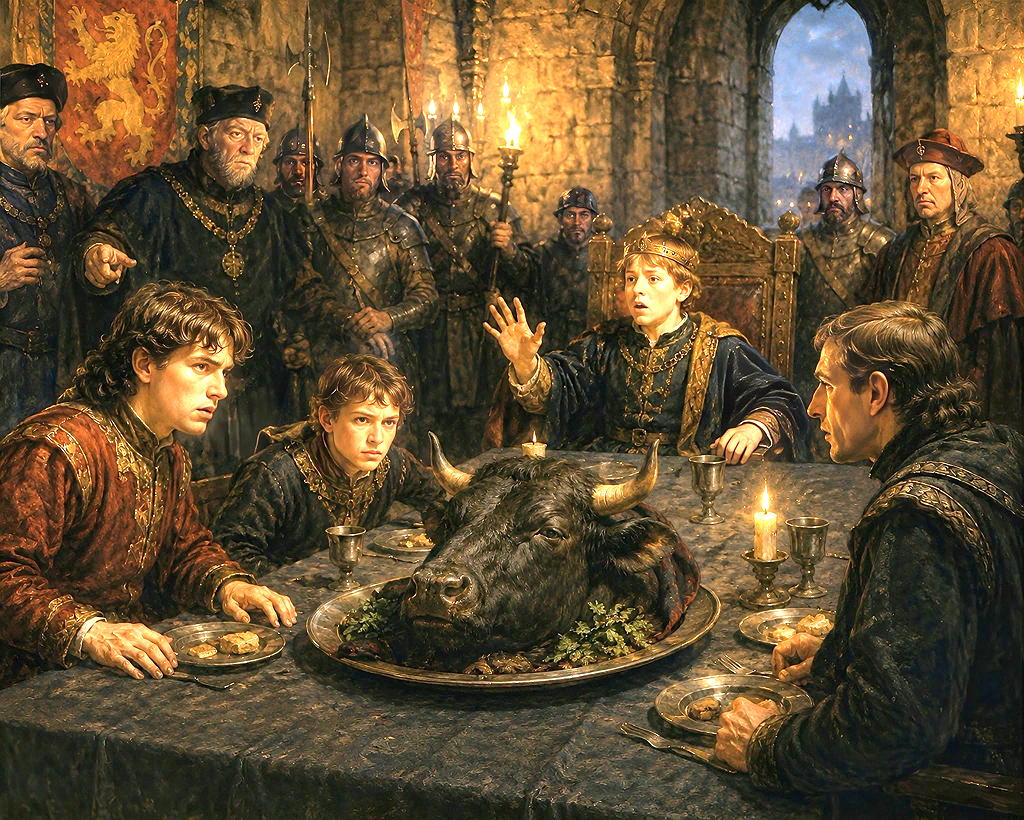
Image credit: The Tudor Intrudors on Facebook.
In the Edinburgh Castle audio guide, George R. R. Martin confirms that the Black Dinner of 1440 and the Glencoe Massacre of 1692 were his inspirations for the Red Wedding in Game of Thrones.
The Red Wedding was a massacre that took place during the War of the Five Kings, arranged by Lord Walder Frey as revenge against Robb Stark, King in the North, for breaking the marriage pact between House Stark and House Frey. The massacre was authorised by House Lannister, who sought to put an end to Robb’s rebellion against the Iron Throne.
Next article
In Part 3(b) we have covered the ninth generation of the heraldry of the ancestors of Barbara Blair.
In Part 3 (c) we will look at the tenth generation who include King Robert II, first of the Stewart Kings, and Marie de Montifex, through whom the Drummonds inherited the Barony of Auchterarder, a crucial element of our ancestral history.
 Vecchio