
“This tremendous story is not all blood and fire, battle and treachery. There is humour and laughter too, colour and beauty, faith and love – love of men and women, beyond all telling. And pride – pride and a great ideal, when all else was gone.“
From the Foreword to Nigel Tranter’s Robert The Bruce, The Steps to the Empty Throne. (1969).
Barbara Blair and the Barons of Brechin
In this article we look deeper into the ancestry of our great (x10) grandmother, Barbara Blair, focusing on the Barons of Brechin.
Nigel Tranter
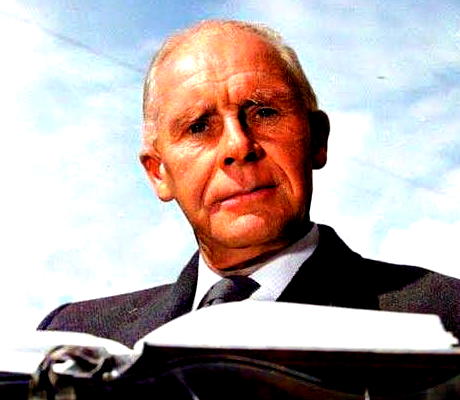
Photo from the author’s own collection.
Nigel Tranter OBE was a prolific author of Scottish historical novels. He was the inspiration for my own interest in Scottish history, visiting castles, and researching our family history.
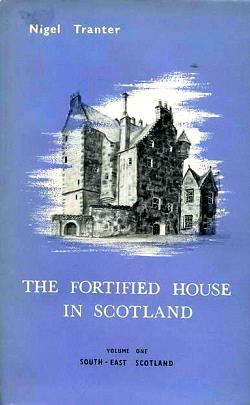
Interestingly, I discovered Nigel Tranter’s own journey had been similar to my own. He too had an interest in Scottish castles and visited more than 600 of them to study their history and architecture. He published these studies in five volumes as The Fortified House in Scotland, a landmark series that is still highly regarded today.
When visiting Scottish castles, I invariably purchased a guide book, most of which included plans of the castle and also the fascinating histories of the families who had lived there.
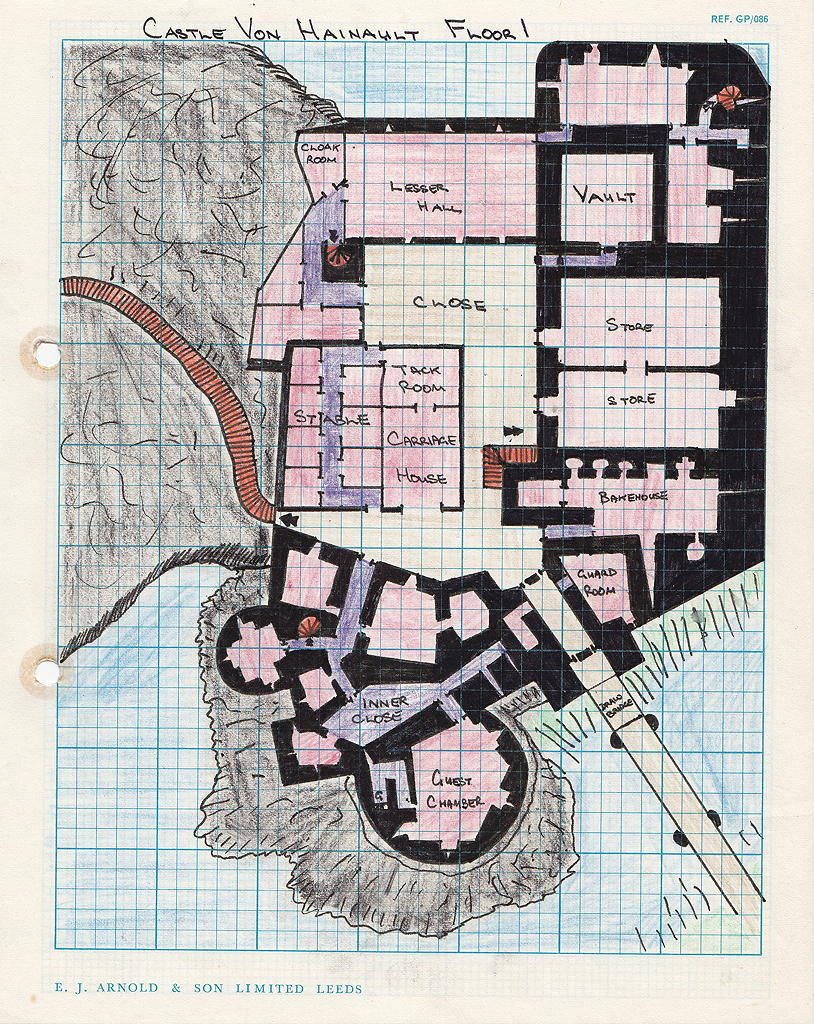
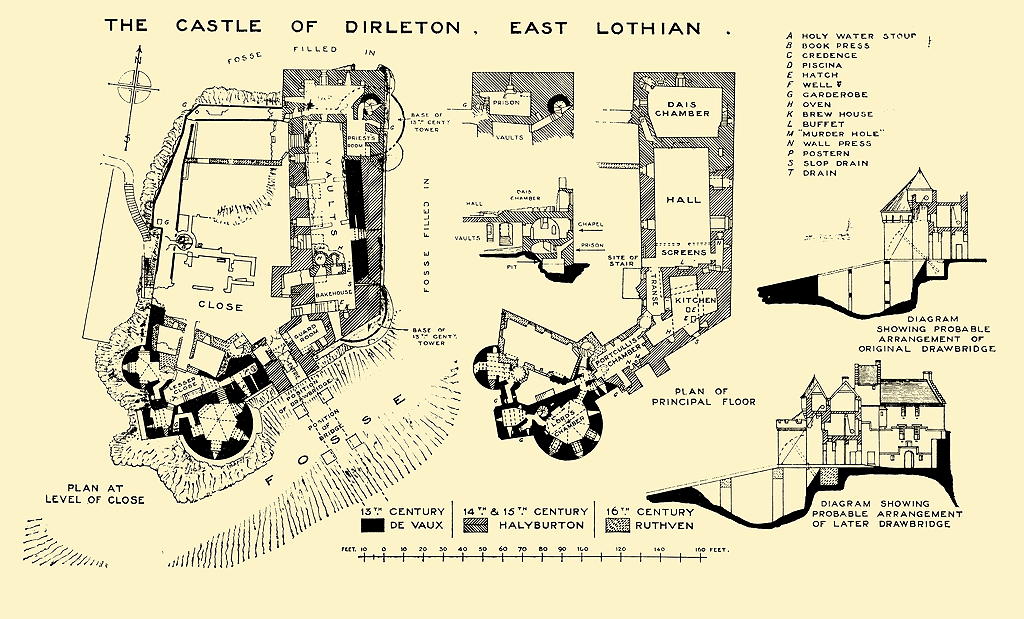
Author: James Smith Richardson FSA Scot (1883–1970), first Inspector of Ancient Monuments for Scotland.
Similarly, while researching his “The Fortified House in Scotland” series, Nigel Tranter became interested in the people who had lived in these castles and the historical events that had taken place in and around them and he used what he discovered to write a series of novels. While the dialogue in the novels was invented, Nigel Tranter’s in-depth knowledge of Scottish history allowed his books to be composed around actual historical events. The books achieved enormous popularity and also encouraged readers to delve deeper into the then largely-neglected field of Scottish history. When I was young, Scottish history was largely ignored in schools, with the focus being on “nationally-important” events such as the 1066 Norman invasion of England.
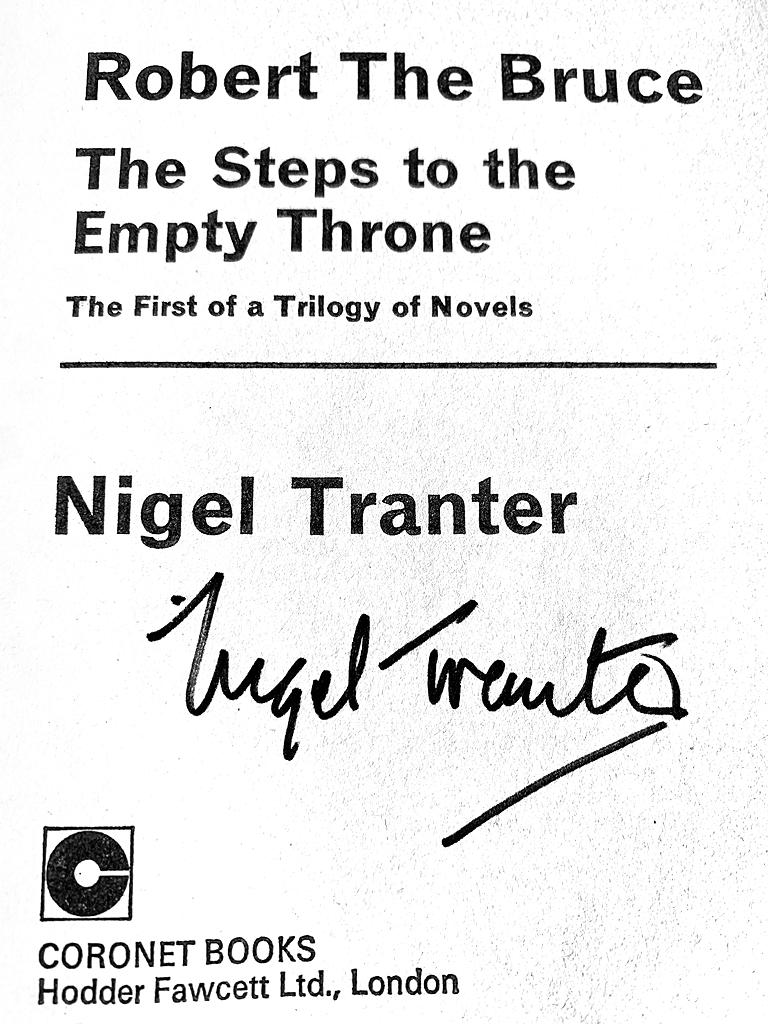
Recently, I attended a lecture by Sir Tom Devine, Emeritus Professor of Scottish History and Palaeography, and afterwards he told me that he had met Nigel Tranter. Like me, Professor Devine had found Nigel Tranter’s work to be inspirational. Nigel Tranter’s novels were written at a time when Scottish history was not easily accessible to the general public and when history was often seen to be boring and irrelevant. Nigel Tranter’s great gift was to be able to make Scottish history interesting – something which countless generations of historians had failed to do. As he explained in The Story of Scotland, in 1987:
“Let there be no mistake about this – I am not setting out to write a history book. For one thing, I am not a qualified historian – only a story-teller with an interest in history. For another, all too often history books are dull, dull – and that in my eyes is a crime. How anyone can make history dull and boring is beyond my conception, especially Scotland’s history, for history is in fact the most dramatic, colourful and exciting subject under the sun, the very essence of mankind’s greatness and weakness, efforts and failures, heroics and cowardices, ambitions, knaveries and folies – indeed everything which story-telling is based upon, the very raw materials of drama, tragedy, comedy, farce. Yet generation after generation of academic historians have somehow managed to make history dull for millions of folk, in book and classroom, almost impossible as this may seem, by producing catalogues of dates, births, deaths and marriages, wars, treaties, alliances, movements and so on. All these, to be sure, do make up the skeleton, as it were, of history, but the flesh consists of the stories of men and women like you and me, their trials, temptations, triumphs, treacheries, even tendernesses. If I did not know better – for I have to read endless history-books, woe is me – I would defy anyone to make all that dull.”
Lord of Misrule
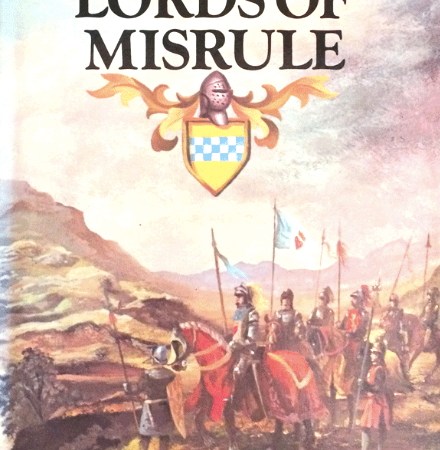
Nigel Tranter wrote more than 130 books, including around sixty historical novels. The first, of many, that I read was his 1976 novel, Lords of Misrule, the first in his Stewart Trilogy.
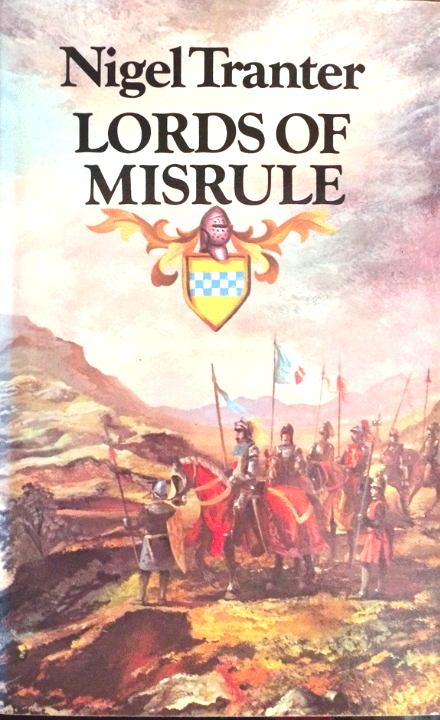
The first Stewart King, Robert II, was the grandson of King Robert the Bruce. However he was older than his half-nephew, King David II, who was a late-born son of Robert the Bruce and his second wife, Elizabeth de Burgh. Robert II was the son of Marjory Bruce, and her husband Walter Stewart, 6th High Stewart of Scotland. Marjory was the daughter of Robert the Bruce and his first wife, Isabella of Mar, and was named after her paternal grandmother, Marjory, Countess of Carrick in her own right. After years of imprisonment in England, Marjory Bruce was released after the Battle of Bannockburn, only to die in a riding accident less than two years later, on 7th February 1316. Marjory was just 20 years old, but left behind a son, Robert, who would go on to become King Robert II.
Marjory Bruce’s importance was acknowledged more than 200 years later by her descendant, King James V. Following the defeat of the Scots by the English at the Battle of Solway Moss, on 24 November 1542, King James V suffered a nervous collapse. He retired to Falkland Palace in Fife and took to his bed with a high fever. When a messenger arrived to tell him that his pregnant queen had given birth to a daughter instead of the hoped-for son, he believed that the Stewart dynasty was at an end. He is said to have “turned his head to the wall” and six days later, he was dead. His famous last words were reputedly:
“It cam wi’ a lass and it will gang wi’ a lass!“
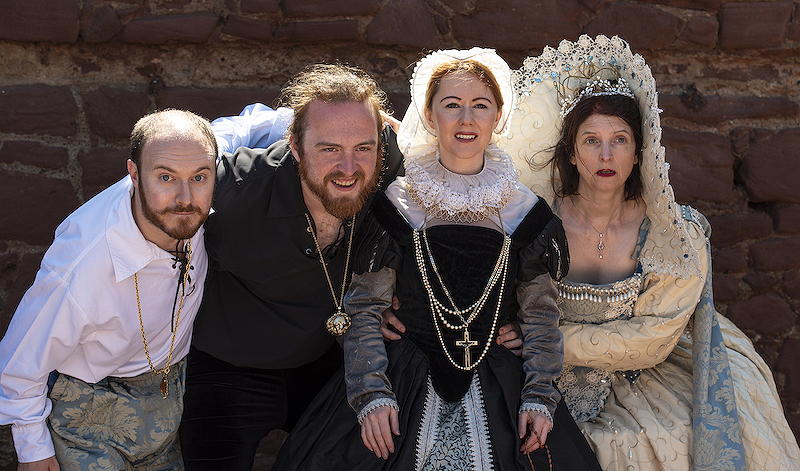
“Mary. It began with a lass…” at the Battery Theatre, Dunbar, 17th April 2020.
Photo Credit: Battery Theatre Company on Facebook.
King James V was aware that the crown had come to the Stewarts through Marjory Bruce’s marriage and he believed that via his daughter Mary, the crown would pass, again by marriage to a different dynasty. Ironically, the crown remained in the Stewart family as Mary married, as her second husband, Henry Stuart, Lord Darnley, a direct male-line descendant of Sir John Stewart of Bonkyl, who had died at the 1298 battle of Falkirk and was the uncle of Marjory Bruce’s husband, Walter Stewart. Their son James VI went on to succeed Queen Elizabeth of England, perhaps fulfilling the motto/prediction that Mary, Queen of Scots had embroidered not long before her execution:
“En ma Fin gît mon Commencement.”
(“In my end is my beginning.” )
Robert II was aged almost 55 by the time he inherited the throne from his half- nephew in 1371. He had been very active during the Wars of Independence and had acted as Regent during the captivity in England of David Bruce. But by 1371, he was seen to be elderly and past his prime. David Bruce had died at the age of 44, while Robert the Bruce had been 54 when he died.
Robert II had fathered many children, both with his two wives and with his several mistresses.
The Royal House of Stewart was as dysfunctional as it was large.
King Robert II’s eldest son, John, Earl of Carrick (later King Robert III) had been kicked by a horse and lamed. This prevented him from being as active as he would have liked. He was also of a more retiring nature than his almost larger-than-life younger brothers. This was still a time when Kings were expected to lead their armies into battle. Just a few generations earlier, Tanistry (selecting the most able candidate from the royal derbfine) rather than primogeniture (where the eldest male heir of the previous monarch succeeded) had been the system used to select kings. Under the system of Tanistry, John, Earl of Carrick would undoubtedly have been passed over for a “more suitable” candidate, perhaps one of his brothers, or another close relative.
The second son, Walter Stewart, had married Isabella MacDuff, in 1360. She was an important heiress as she was Countess of Fife in her own right. However Walter had died not long after the marriage, in 1362, while still in his twenties, without leaving any children.
The third, but second surviving son, was Robert Stewart, the archetypical Wicked Uncle. In 1361, he married Margaret Graham, Countess of Menteith in her own right and gained control of that Earldom. In 1371, he somehow managed to persuade his sister-in-law to resign the Earldom of Fife in his favour. In 1398 he was created Duke of Albany by his brother and in 1403, King Robert III granted Albany the Earldom of Atholl.
As if all this was not power enough for just one man, Parliament appointed him as Guardian of Scotland on 1st December 1388, replacing his elder brother, John, Earl of Carrick. John, Earl of Carrick succeeded as King Robert III in 1390, but due to his infirmity, Robert, Earl of Fife continued as regent until 1393, when he was forced to return power to his brother, King Robert III.
In 1399, David, Duke of Rothesay, the heir to the throne was appointed as Regent, but he soon came into conflict with his uncle Robert, Duke of Albany, who arrested him in late 1401. David, Duke of Rothesay died in mysterious circumstances soon afterwards while Albany’s prisoner at Falkland Castle in Fife. Many believed that he had been starved to death.
From the author’s own collection.
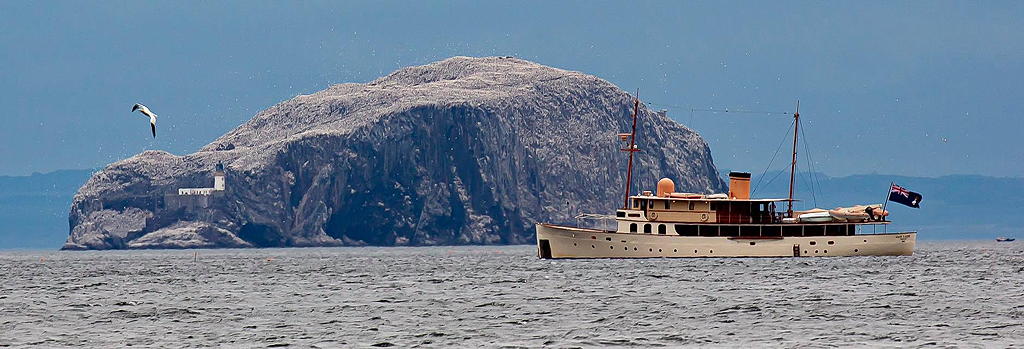
King Robert III, for once, took decisive action and arranged to send his only surviving son, James, now Duke of Rothesay, to France for safety. However, James only made it as far as the Bass Ross (which I could see from one of the bedrooms in our previous house). On 22nd March 1406, James was captured by English pirates, who were believed to have been tipped off by Albany. James was handed over and imprisoned for 18 years by one of the many English King Henries. The news of his son’s capture seemed to be the final straw for King Robert III and he died on 4th April 1406, aged 68.
Robert III’s death meant James was now King James I and the English had a very valuable hostage indeed. Between years of minorities and years of captivity in England, many Kings of Scots had little time to rule as opposed to reign and James I was one of them. Robert, Duke of Albany did little to attempt to secure the release of his nephew from his captivity as the situation suited him perfectly. It left Albany as King of Scots in all but name.
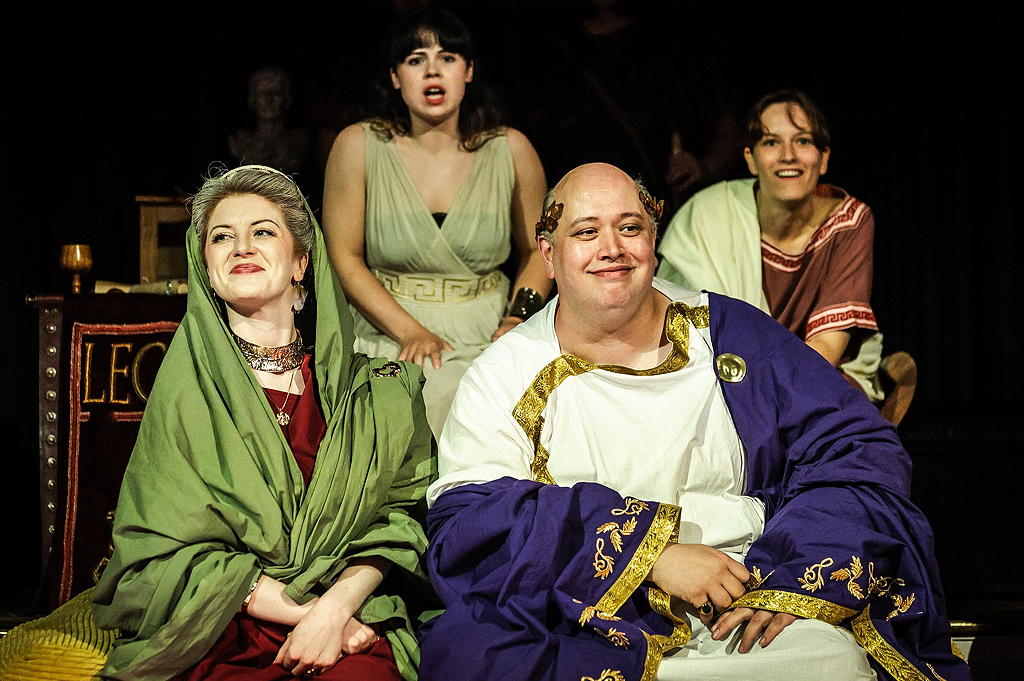
Photo credit: Strawmoddie Theatre Company.
As with Livia, wife of Roman Emperor Augustus, Robert, Duke of Albany tends to get a very bad press. Livia was played to perfection by Dame Siân Phillips in the superb 1976 BBC adaptation of Robert Graves’ I, Claudius. Livia was portrayed almost as the ultimate Disney villainess, making Cruella de Vil (101 Dalmations – 1996) appear to be simply Miranda Priestley (The Devil Wears Prada – 2006 & 2026)’s slightly less politically-correct grandmother. (Both roles were, appropriately, played by Glen Close). But, some might argue that Albany was perhaps the best man for his times, and like Livia, that he may have removed, what he thought, were obstacles to the best rule of the Empire/Kingdom? The jury is out…
Robert Stewart, 1st Duke of Albany died at Stirling on 3rd September 1420, aged 81. He was one of the longest lived of the Royal House of Stewart and had ruled Scotland almost continuously for over 30 years. He was succeeded as Governor of Scotland by his son, Murdoch, 2nd Duke of Albany.
Meanwhile, King James I ‘s relationship with his English captors changed dramatically in February 1424 when he married Joan Beaufort, a cousin of King Henry VI. On 28th March 1424, King James I attached his seal to a document agreeing to pay a ransom of £40,000 sterling for his release. King James I and Queen Joan arrived at Melrose Abbey on 5th April 1424. There they were met by Murdoch, 2nd Duke of Albany, who was obliged to relinquish his seal of office of Governor of Scotland. Thus ended the rule of the House of Albany.
The inevitable showdown came soon after. Once James had consolidated his position as King, he took his revenge for his elder brother’s murder and his own betrayal, capture and 18 years of incarceration. In 1425, Murdoch, 2nd Duke of Albany was put on trial for treason, found guilty, and beheaded along with his father-in-law, the 80 year old Earl of Lennox. This completed the Fall of the House of Albany.
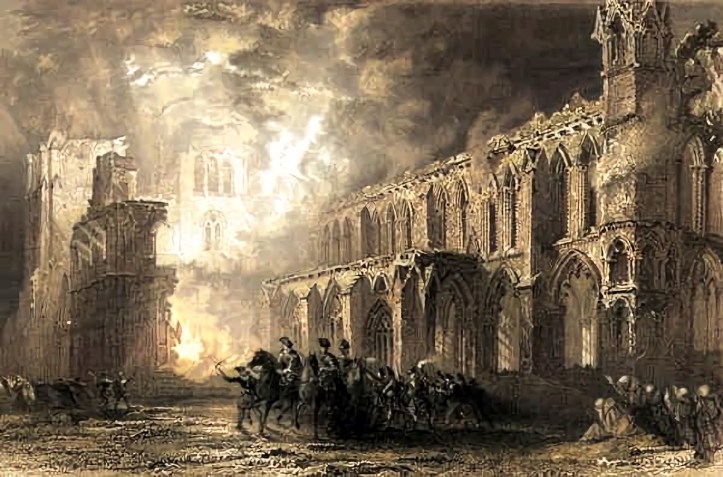
King Robert II’s fourth, but third surviving son was Alexander Stewart, who was also a rogue, but from a very different mould to Albany’s. He was created Earl of Buchan by his father and, like his brothers, he also found an heiress to marry – Euphemia, Countess of Ross in her own right. However, unlike his brothers, Alexander deserted his wife, preferring to live with his mistress Mariota de Athyn, with whom he had several illegitimate children. One of these was Alexander Stewart who later went on to become Earl of Mar and victor of the 1411 Battle of “bloody” Harlaw. The Bishop of Moray chastised Alexander, Earl of Buchan for his behaviour and demanded that he return to his wife. Buchan’s response to the bishop was typically swift and clear – he attacked Elgin and burned down its cathedral!
King Robert II also had sons by his second marriage. The elder was David, Earl Palatine of Strathearn, and Earl of Caithness who died in 1390, leaving a young daughter, Euphemia, as his heiress. Euphemia’s husband, Patrick Graham, was murdered on 14th July 1413, by his brother-in-law, Sir John Drummond of Concraig, elder brother of our ancestor, John Drummond, 1st of Colquhalzie.
The younger son from the second marriage was a second Walter, Baron of Brechin, who later became Earl of Atholl and Earl of Caithness. Walter Stewart was one of the jury who condemned his nephew, Murdoch Stewart, 2nd Duke of Albany to death in 1425.
However, the demise of the Albany Stewarts was not the end of the problems for King James I. The marriage of Robert Stewart (later King Robert II) and his first wife, Elizabeth Mure of Rowallan, was said by some to be un-canonical and consequently, it was claimed, their children, including King James I’s father, King Robert III were illegitimate.
To counter these claims, Robert Stewart and Elizabeth Mure of Rowallan had obtained a Papal dispensation dated 22nd November 1347 at Avignon and they were formally remarried.
This should have been the end of the issue. According to Scots law, unlike English law, even if the first marriage had been un-canonical, the second marriage would have legitimised their children.
Nevertheless, some, especially the sons of Robert II’s second marriage, to Euphemia Ross, continued to believe that they had a better right to the throne than the sons of Elizabeth Mure of Rowallan.
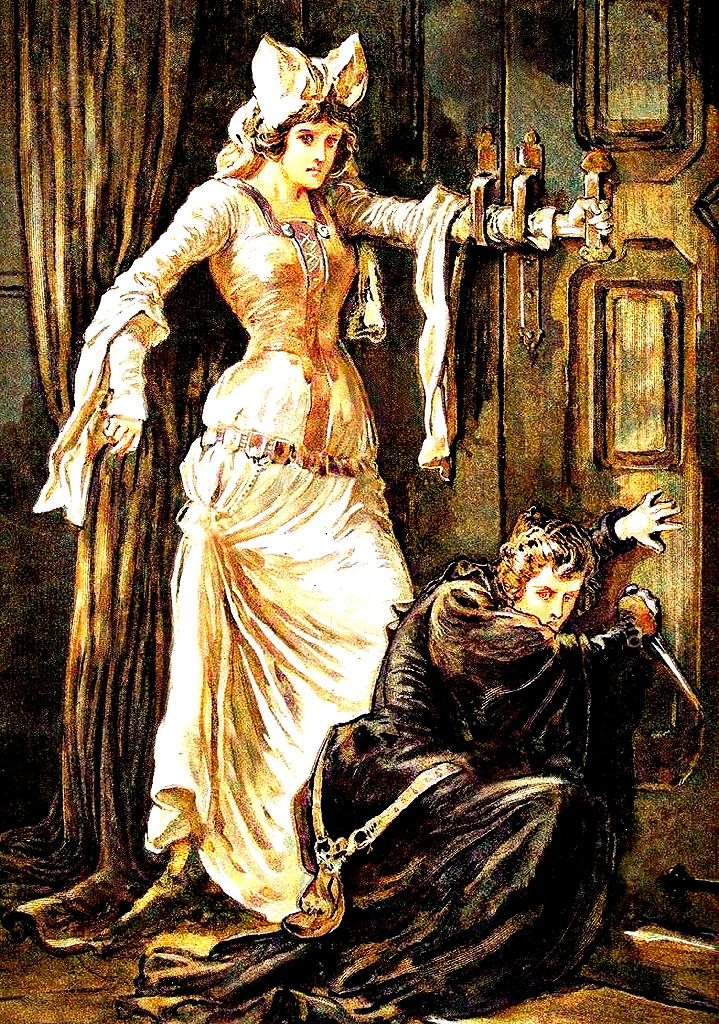
In 1437, King James I’s uncle Walter Stewart finally took his own steps to the not so empty throne. Walter and his sons managed to surprise his nephew, King James I at the Blackfriars monastery in Perth. Despite the valiant attempts of the Queen and her ladies to cover the King’s escape, he was apprehended and assassinated.
Gordon Browne (1858-1932) From A History of the Scottish People (1893)
As a result of the assassination of King James I, Walter Stewart of Brechin finally obtained what he had always desired – a coronation. But it was not quite how he imagined it would be.
There was very little support for Walter and people rallied around the widowed queen, Joan Beaufort, and her six year old son, who was now King James II of Scots. The queen dowager was the aunt of Margaret Beaufort and therefore the great aunt of King Henry VII of England and great (x2) aunt of King Henry VIII. And Joan’s revenge was typical of that of the Beauforts and their descendants.
So, Walter Stewart was indeed crowned, but not with the Crown of Scotland. His was a red hot crown inscribed with:
“The King of The Traitors.”
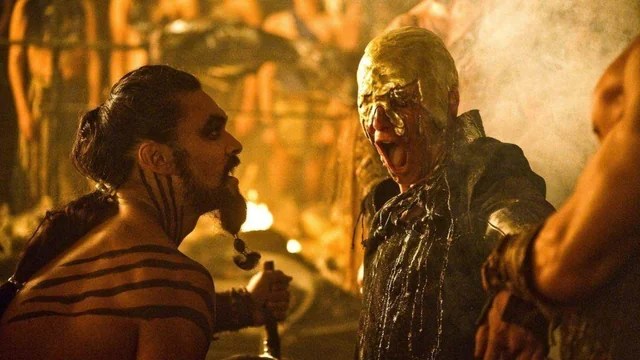
I believe that Walter Stewart’s “coronation” was the event that inspired George R. R. Martin for the death of Prince Viserys in Game of Thrones. When a drunken Viserys threatens his sister Daenerys at sword-point, her husband Khal Drogo agrees to give the prince the “golden crown” that he has demanded. As Drogo’s bloodriders restrain Viserys, the Khal pours molten gold on his head. Watching her brother burn to death while he begs for her to not let them kill him, Daenerys coldly remarks:
“He was no dragon. Fire cannot kill a dragon“.
The Barons of Brechin
Lords of Misrule covered the events above and numerous others including the death of the second Earl of Douglas at the 1388 Battle of Otterburn, and was an inspiration to me.
This was a period of history that, until then, I had known almost nothing about. We had studied the 1388 Battle of Otterburn at school but then I had been unclear that the Douglases were Scots and that Hotspur Percy was English.
The second-last named person in the cast of characters of Nigel Tranter’s Lords of Misrule was “Walter Stewart, Lord of Brechin“, youngest legitimate son of King Robert II by his second marriage.
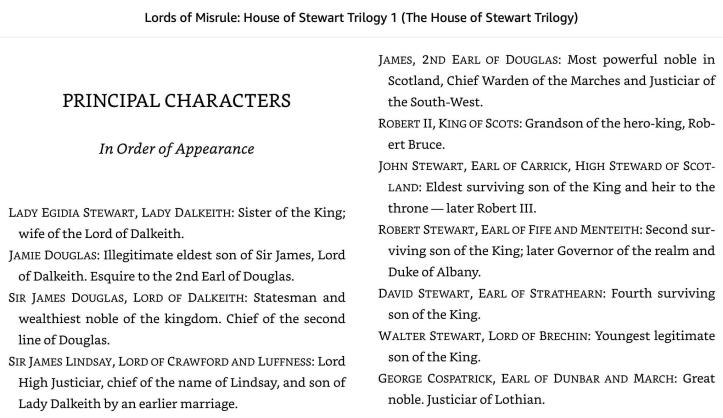
Recently, I finally discovered how Walter Stewart, “The King of The Traitors” came to be Baron (or “Lord”) of Brechin. It should be noted that Brechin was a Barony, not a Lordship of Parliament. However as both Barons and Lords tended to be described in charters as “Dominus” in Latin, both Barons and Lords, inevitably, end up being translated as “Lord” in English.
Walter Stewart had married the daughter of Sir David Barclay, Baron of Brechin, whose other daughter, Joneta, was the ancestor of our own Mercers. Through the Mercers, he was an ancestor of our Barbara Blair, who married John Drummond, 8th of Colquhalzie. I had found Nigel Tranter’s novels absolutely fascinating. And now it is equally fascinating to think that we can trace our relationships to all of the people in his novels.
The discovery that we were related to Walter of Brechin inspired me to attempt to sort out the ancestry of the Barons of Brechin. I already had most of the people in my tree, but they were unconnected and a couple of them were even represented three times. It took a fair bit of sorting out, but eventually, I was able to trace the ancestry of Barbara Blair, mother of our Thomas Drummond in Auchterarder, back via the Mercers and Barons of Brechin to Henry, first Baron of Brechin, who was an illegitimate son of David Earl of Huntingdon.
The thumbnail image below shows Barbara Blair’s descent from her great (x13) grandfather David, Earl of Huntingdon via the Barons of Brechin, the Mercers of Meikleour and the Blairs.
David, Earl of Huntingdon is a largely unknown but crucial figure in our history. He was a younger brother of King Malcolm IV, who died childless, and of King William the Lion. King William’s line became extinct when Queen Margaret, the Maid of Norway, died in 1286 in Orkney. This lead to generations of civil wars between the competitors for the throne and invasions by English Kings, that did not end until James VI of Scots inherited the English throne in 1603.
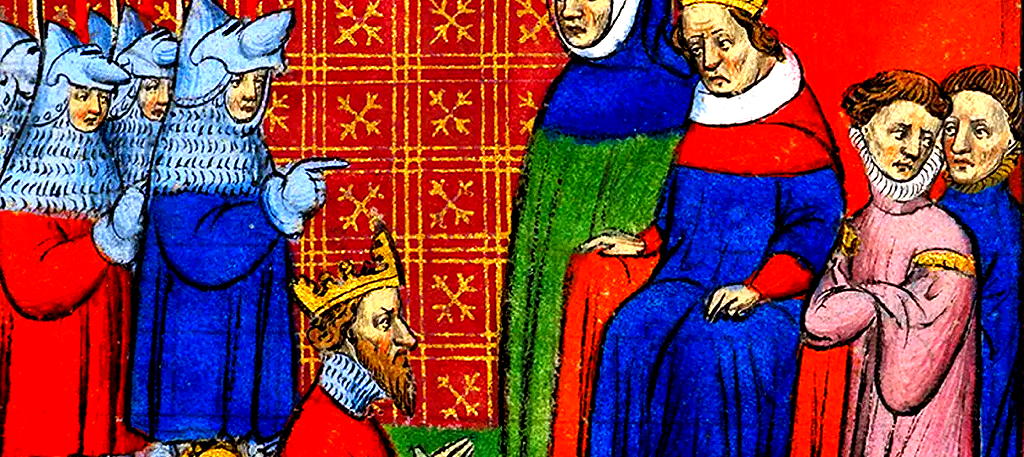
Image credit: The British Library.
David, Earl of Huntingdon left no legitimate sons, only daughters. The eldest, named Margaret, had a daughter named Devorgilla, whose son John Balliol was chosen by King Edward I of England as John, King of Scots. King John’s repeated humiliation led to his rebellion against his English Lord Paramount, his defeat at the first (1296) Battle of Dunbar, and his deposition as King of Scots.
The second of David, Earl of Huntingdon’s daughters was Isabella. She was the mother of Robert Bruce, 5th Lord of Annandale, who was known as “the competitor”. Robert Bruce was the closest male relative of King Alexander II, and had served as Regent during King Alexander II’s minority. He had been officially acknowledged as heir presumptive should King Alexander die childless. Although his claim was rejected by Edward I of England, his grandson, Robert “the Bruce” declared himself King in 1306 and defeated King Edward II of England at Bannockburn in 1314.
How different history might have been if David, Earl of Huntingdon had married Henry of Brechin’s mother and Henry’s grandson David had succeeded the Maid of Norway in 1286 to become King David II of Scots.
But, as Timothy Dalton (King Philip II of France) informed John Castle (Prince Geoffrey) in The Lion in Winter:
“‘What if” is a game for scholars!“
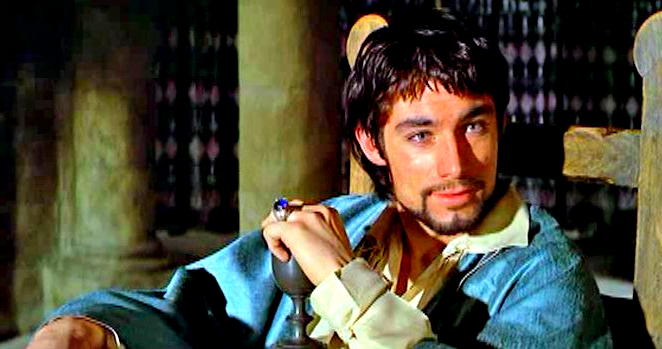
Philip II: “What If” is a game for scholars. What if angels sat on pinheads?
Geoffrey: What if I were king?
Philip II: It’s your game, Geoff. You play it.



[…] Bruce was succeeded by his half- nephew, Robert Stewart, who became King Robert II. As detailed in Lords of Misrule and the Barons of Brechin, the Stewart family was dis-functional as it was numerous. George Douglas, 1st Earl of Angus, was […]
LikeLike
[…] King Robert III has been discussed in previous articles including The Royal Stewart ancestry of Barbara Blair, wife of John Drummond, 8th of Colquhalzie: Part 2 The Royal Stewart Connection and Lords of Misrule and the Barons of Brechin. […]
LikeLike