
This article was originally intended to be published in January 2024, however it was delayed so that some of the conclusions could be published by a member of the Lammermoor team as a book chapter. Now that the embargo has been lifted, more than two years on, we can again return to our story of the links between the Fife and East Lothian Prides.
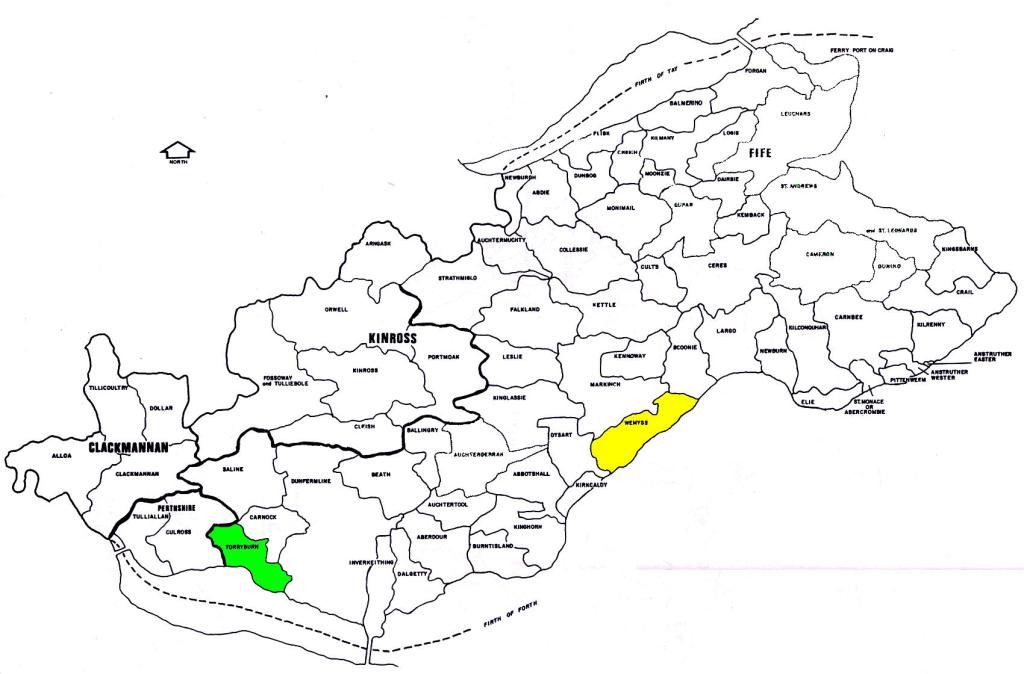
In Part I of this series, published on 24th December 2023, we revealed that on 19th March 1693, John Pride, Collier and Christian Pride, coal bearer in the employment of the Laird of Prestongrange, both single and unmarried, appeared before the Kirk Session of Saltpreston (Prestonpans) accused of cohabitation and fornication. It turned out that they had only recently arrived in East Lothian from the parish of Weims (Wemyss) in Fife, having deserted their work there.
However, they were not the only Prides to cross from Fife to the Lothians as we found further evidence in the Kirk Session Minutes that in 1669, some 24 years earlier, another Pride couple had moved across the Firth of Forth, this time from Torryburn parish in Fife to Newbattle parish in Midlothian.
Coalmines and Salt Pans
Before the industrial revolution, coal was not only used to heat houses, it was required in vast quantities to boil sea water in order to produce salt. Salt was a vital part of Scotland’s economy, and remained so until the eighteenth century. This commodity was so valuable that salt was referred to as “white gold” (whereas coal was “black gold“). In the 1790s around six tons of coal were required in order to produce one ton of salt. It is for this reason that Salt Pans were generally found firstly on the coast, and secondly beside coal mines, eg at Saint Monans in Fife or Prestonpans (Salt Preston) in East Lothian.
Coalmining in Fife
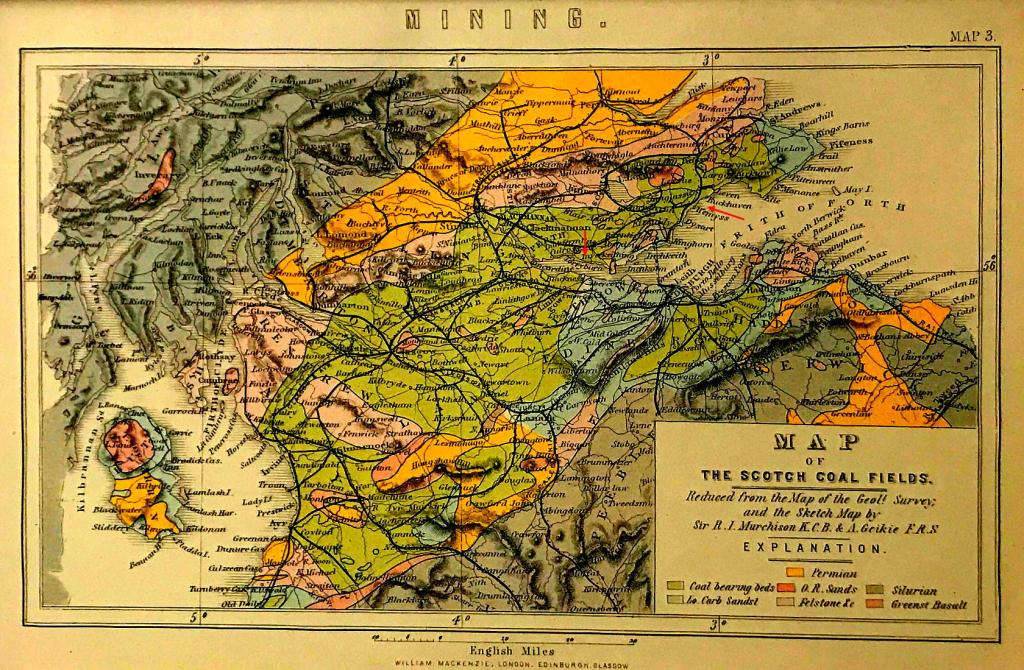
Before looking at the Prides in question, it is worth remembering that Fife was one of Scotland’s main coal mining areas for hundreds of years. It was traditionally divided into the West Fife, Central Fife and East Fife coalfields with more than 50 Fife collieries producing coal between the middle of the nineteenth century and the end of an era when the last Fife mine closed in 1988. As with Preston Grange in East Lothian, some of the Fife mines continued under the Firth of Forth, following the Leven Syncline which connects the two regions. In addition to the large industrial scale mines, there were also many small coalfields in the East Neuk of Fife, and other areas, that had been mined for centuries before the appearance of the large scale collieries of the 20th century.
Early coal mining in Torryburn & Bell Pits
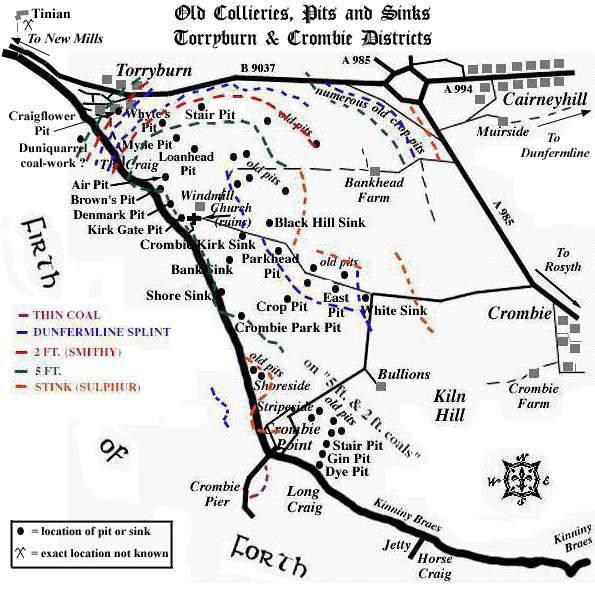
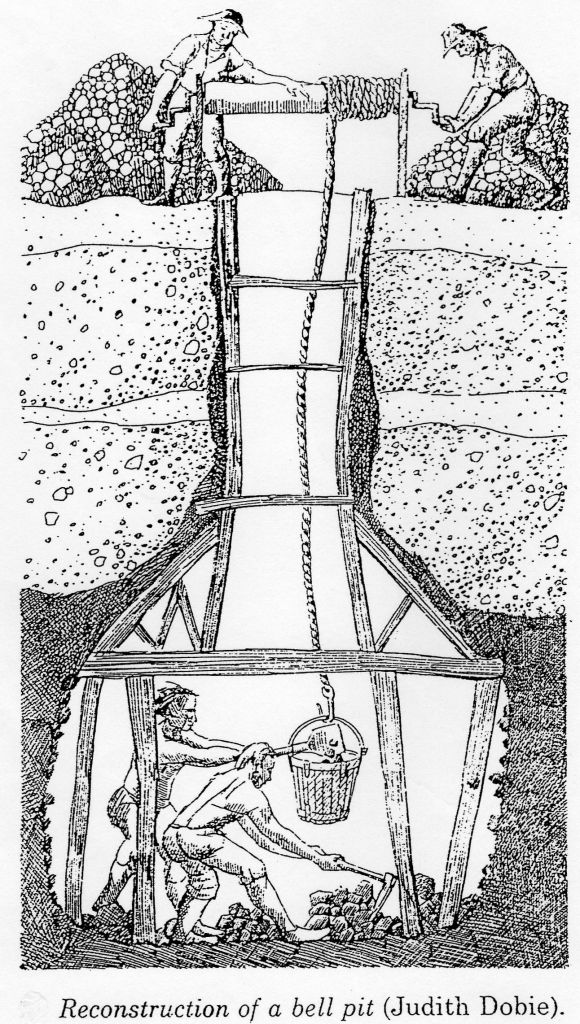
Bell pits were first used back in prehistoric times, and they continued to be dug throughout the Middle Ages, with a few continuing to be used as late as the early twentieth century. The best known examples of Bell Pits are probably the extensive prehistoric flint mines known as “Grime’s Graves” in Norfolk.
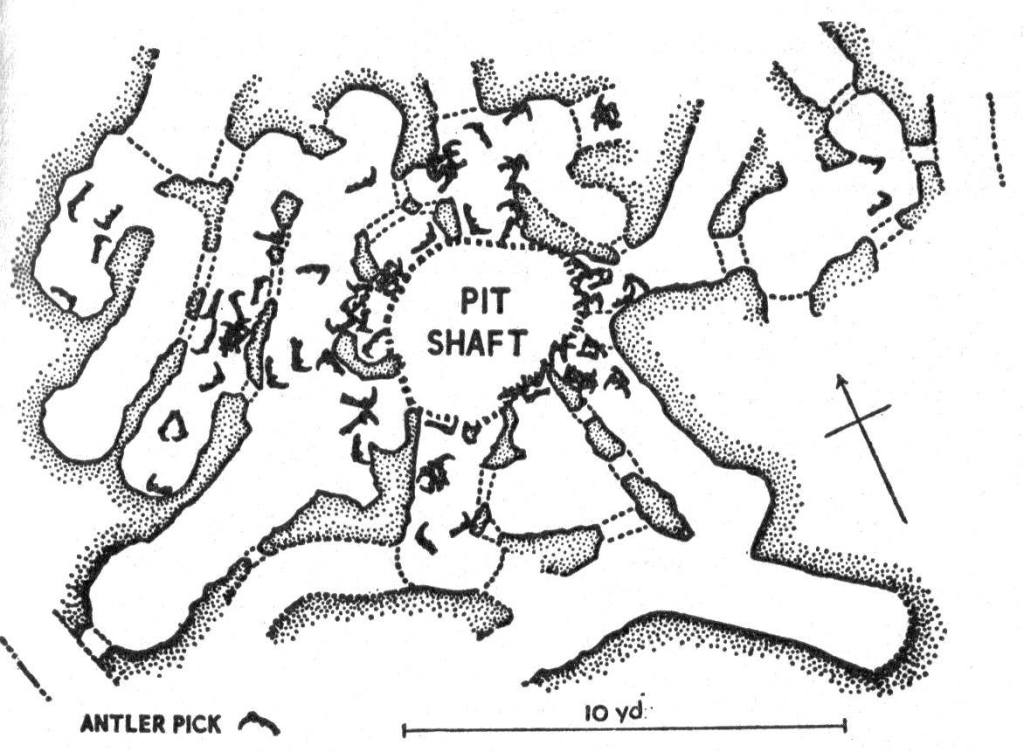
Photo credit: Peter Lewis (https://en.wikipedia.org/wiki/User:Peterlewis)
In 1843, Mr William Trotter, Session-Clerk of Torryburn noted the decline of coal mining and salt manning in the parish writing: “The population of Torryburn now consists principally of hand-loom weavers; formerly they had extensive salt pans, and coal works. They have still the dregs of that population amongst them. These, and the low rate of wages paid to the weavers, have sunk the condition of the population very much.” Extracts from “Poor Law inquiry (Scotland.) Appendix, part III. Containing minutes of evidence taken in the synods of Angus and Mearns, Perth and Stirling, Fife, Glasgow and Ayr, Galloway, Dumfries, Merse and Teviotdale, Lothian and Tweeddale. “
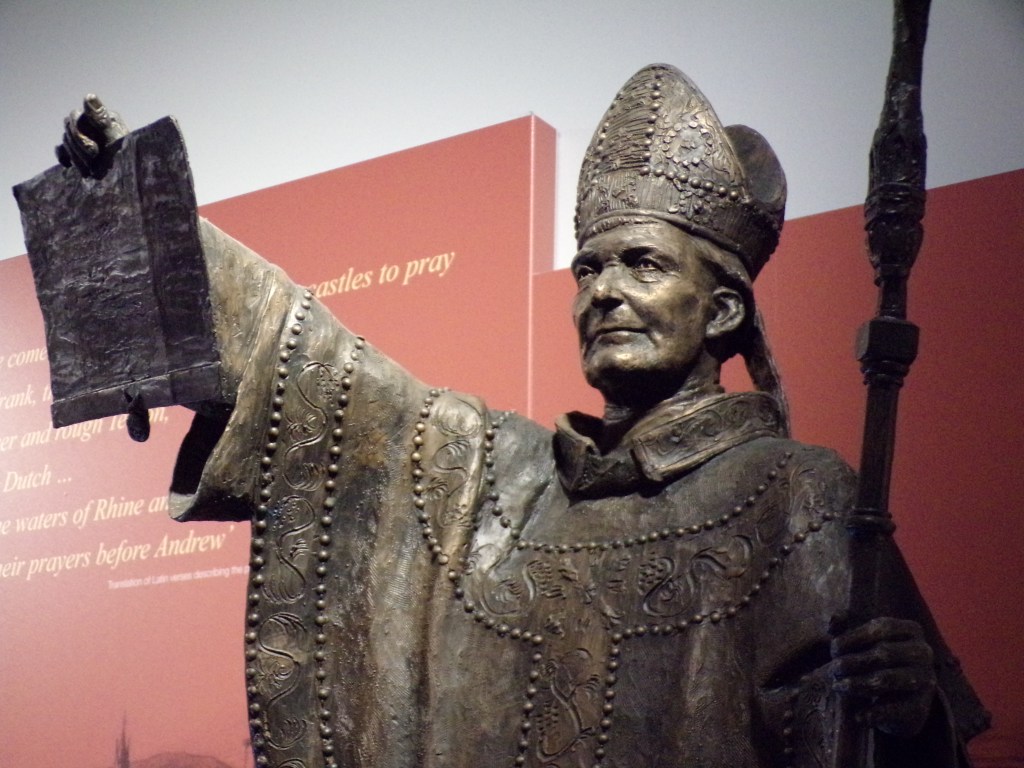
Copyright: Museum of the University of Saint Andrews.
The principal family in Torryburn parish was that of the Wardlaws of Torry. They were descended from an ancient Saxon family that came to Scotland with Edgar the Ætheling. Edgar was the last male member of the royal house of Cerdic of Wessex and following the death of Harold Godwinson at the Battle of Hastings in 1066, he was elected King of England but never crowned. Edgar’s sister Margaret (later Saint Margaret) married King Malcolm III (Malcolm Canmore) and was the mother of three Kings of Scots, King Edgar, King Alexander I, and King David I, while her daughter Matilda married King Henry I of England. Two members of the Wardlaw of Torry family gained high rank in the church: firstly Walter Wardlaw (died circa 1387) who was appointed Bishop of Glasgow in 1367, Cardinal in 1383 and papal legate in 1384, and secondly his nephew Henry Wardlaw, who was appointed Bishop of Saint Andrews and Primate of the Scottish church in 1403, serving until his death in 1440.
Coalmining in Wemyss
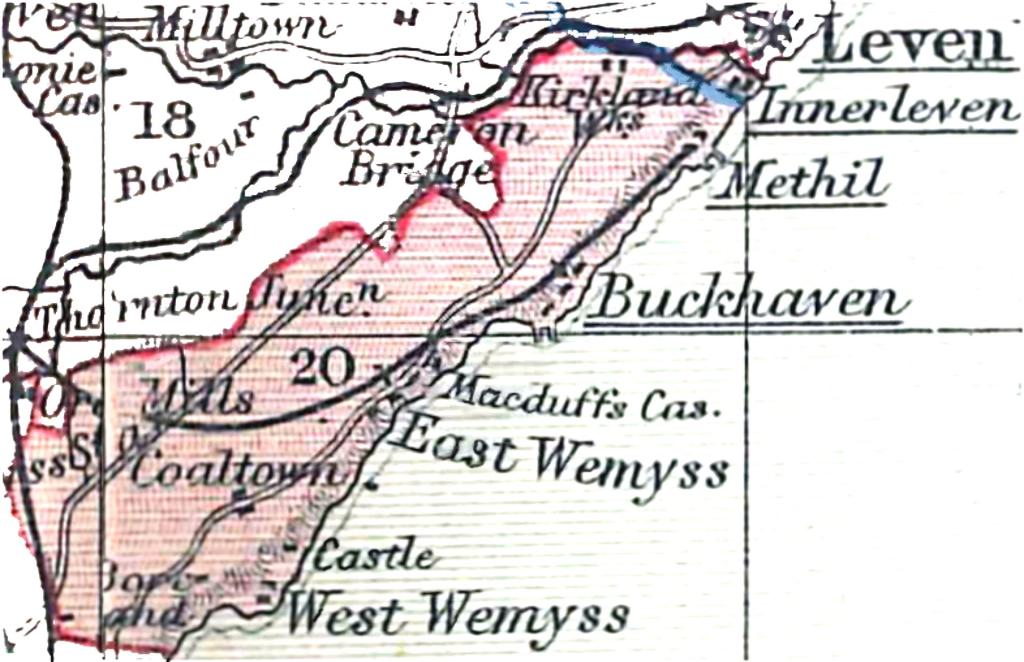
There are records of coalmining in Wemyss as far back as November 1428 when the rights to a share of the coal and saltpans was granted to the Livingstones of Drumry by David Wemyss of Muthill. This continued until July 1501, when the Wemyss family disputed the shared ownership. In 1621, a harbour was built by the Wemyss family for the use of coal exportation from the mines on the lands of their estate. By the late 17th century, the harbour was a major port involved in exporting coal to the Baltic states with the ships bringing back imports of wood, iron and flax. As its name suggests, the Coaltown of Wemyss has long connections with coal mining: A plaque on a house in Barns Row that was rebuilt in 1912 is dated 1645. The earliest population records of the Coaltown are from 1755 when it is recorded as having 393 inhabitants. At this time it played a supporting role to the nearby village of West Wemyss and the Wemyss Estate and much of the population of the parish were employed by the Wemyss estate; primarily in agricultural work and, to a lesser extent, coal mining. In 1795, the first Statistical Report for Scotland stated that the coal in the area had been mined for some centuries, and was of particularly good quality.
The Wemyss Families
The family rose to prominence in 1618 when John Wemyss was knighted by King James VI, and then, in 1625, (for a hefty sum) he gained a hereditary title as a Baronet of Nova Scotia. In 1628, King Charles I raised John Wemyss to the peerage as 1st Lord Wemyss of Elcho and in 1633 he was further ennobled as 1st Earl of Wemyss with the subsidiary title of 1st Lord Elcho & Methel.
John’s son, David Wemyss, 2nd Earl of Wemyss spent his lifetime nurturing the resources of the Wemyss estate, in particular his salt and coal mines. He also built a large harbour at Methil, Fife and greatly extended Wemyss Castle where he entertained the newly-crowned King Charles II of Scots in 1650 and 1651. The 2nd Earl died in 1679 and as he had been predeceased by his son, the estates were inherited by his daughter, Margaret Wemyss, who became 3rd Countess of Wemyss suo jure (in her own right). Margaret married her cousin and closest heir, James Wemyss, Lord Burntisland. Their son, David Wemyss, 4th Earl of Wemyss, succeeded his mother in 1705.
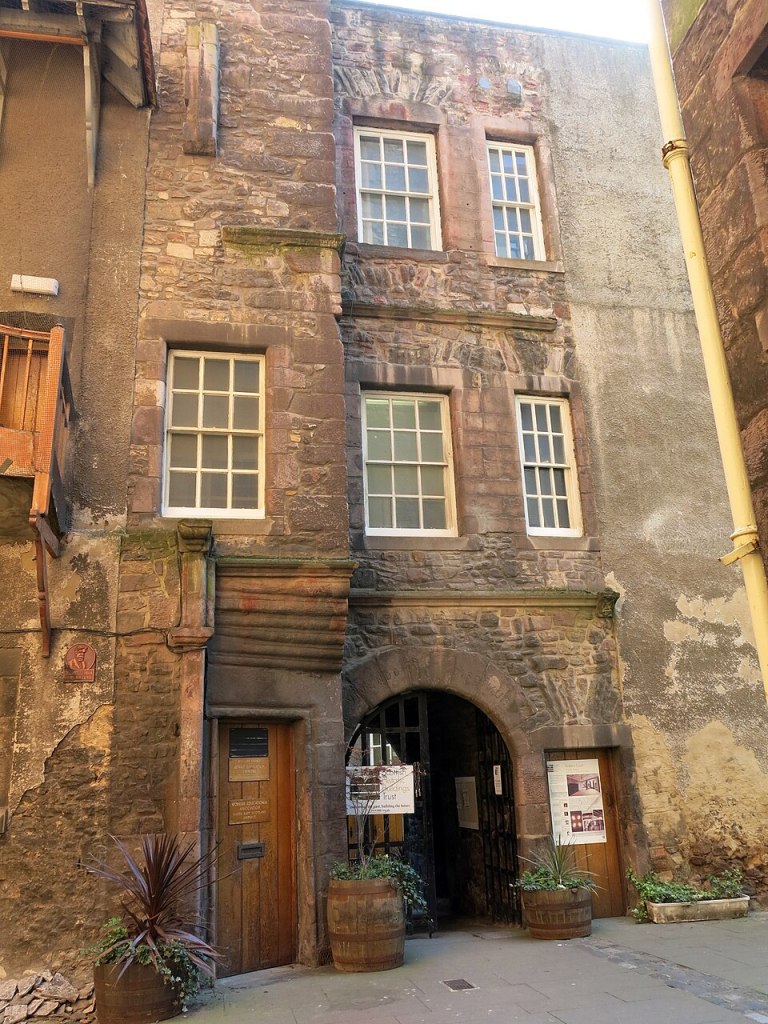
Perhaps now best known to visitors as a beautiful venue for the Edinburgh Festival Fringe.
David Wemyss, 4th Earl of Wemyss died on 15th March 1720 and was succeeded by his son, James Wemyss, 5th Earl of Wemyss. He had a town house in Edinburgh at Riddle’s Court which retains much of its original 17th century interior including some wonderful painted ceilings.
Following on from the 5th Earl, the succession in the Wemyss family can be somewhat confusing. The eldest son was a Jacobite and was attained by the Electors of Hanover – his line becoming extinct; the second son, who inherited the Earldom, adopted the surname Charteris; and it was only the third son, who inherited estates in Fife including Wemyss Castle, retained the surname of Wemyss. (I am grateful to Isabella Wemyss who explained, very patiently, to me exactly how and when this happened).
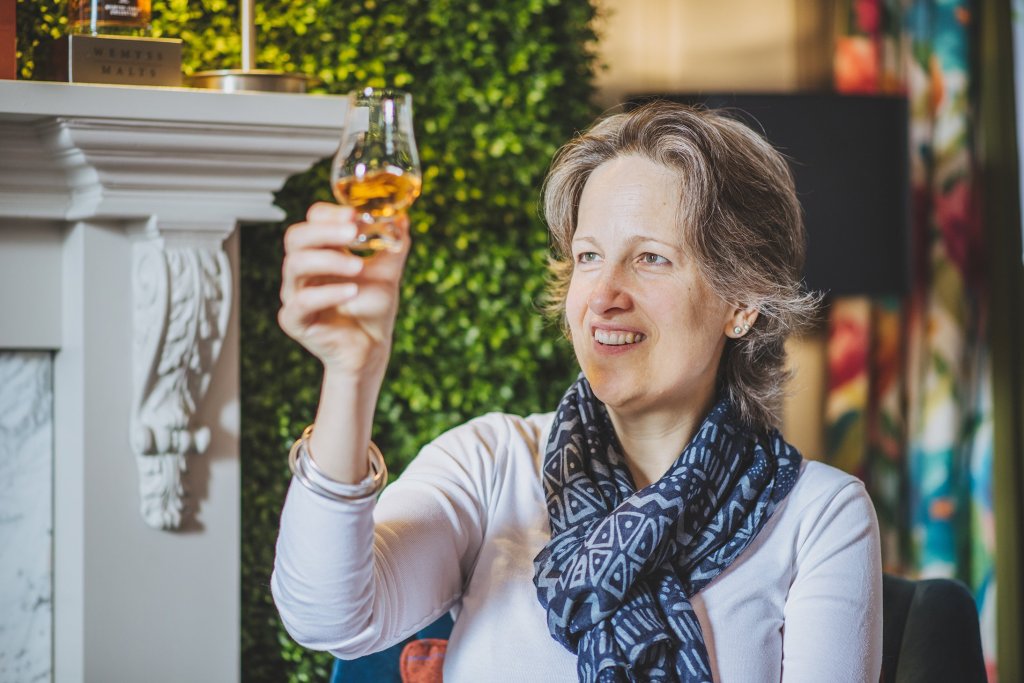
On 17th September 1720, James Wemyss, 5th Earl of Wemyss married Janet Charteris, the daughter and heiress of Colonel Francis Charteris of Amisfield. Their eldest son, Lord Elcho supported the Stewarts against the House of Hanover and Lord Elcho’s Life Guards were an important cavalry contingent in the army of Prince Charles Edward Stuart. After the battle of Culloden, Lord Elcho escaped to France and when he died, the Earldom of Wemyss was inherited by his younger brother Francis. However, Francis had previously inherited the estates of his maternal grandfather and on 24th February 1732 (1731 Old style) he legally changed his surname to Charteris, which became the surname of future Earls of Wemyss (& March).
There was also a third brother, James Wemyss, who, on 31st July 1750, was named heir to the Wemyss estates, including Wemyss castle, by a new entail. James’ descendants “the Wemyss family” continue to be important landowners in Fife to this day, and are perhaps best known as the owners of Kingsbarns Distillery.
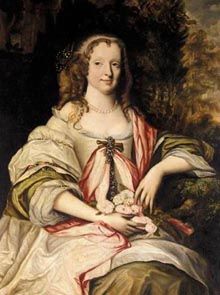
At the time when John Pride, Collier and Christian Pride moved to East Lothian from Fife, the head of the Wemyss family was Margaret Wemyss, Countess of Wemyss in her own right.
The Acts of Parliament of 1606, 1641, 1647, 1661 & 1701
It is not known why our two Pride couples relocated to the Lothians from Fife in 1669 and 1693, but possibly the most likely reasons would be to seek new employment opportunities due to pits closing, or to escape bad working conditions.
It must also be remembered that the 1600s were difficult times to be a salter, coal miner or coal bearer. In 1606 an Act of the Scottish Parliament had effectively reduced coal miners and salt workers into a state of serfdom, verging upon slavery. The main aims of this act was to ensure that:
- Salters, colliers and coal bearers could not be hired by anyone without the written permission of their current masters.
- Any salter, collier or coal bearer who left without a testimonial from their master could be reclaimed by that master within a year and a day.
- Anyone found employing a salter, collier or coal-bearer without a testimonial was obliged to return them within twenty-four hours, or face a fine of 100 Scots shillings.
- A salter, collier or coal-bearer who left without a testimonial would be guilty of theft, having effectively stolen their master’s property – i.e. themself.
- As salters, colliers and coal-bearers were in such short supply, the Act also permitted and indeed encouraged owners of coal mines and salt pans to force any beggars, vagrants or vagabonds to work for them.
Further Acts of 1641 and 1647 extended the scope and severity of the 1606 act. In 1661, Parliament decreed that all workers in coal mines must work for six days a week, except Christmas, or be fined 20 Scots shillings to be paid to their masters, while in 1701 miners were specifically excluded from “the Act for preventing wrongful imprisonment and against undue delays in trials“, the Scottish equivalent of the Habeas Corpus Act.
A Torryburn origin for the Newbattle Prides
The Scottish Genealogy Society is well known as one of the essential ports of call for any researcher with an interest in Scottish family history. Amongst their extensive list of useful publications, in 2013 they produced “Newbattle Testimonials 1657 – 1671” compiled by D. Richard Torrance.
This publication revealed that another Pride couple had arrived in the Lothians from Fife in the 1660s.
As noted in the booklet:
“Testimonials were issued to individuals to show that the bearer was an upright citizen and unlikely to cause trouble or be a burden on the parish. Many were described as having a civill cariag, and others brought a sufficient testimoniall. Occasionally reference was made to former indiscretions that had been satisfied before the kirk session of the parish issuing the testimonial.“
Of interest to us is testimonial number 168:

Newbattle kirk session, Minutes (1646-1649), Testimonials (1654-1671), CH2/276/3.
“David Prid & Catrin Gibb brought a sufficient testimonial from Torryburne daited ye 26th of Aprile 1669“
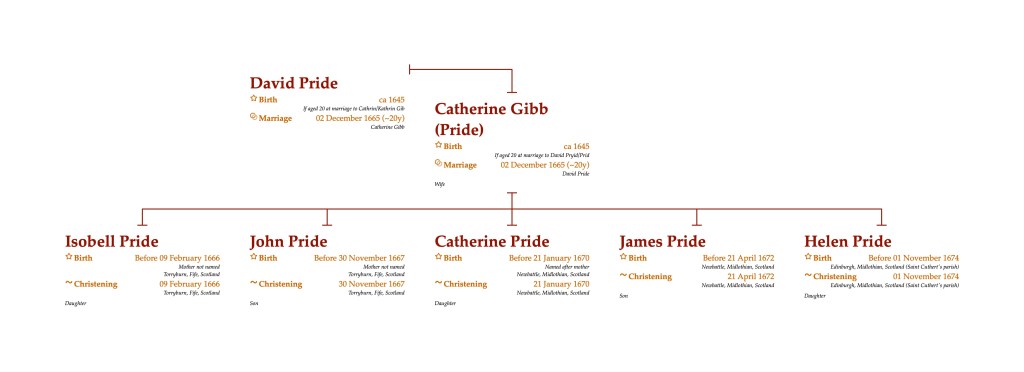
Marriage Banns for David Prid & Kathrin Gib were published in Torryburn parish in Fife on 27th November 1665 and for David Pride & Cathrin Gib in Cramond parish in Midlothian on 2nd December 1665. It seems likely that the groom was from Torryburn in Fife and the bride from Cramond.
This couple were clearly (upwardly?) mobile with marriage banns in different parishes (Crammond and Torryburn) either side of the Firth of Forth and at least five children in three different parishes: Torryburn in Fife, Newbattle in Midlothian and Saint Cuthbert’s in Edinburgh:
- Isobell Prid, baptised on 9th February 1666 in Torryburn parish, Fife (mother not named).
- John Prid, baptised on 30th November 1667 in Torryburn parish, Fife (mother not named).
- Catrin Prid, baptised on 21st January 1670 in Newbattle parish, Midlothian.
- James Prid, baptised on 21st April 1672 in Newbattle parish, Midlothian.
- Helen Pride, baptised on 1st November 1674 in Saint Cuthbert’s parish, Edinburgh.
James Prid baptised 1672 in Newbattle was not our ancestor
The James Prid who was baptised in 1672 in Newbattle parish is of especial interest. There are some who are convinced that he was the James Pride who married Helen Selkirk and, at the date of writing, the global tree on Family Search has been changed back to reflect their belief.
In April 1748 the Journal of the Management of the Coall and Salt Works at Prestoungrange, mentions: “James Helen Selkrick beingAt Pinkey James Pride aged about 70 married to Helen Selkirk 3 sons all of age and one daughter.” In 1748, James Pryd baptised in Wemyss would have been aged 67, while the James Prid baptisied in Newbattle would have been, at 76 years old, closer to eighty.
Also, the James Prid from Newbattle would have been aged 32 at the birth of James Pride and Helen Selkirk’s eldest son, William in 1704.
Finally, there were no children named David or Isobell as might be expected had it been James Prid baptised 1672 from Newbattle rather than James Pryd baptised 1681 in Wemyss who had married Helen Selkirk.
A Wemyss origin for the East Lothian Prides
In part I of this series we revealed that John and Christian Pride, believed to be close relatives of our ancestor James Pride who married Helen Selkirk, had arrived in Saltpreston (Prestonpans) parish in Haddingtonshire (East Lothian) in 1693. The Saltpreston Kirk Session were primarily concerned that the couple were unmarried but cohabiting and engaging in “fornication“. However their interrogation also revealed that John, a Collier, and Christian, a Coal Bearer, working for the Laird of Prestongrange, could not obtain testimonials as they had abandoned their previous employment in Wemyss parish in Fife. As noted above, this was at a time when colliers and their families were bound to their employers and could not seek new employment lacking their permission, which was rarely given.
The fact that John and Christian Pride had crossed the Firth of Forth from Wemyss parish in Fife led us to look at the Wemyss Old Parish Register of Births and Baptisms to see whether they had might have been born there. While there was no evidence to suggest that they had been born in Wemyss, the search led to a more surprising conclusion: that our ancestor, James Pride who married Helen Selkirk, appeared to have been baptised in Wemyss parish in Fife on 18th November 1681. His parents were John Pryde and Elspeth Dickson and the witnesses were James Lumsdall & Robert Dickson (possibly his paternal uncle).
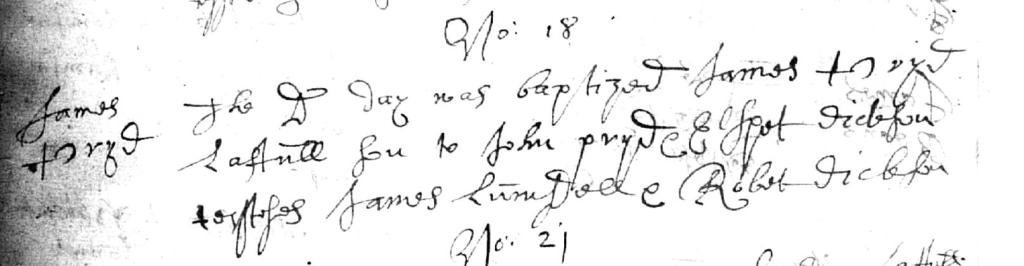
PRYD JAMES JOHN PRYD/ELSPET DICKSON M 18/11/1681 459 10 / 266 Wemyss.
Copyright National Records of Scotland.
We do not know when James Pride moved to Prestonpans. The first known mention of James Pride there was on 1st November 1702 when James Pride was cited in Saltpreston Kirk Session minutes as one of several witnesses that Jonet Adamson, spouse to James Imbrie collier, was called a witch by John Donaldson, salter & elder and others.
It may be significant that on 31st May 1702, the Saltpreston Kirk Session records state that “The moderator exhorted the Elders to take particular notice of strangers, that come into the paroch, and to delate such, as reset, any that lack sufficient testamonials, according to advertisement given from the pulpit.” This suggests that there may have been an influx of newcomers to the parish, perhaps including the Prides from Wemyys?
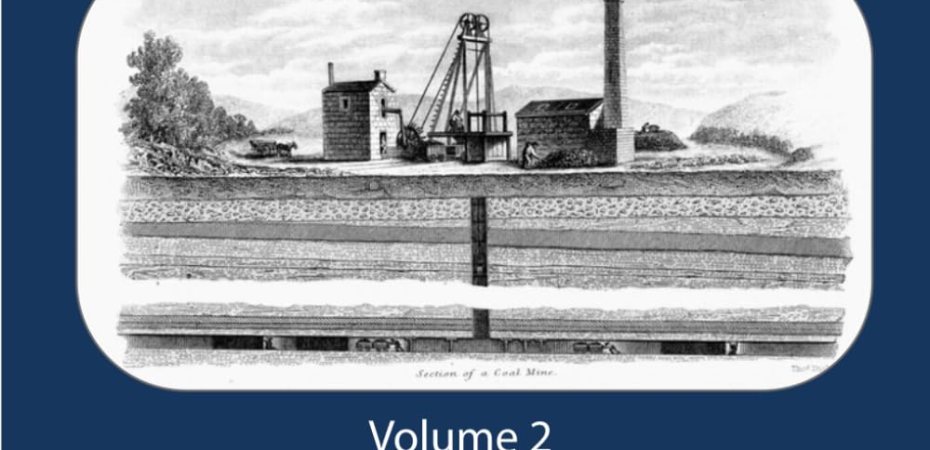
We will not go into any further analysis concerning of our breakthrough regarding the parentage of James Pride, founding father of the East Lothian Prides, as the full story has now been published in Chapter 7 of the book A Pride of Prydes Volume 2 by Eve Pryde-Roberts.
PS. A Selkirk Miner in Fife in 1684
While my own belief is that our Selkirk ancestors appear to have come to Prestonpans parish in East Lothian from Liberton parish in Midlothian via Newton parish in Midlothian, there are other possibilities.
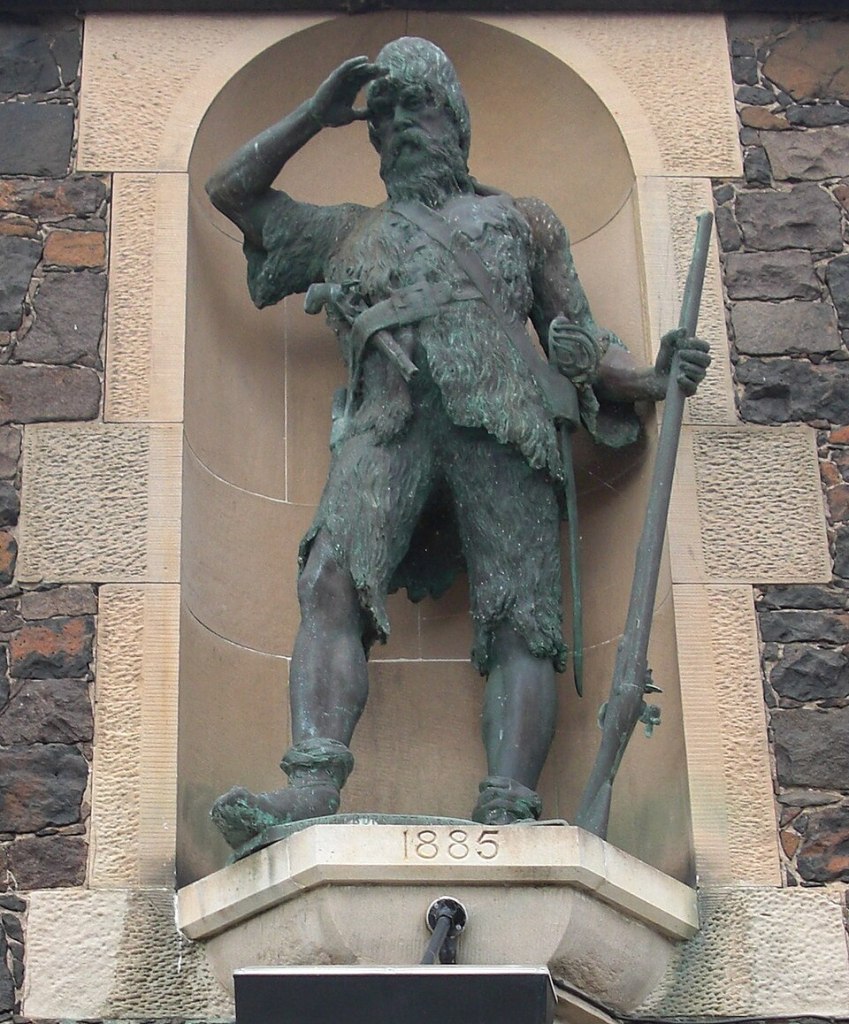
Photo Credit SylviaStanley.
It is in the nature of Selkirk researchers to almost automatically disregard proposed connections between the East Lothian Selkirks and the most famous Selkirk of them all – Alexander Selkirk of Lower Largo, the inspiration for Daniel Defoe’s Robinson Crusoe. This Alexander Selkirk was a sailor while his father was a shoemaker and tanner, and to the best of my knowledge, this family had no connections to coal mining?
However, taken in the context of Prides from Fife moving to the Lothians, it is of interest to look into the following record, published by Fife Family History Society in 2006.

Copyright Fife Family History Society, from Journal, New Series, No. 7, page 63 (Autumn 2006).
This record does not specifically state (as other entries do) that Alexander Selchreidge (i.e. Selkirk) was a collier, hewer, sinker or winlass man. However it does note that he was paid for 36 days work at the new sink set down on the “ten foot coal” at Clunie in 1684. This was between 1669 and 1693 when our two Pride couples relocated from Fife to the Lothians.
Others who appear to have been employed in the same task at the “ten foot coal” in 1684 include James Aitken, Henrie or Hendrie Gib, Crispanie Good, James Greige, Andro Lamb, David Lamb, David Law, Patrick Michie, Robert Michie, Andro Nicklesone (windehouseman), Thomas Niklson or Nicholson, James Nisbet, Robert Nisbet, Robert Pratte, and John Robertson.
The Clunie (or Cluny) pit(s) were in the parish of Auchterderran in Fife with a water wheel for pumping water out of the pit being constructed there in 1736.
Trove Scotland notes:
“Unlocated.
Reference is made to a number of “old coal pits” in the Cluny area in Houston’s book (see Bibliography). These are shown on the 1914 OS map, and include the “old coal pit” at grid reference 241 959, and numerous shafts (Houston quotes eight) between Cluny Square (2340 9515) and Coalden (2415 9525). The 1914 map also show ‘Cluny Colliery’ (now disused) at grid reference 226 954.
Information from Architecture Catalogue slip:
REFERENCE: Kirkcaldy Art Gallery and Museum.
Cluny, Water Machine (for Earl of Rothes)
Rothes MSS – elevation of machine consisting of a water wheel for pumping water out of pits c.1736. Monochrome.
NT 2444 9590
A mineshaft was recorded here during fieldwork in the area. Banks and other mining features were noted nearby.
T C Welsh 2005“
This is the first record that I have seen of a Selkirk who was involved in coal mining in Fife. Have any of our readers seen similar examples?
 Vecchio
Welcome back to the fight. This time I *know* our side will win.
Victor Laszlo in Casablanca.
LikeLiked by 1 person
“Here’s looking at you, Kid!”
https://www.azquotes.com/picture-quotes/quote-rick-here-s-looking-at-you-kid-humphrey-bogart-75-93-60.jpg
LikeLiked by 1 person
Ugarte: You know, Rick, I have many a friend in Casablanca, but somehow, just because you despise me, you are the only one I trust.
LikeLiked by 1 person