Image Copyright Playgroup.
The Church of Scotland
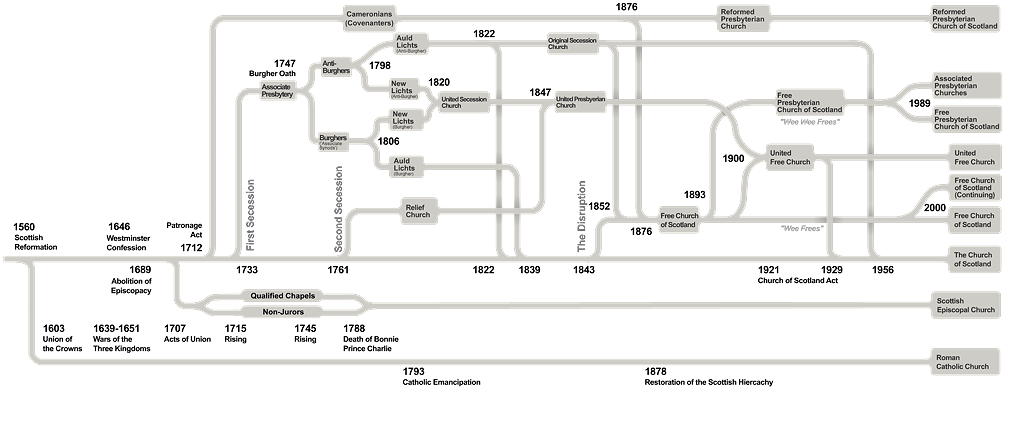
Church history in Scotland is somewhat complicated with many splits and fusions, but family historians are obliged to delve into this tangled web as not all of our ancestors belonged to the Established Church. So depending upon which group they belonged to, finding records for their baptisms, banns and burials, even if they exist (see ScotlandsPeople), can sometimes require some detective work.
It was the Reformation of 1560 that created an Established Church of Scotland, which became known as “The Kirk“. This new church was predominantly Calvinist in doctrine and Presbyterian in structure. The Church of Scotland was principally shaped by John Knox, but when it split from the Catholic Church and established itself as a Calvinist church in the reformed tradition, it had no official permanent head, but instead a Moderator of the General Assembly was elected every year.
Less than 25 years after the Kirk was created, Episcopacy was re-introduced in Scotland when James VI appointed a layer of bishops and archbishops in 1584. However, in December 1638, the General Assembly abolished Episcopacy, against the wishes of King Charles I. This sparked the conflict known as the Bishops’ Wars, the first of the Wars of the Three Kingdoms, and resulted in a pseudo-republican era known as the Commonwealth with “His Highness” Oliver Cromwell as “Protector” – essentially a monarch in all but name. However, in 1661, following the restoration of the Stuart Monarchy under Charles II, Episcopacy was once more re-introduced. Twenty-nine years later, following a military coup in 1689 by William of Orange and his wife Mary (II) Stuart, the 1690 Scottish Act of Settlement restored Presbyterianism; at least in the Church of Scotland, as the system continued in the Scottish Episcopal Church and later in the re-introduced Catholic Church in Scotland.
While these terms now imply differences in doctrine, in the 17th century Episcopalian simply meant churches governed by bishops, usually appointed by the monarch; while Presbyterian implied rule by Elders, who were nominated by the congregations.
The post-1689 Church of Scotland had, as in 1560, a Presbyterian structure, which meant it was organised under a hierarchy of courts. Traditionally there were four levels of courts: the Kirk Session (at congregational level), the Presbytery (at local area level), the Synod (at a regional level) and the General Assembly (the Church’s highest court). (The synods were abolished in the early 1990s.)
By the 1630s, around 90-95% of Scots were members of the church, and despite some disagreements on governance, there was general alignment on Calvinist doctrine. In the 17th century, religious disputes were often as much about political principles, due to the assumption ‘true religion and true government’ were one and the same.
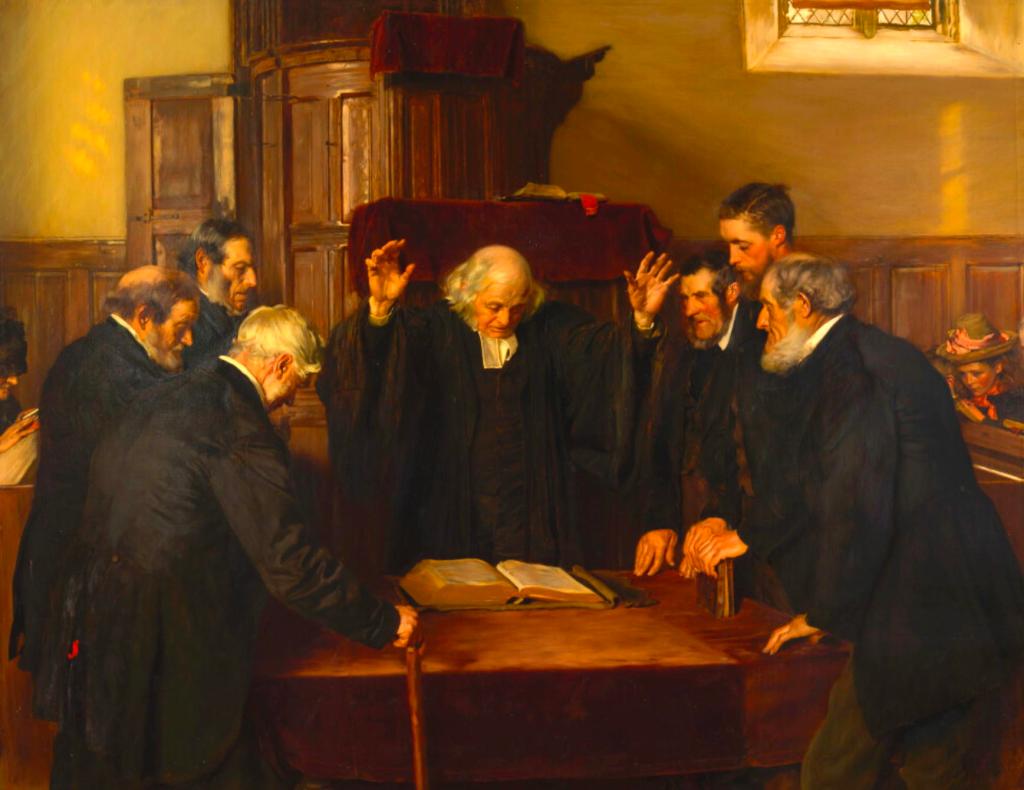
In the Church of Scotland, there were three classes of officers, the Minister, the Ruling Elders and the Deacons. The duty of the first was to “Minister in the Word and Doctrine“, and to dispense the sacraments; – the second to assist in the inspection and government of the Church; – and the third to “serve tables“; i.e., to take care of the Church’s funds destined for the support of the poor, and sometimes to manage whatever relates to the temporal support of the gospel and its ministers.”
Humphrey McAuslane, Elder of the Kirk
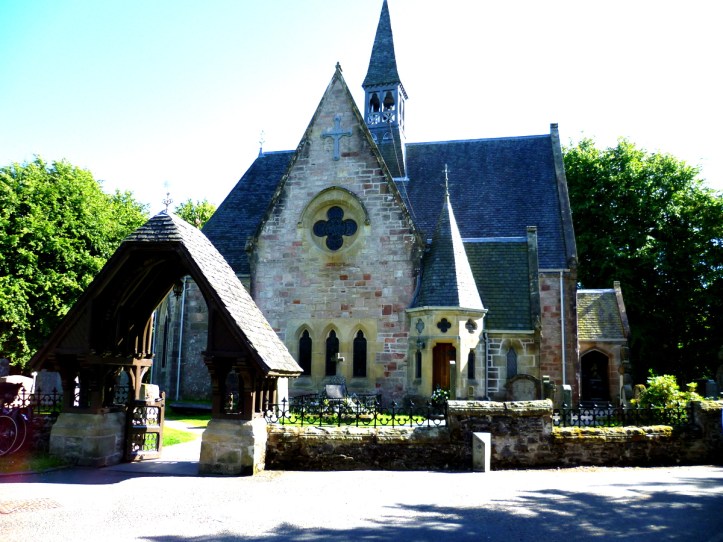
The Minutes of Luss Kirk Session begin in 1711 and on 30 March 1712 they list a Humphrey McAuslane, Elder who was chosen and received a commission to represent the Session at the next Synod at “Air” (Ayr). There is no record in the previous minutes of his appointment, and given that he was entrusted to represent Luss at a Synod meeting, it seems possible that he had been an Elder for some time.
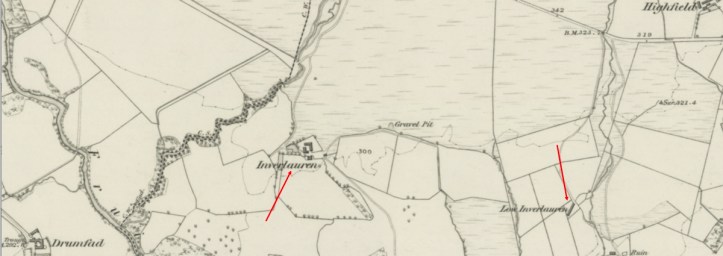
Ayr is a considerable distance, some 56 miles, from Luss, and to walk there from Inverlauren, where Humphrey is assumed to have resided, would today take over 19 hours. It seems likely that Humphrey would have travelled by horse, although in those days where roads were poor and travel by water more common, he may have sailed from a port on the north shore of the Clyde to Ayr.
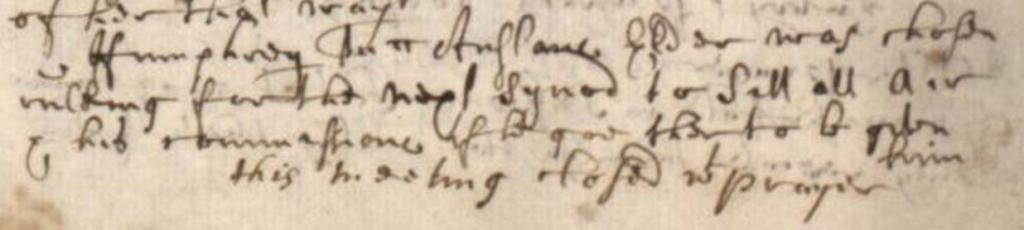
Humphrey is listed as attending the Kirk Session for a number of years. The elders are not always named at every meeting, often only as “sederunt, Minister and Elders” so he very likely attended a number of other sessions in addition to those listed below where he was specifically named:
- 1712: 30 March; 25 May;
- 1713: 20 June; 02 August; 30 August; 27 December;
- 1714: 20 June; 18 August;
- 1716: 02 January; 03 June;
- 1717: 03 March; 20 January; 17 November;
- 1721: 12 September; 12 November;
- 1722: 08 April.
Humphrey McAuslane was also selected several times to attend Presbytery and Synod meetings such as on 20th June 1714 when “This day Humphrey MacAuslane was chosen by the Session as their ruling Elder for the Presbytery and next Synod” or on 2nd January 1716 when he was “Chosen as working elder to next Synod and ruling elder to next Presbytery.“
He is last recorded as having attended Luss Kirk Session on 8th April 1722.
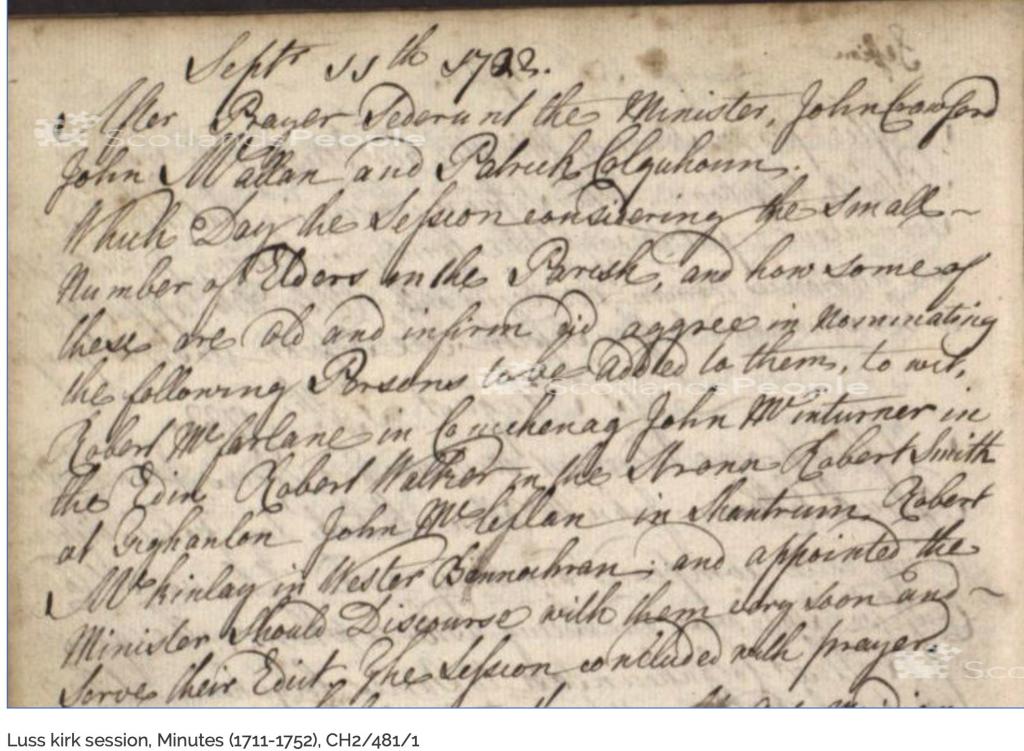
At a meeting on 11 September 1722 attended by the Minister and only two Elders, John McAllan and Patrick Colquhoun, it was noted that the Elders were few in number and some (presumably including Humphrey McAuslane) were old and infirm. Six new Elders were therefore nominated and their appointments were confirmed at the next Kirk Session meeting.

According to the 1694 Hearth Tax records, there was a “Humphra mccauslune” who was listed as (tenant) “in Innerlarran“. He may also have been also a Heritor and it seems likely that he was the Elder who served from at least 1712 until 1722.
Humphrey McAuslane is believed to have been born circa 1647, so he may have been 75 years old in 1722, when he was last recorded as having attended a Kirk Session meeting.
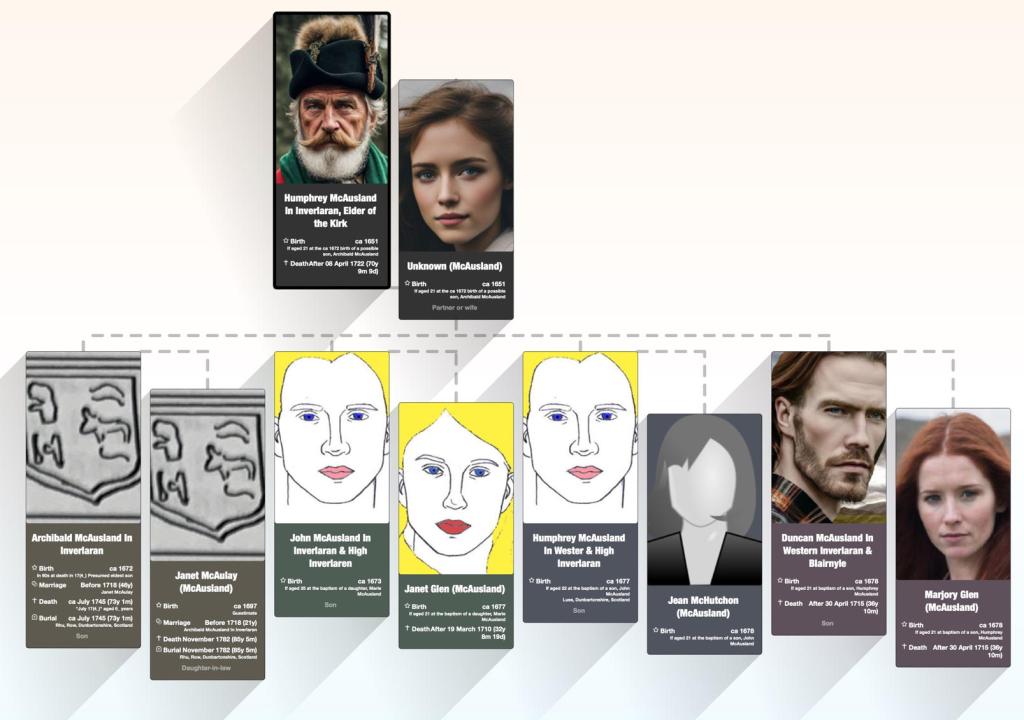
As discussed in previous articles, it is believed that the McAuslands of Inverlauren, like the McAuslands of Prestilloch and of Stockidow, were descended from the McAusland Barons of Coldenocht, but their exact relationship is as yet unclear. Meanwhile, gravestones in Luss and Rhu kirkyards and DNA analysis suggest that Humphrey may have had four sons, Archibald, John, Humphrey and Duncan.

From Monumental Inscriptions (pre. 1955) in Dunbartionshire. Mitchell (1926), Scottish Genealogical Society.
According to a gravestone in Luss kirkyard, Humphrey McAusland appears to have died on 20th February 1727, almost five years after he was last recorded as attending a meeting of Luss Kirk Session. He is believed to have been aged around 80 at his death.
Humphrey’s grand old age was not entirely unusual for members of his family. The three next generations were buried in Rhu kirkyard rather than Luss.
Humphrey’s presumed eldest son and heir, Archibald McAusland in Inverlaren was in his 60s when he died in the 1740’s (his tombstone is very worn).
Archiband’s eldest son, another Humphrey McAusland in Inverlaran was aged 81 when he died in 1799.
Meanwhile the second Humphrey’s son, John McAusland died in 1834 when he was 83, according to his tombstone.
John’s eldest son, another Humphrey, was aged 71 when he died in 1862.
However, his son, a second John, and the last male McAusland tenant of Inverlaran, was just 41 when he died in 1876, having suffered from Phthisis (Tuberculosis) for six months.