
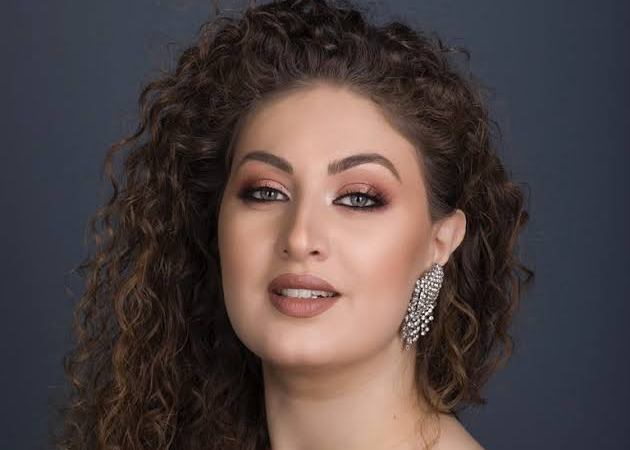
Opera Caledonia – Anush Hovhannisyan – An Evening of Opera & Song
The Queens Hall, Saturday 2nd September 2023.
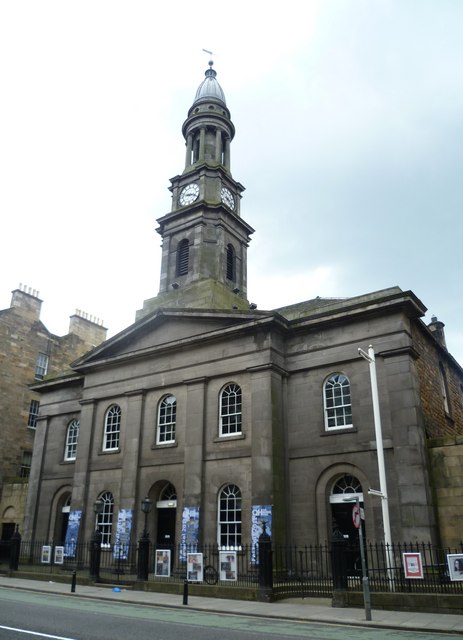
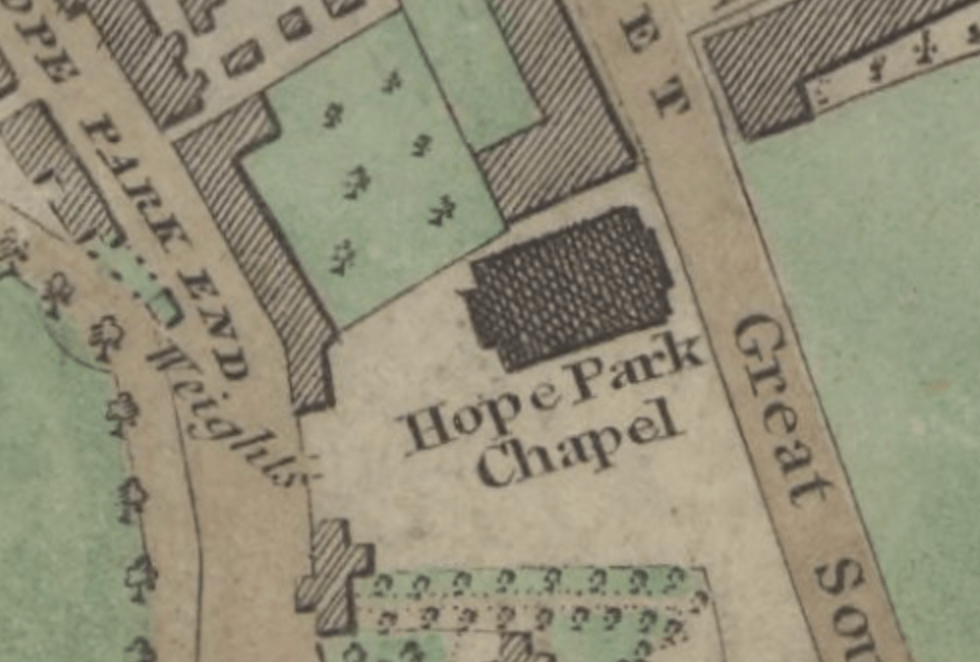
This was only my third visit to The Queen’s Hall, which had started life way back in 1823 as Hope Park Chapel. The chapel was initially built to relieve congestion at the ancient Saint Cuthbert’s Church and its subsidiary Buccleuch Chapel, which had been constructed in 1756. The architect of Hope Park Chapel was Robert Brown, a son and grandson of wrights, and the initial budget was set at £6,111 17 s and 2d, however, as so often, even back then, this soon ran over. The first Minister of Hope Park Chapel was the Rev. Robert Gordon from Glencairn in Dumfriesshire, but he only served there until 1825, when he was appointed Minister of the New North Church. He rose to be Moderator of the General Assembly of the Church of Scotland in 1841, but following the 1843 Disruption left the Church of Scotland and became the first Minister of the Free High Church. In 1834, Hope Park Chapel itself was raised to a “quoad sacra” charge and became known as “Newington Parish Church”. The reunification of the Church of Scotland and the United Free Church in 1929 saw the church become “Newington & St Leonard’s Church” which was its designation until it finally closed as a place of worship following the retirement of the final minister, Rev. Matthew Shields, who had served there since 1956, on 31 July 1976.
At this time the Scottish Baroque Ensemble (founded in 1968) and the Scottish Chamber Orchestra (founded in 1974) were looking for a rehearsal venue but when it became known that Newington & St Leonard’s Church was available, the building was proposed as a possible new Concert Hall for Edinburgh. The acoustics were tested by experts and musicians and agreed by both to be excellent. An estimated budget of £350,000 was required with £35,000 being initially provided by the Housing the Arts Fund of the Arts Council. A subsequent fundraising appeal raised £50,000 from the City of Edinburgh District Council and over £100,000 from individuals. There were additional contributions from charitable trusts and businesses, the Historic Building Council, and continuing gifts and covenants from individuals culminating with £200,000 from Lothian Region Council. A pledge by John Drummond, the current Director of the EIF that the building would be used as a venue at the next Festival boosted confidence that it would become an important fixture in Edinburgh’s musical life. It only remained to choose a name, and once the permission of the late Queen was requested and granted, the building was rechristened as The Queen’s Hall, with the late Queen Elizabeth herself being present at the official opening on 6th July 1979.
The opening concert included The Scottish Philharmonic Singers; The Scottish Chamber Orchestra, who performed Haydn’s Te Deum in C Major and Mozart’s Symphony No. 35 in D Major K385 “Haffner”; and The Scottish Baroque Ensemble, who performed McGibbon’s Sonata No. 5 in G and Bach’s Brandenburg Concerto No. 3. The Queen’s Hall celebrated its 40th anniversary in 2019 and after a closure from 20 March 2020 to 22 August 2021 due to the Covid-19 pandemic is now back up and running as one of Edinburgh’s best-loved concert venues, with forthcoming concerts from artists as varied as Ally Bain & Phil Cunningham, Wishbone Ash, Rachel Sermanni, Moya Brennan, Clearwater Creedence Revival, Judy Collins, Tangerine Dream, Eddi Reader, Haircut 100, and, of course, the Scottish Chamber Orchestra.
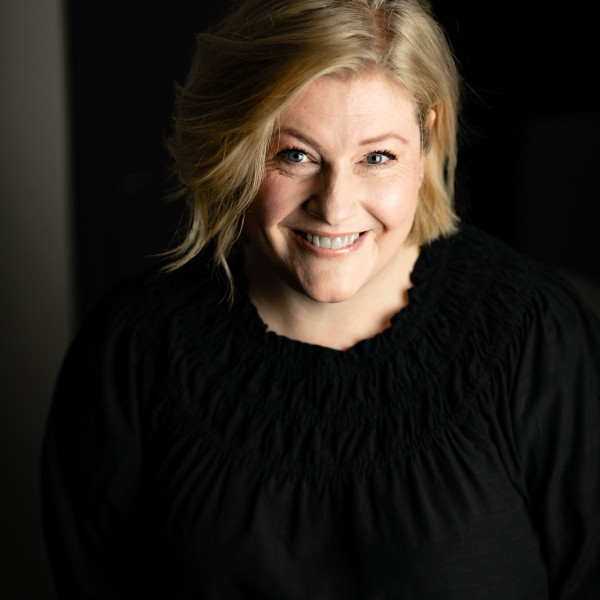
My first visit to the Queen’s Hall was on 20th April 2023 for a highly enjoyable Summer Nights concert by the Scottish Chamber Orchestra and Arbroath-born mezzo-soprano Karen Cargill (see article in The Edinburgh Music Review). Karen gave a wonderful performance in less than ideal circumstances as a member of the audience was unfortunately taken ill, but thankfully appeared to recover after some time. At the interval, I asked Karen if she was by any chance related to the late Ken Cargill, Head of News and Current Affairs at BBC Scotland and she told me that her father had indeed discovered they were distant cousins. Three months later, in July of this year, when the late Queen Elizabeth’s son Charles and his entourage appeared in Edinburgh to accept the Honours of Scotland, Karen Cargill performed A Song of Thanksgiving and Dedication, in a Doric tribute to Charles’ second wife, Camilla, in her role as chancellor of Aberdeen University.
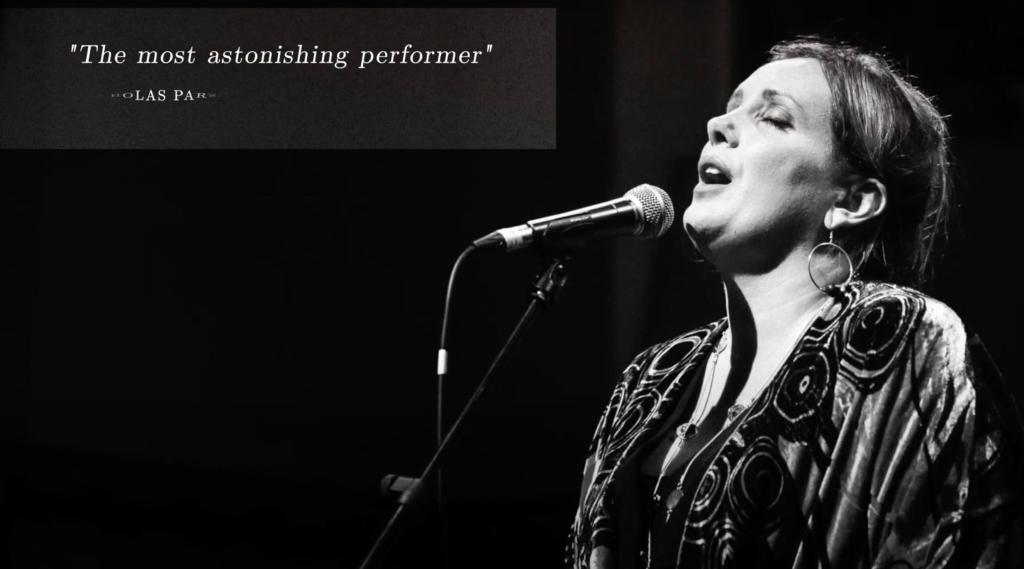
My second concert at the Queen’s Hall was on 10th August, when Christine Bovill performed her amazing “From Piaf to Pop” which had been a sell-out at the 2022 Edinburgh Fringe. The concert explored the 1960s and the Americanisation of French music, known as “le yé- yé” (The Yeah Yeah). The 1960s was a time of enormous cultural and also political change in France, with the new musical style being seen to pose an enormous threat to the traditional and revered High Art Form of French chanson. In “From Piaf to Pop”, Christine Bovill presented a sensuous and delicious celebration of the Golden Age of French song and how it evolved during the Swinging Sixties. Singing in both French and English, she honoured many stars including Edith Piaf, Jacques Brel, Claude François Serge Gainsbourg and Françoise Hardy. I was delighted when, later that month, at the Gilded Balloon’s Patter Hoose in Chamber Street where she was performing her Kiki, DeathBed Cabaret, Christine told me that she had really enjoyed her concert at Queen’s Hall – seemingly almost as much as we had.

With such excellent previous concerts at the Queen’s Hall, the standard had been set at a very high level, but British-Armenian soprano Anush Hovhannisyan did not disappoint in her Evening of Opera & Song with Leonardo Catalannotto on piano and a String Quartet composed of members of The Orchestra of Scottish Opera, with Derek Clark introducing the pieces. The evening was organised by Opera Caledonia, Scotland’s newest professional opera company, which was founded in 2020.In 2024, they will be presenting a new chamber arrangement of Verdi’s MacBeth in both Sicily and Scotland.
Anush Hovhannisyan was selected in 2020 by The Times as “The Face to Watch in Opera 2020” and by Der Theaterverlag as one of the outstanding artists of that year. She graduated from from the Armenia State Conservatory and the Royal Conservatoire of Scotland before beginning her career as a member of the Jette Parker Artists Programme at the Royal Opera House Covent Garden. When she made her Scottish Opera debut as Violetta in Verdi’s La Traviata. Opera Magazine described her as having “the coloratura, the musical intelligence, the rock-solid technique, the evenness throughout an ample vocal range, the dramatic versatility, the imposing but graceful physique – and indeed the pathos.” Meanwhile The Sunday Times proclaimed: “A ‘Star Is Born’ Moment.” From my prime vantage point of the middle of the front row, I was in a perfect position to agree with all that acclaim, while also being relieved that I had remembered to put on a jacket, as my distinguished neighbours also appeared to just as impressed as I was with frequent and eloquent cries of “Brava!” for Ms Hovhannisyan (rather than the sometimes more common “Bravo!”) and “Bravi!”
The concert began with “Seven Early Songs” (Sieben frühe Lieder) by Alban Berg, perhaps best known for his operas Wozzeck and Lulu. The songs were Night, Song Among The Reeds, The Nightingale, Crowned in Dream, Indoors, Ode To Love, and Summer Day. I have never been an enormous fan of Leider – I still remember going to a concert in Paris that included Schubert’s “Der Tod und das Mädchen” and my colleagues all being in involuntary hysterics because the singer (thankfully another friend) was the antithesis of the personage described in the title. But in this case, Anush Hovhannisyan’s delivery of the Lieder was so mesmerising that even this heathen was enthralled.
The String Quartet and Leonardo Catalanotto then gave a polished performance of Puccini’s Crisantemi (The Chrysanthemums). Derek Clark explained that Chrysanthemums traditionally represent heroism, loyalty and mourning and that this composition was a rapid response by Puccini to the sudden death of Prince Amedeo, Duke of Aosta, a first cousin, once removed of the King of Italy, Victor Emmanuel III. Prince Amedeo was a friend of Puccini’s and his untimely death at age 44 touched Puccini profoundly.
Anush Hovhannisyan returned to the stage to sing Antonín Dvořák’s “Song To The Moon” from Rusalka. Derek Clark explained that Rusalka is a water nymph, who falls in love with a human prince when he comes to hunt around her lake. Rusalka decides she must become a human to embrace her love, but her father, a goblin, tells her it is a bad idea. Nevertheless he sends her to the witch, Ježibaba, for assistance. Rusalka then sings her “Song to the Moon”, asking the Moon to tell the prince of her love. Naturally, it all ends very badly, although Derek pointed out that in the original fairy tale from which the opera took its inspiration, there was a happy ending. We were all spellbound as Anush Hovhannisyan sang this incredibly sad song, though heartened, that in the original tale at least, all turned out well.
Anush Hovhannisyan then sang Pyotr Ilyich Tchaikovsky’s “Uzh polnoch blizitsya” from “The Queen of Spades”. I can remember seeing The Queen of Spades at La Bastille opera house in Paris, being somewhat underwhelmed, and commenting that I thought that Tchaikovsky’s ballet music was far superior to that of his operas. However, once again, with a singer of the calibre of Anush Hovhannisyan in front of us, who could fail to be moved, and the first half of the concert concluded with a well deserved ovation for all the artists.
After the interval, I especially appreciated three offerings from Puccini operas, starting with “Quando m’en vo” (“Musetta’s Waltz”) and “Donde lieta usci” two very different song from La Bohème. In the first uplifting and cheerful song, Musetta, in the presence of her bohemian friends, does her very best to flirt and attract the attention of her on-and-off boyfriend Marcello. Meanwhile in the second, tragedy strikes. Mimi discovers the real reason why Rodolfo has been cold towards her of late. Her persistent tubercular coughing and his dire financial situation have convinced the poet that Mimi would be much better off without him.The two lovers agree to separate once the springtime arrives. In this aria, Mimi bids Rodolfo a fond but tearful farewell. Inevitably (this is opera after all), Mimi eventually succumbs to her tuberculosis and dies in Rodolfo’s arms.
For me, the highlight of the concert was Anush Hovhannisyan’s interpretation of “Vissi d’arte” (‘I lived for art’) from Puccini’s Tosca. In this hauntingly beautiful song, which is sung by Tosca during Act II of the opera, she finds both herself and her her beloved, Mario Cavaradossi at the mercy of Baron Scarpia. Tosca prays, musing over her darkening fate and demands to know why God has seemingly abandoned her?
There then followed a musical interlude, which was entirely appropriately “Intermezzo” from Pietro Mascagni’s one act opera, Cavalleria Rusticana, with the famous intermezzo being used to stitch the two parts of the opera together. Anush Hovhannisyan then took the opportunity to take over from Derek Clark to introduce her accompanying artists – and because she wanted us to hear her normal speaking voice.
The compere was David Clark from Glasgow, who was Head of Music at Scottish Opera from 1997 to 2023. He has conducted more than 30 operas for the company and has also composed and arranged music for a wide variety of people and occasions in venues from schools to Westminster Abbey.
On piano was Leonardo Catalanotto who was born in Caracas in 1966, a conductor who has worked with Maestros Zubin Mehta, and Fabio Luisi and also with Jesus Lopez Cobos, Lorin Maazel and Myung-Whun Chang.
The String Quartet was composed of:
Katie Hull on violin. She hails from Dorset and was appointed Principal 1st Violin with the Northern Sinfonia at the age of 21, later moving to Scotland where she became Assistant Leader of The Orchestra of Scottish Opera in 1996. She obtained an MBA from Glasgow University in 2018 and runs her own charitable company McOpera.
Tamas Fejas, on violin is currently the Assistant Leader of the Royal Scottish National Orchestra. He hails from Hungary and at the age of 10 won second prize in the Janos Koncz national violin competition.
Jane Atkins on viola is one of Britain’s most versatile violists and attended the Yehudi Menuhin School from the age of six. She is a tutor at the Guildhall School of Music and the Royal Conservatoire of Scotland.
Martin Storey on cell was Principal Cellist with the BBC Scottish Symphony Orchestra before becoming Principal Cellist of Scottish Opera and was cello professor at Park University in Parkville, Missouri, USA.
Anush added that Leonardo has learned the lieder specifically for the performance and that as a group, they had only been able to practice together for a couple of hours before the performance, highlighting the amazing talents of this group of artists.
I was initially a little disappointed to see that the final three songs on the program were from George Gershwin: “Summertime” from Porgy & Bess, “The Man I Love” and “I Got Rhythm” from “Girl Crazy”. To me Gershwin’s works are more musical theatre than opera, but to be fair, the program was entitled “An Evening of Opera and Song”. To my enormous surprise, rather than my usual boredom with the American banality of Gershwin, Anush Hovhannisyan’s interpretation was yet again so powerful and dramatic that we were all entranced and what I had expected to be a damp squid (or three) turned out to be a fitting finale to a wonderful evening.
I am sure that we will be hearing much more from Anush Hovhannisyan in the future and we all felt privileged to be part of the audience of such a magical experience. Well done to all seven artists involved in tonight’s spectacular performance.
This article was originally to be one of several requested by the Edinburgh Music Review, but was rejected by the editors due to inclusion of a potted history of the Queen’s Hall.
 Vecchio
You should set up a rival to the – very snobby – Edinburgh Music Review. 😀
Maybe the Edinburgh Musical Review. 😉
LikeLiked by 3 people
Very interesting article regarding the history of the church!
Ignore the out-of-touch luvvies. They are in their own parallel universe and not worth bothering about.
LikeLiked by 3 people
Glad you didn’t just bin the article after it was rejected. Lots of interesting history about Queen’s Hall in it and it would have been a real shame for it to have been lost through short-sightedness on behalf of the posh boys and girls! 😉
LikeLiked by 3 people