
“Winnie (Churchill) is crazy. I see what he wants but it’s a criminal solution.”
Admiral Sir Dudley Burton Napier North (Royal Navy).
Guest Article
More than eighty one years later, Julie Anya Guthrie reflects upon one of the most controversial acts of the Second World War which resulted in her great grandfather being seriously wounded and the death of his younger brother.
On 3rd July 1940, just a month after the Dunkirk evacuation, Churchill ordered the British Navy to attack the fleet of their French allies which was moored at Mers-el-Kébir in Algeria. As a result, 1,295 French sailors and two British airmen were killed.

My maternal great grandmother’s family had reason to be grateful to the Royal Navy. I never forget that I am the descendant of refugees who arrived in the UK in 1919, having been rescued from the Crimea by a Royal Navy battleship HMS Marlborough. However, even in 1919, a hundred years before Brexit, the UK was very picky about who they let in. My great (x3) grandmother and her sons were allowed to settle, but her husband was seen to be an undesirable alien and was refused entry. He ended up travelling to the USA and finally settling in the south of France, so in a way, perhaps he was luckier than they were.
However, my maternal great grandfather’s experience with the Royal Navy was very different. During a treacherous and unprovoked attack by their own allies, he was severely wounded and his brother was killed along with almost one thousand three hundred of his fellow sailors.
The Attack on Mers-el-Kébir, part of Operation Catapult and also known as the Battle of Mers-el-Kébir, was a naval engagement fought at Mers-el-Kébir on the coast of what was then French Algeria on 3 July 1940. A British naval task force attacked the main part of the French fleet, which was at anchor there, resulting in the deaths of 1,295 French servicemen, the sinking of a battleship and the damaging of five other ships for the loss of two aviators and four planes. France and the United Kingdom were not at war but France had signed an armistice with Germany. The isolated and despairing Churchill, who was well aware that Dunkirk was in reality not a great victory but a terrible defeat, was terrified that the French fleet might end up as a part of the German Navy and tip the balance in the conflict that Britain was already in great danger of losing.
Communication Failures
The naval disaster of Mers-el-Kébir where 1,295 French and two British naval personnel died needlessly, was the result of several communications failures.
The first misunderstanding came in the spring of 1940 when Hitler’s Panzers defeated the French at Sedan, driving the British into a small beachhead at Dunkirk. Largely due to the arrival of the “little ships”, almost 400,000 men were lifted from the hell of Dunkirk’s beaches and brought back to “Blighty“. To the English and American leadership, the successful evacuation of these men was hailed as providential. But to many Frenchmen it appeared to be an act of cowardly desertion.

Many Scots agreed with their oldest allies, the French. Across the English Channel in France, the 51st Highland Division which had covered the evacuation had been abandoned and was about to be forced to surrender. They had been left behind to help the French Army fight on as the Panzer divisions poured into the heart of France and were sacrificed by Churchill. A Dundee historian has said of his city, where Churchill served as the local MP for nearly fifteen years: “A statue of Winston Churchill here would be as welcome for many as a swim through vomit!”
The defeat of the 51st Highland Division marked the end of British resistance in the Battle of France. On 22 June France was forced to sign an Armistice with Nazi Germany, and Normandy, along with much of northern France began several years of Occupation by the Axis powers.
The second failure of communication occurred with the signing of the French-German armistice. In March of 1940 the French and British had concluded an agreement that neither would ever sign a separate peace treaty with the Nazis.

Three months later Paris had fallen and the beleaguered French Prime minister Paul Reynaud petitioned Churchill to be released from the obligation. Churchill responded in typical fashion. The French would be permitted to explore conditions for an armistice but only on condition that the French fleet set sail for British ports. It was the fourth largest fleet in the world and in German hands could wreak havoc on Allied shipping. He also set forth a proposal of “indissoluble union” between Great Britain and France. It was a dramatic gesture but clearly unrealistic under prevailing circumstances. France was already a beaten nation and was attempting to salvage some measure of sovereignty over the southeastern half of its territory.
The Massacre at Mers-el-Kébir
Churchill feared that the French naval fleet could end up in German hands and be used against its own naval forces, which were so vital to maintaining North Atlantic shipping and communications. Under the armistice, France had been allowed to retain the French Navy, the Marine Nationale, under strict conditions. Vichy pledged that the fleet would never fall into the hands of Germany, but refused to send the fleet beyond Germany’s reach by sending it to Britain or to faraway territories of the French empire such as the West Indies. This did not satisfy Winston Churchill, who ordered French ships in British ports to be seized by the Royal Navy.

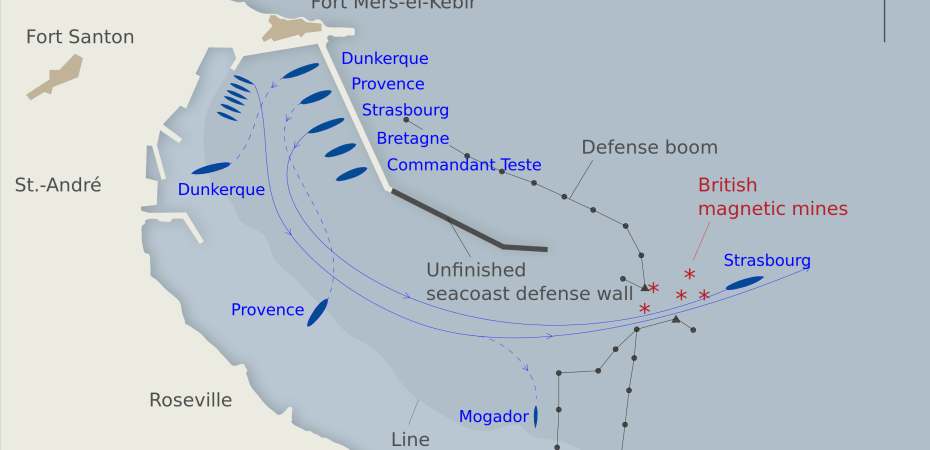
In the late afternoon on 3rd July 1940, the French fleet was approached by the British Navy. The French crews did not believe, right until the last moment, that the British warships would to fire upon them.

The French were doomed as, never expecting to be attacked by their allies, their ships had remained tightly moored, guns trained towards land.
Meanwhile the British warships were prepared for battle and free to manoeuvre in the open sea. Thus the massacre began and 1,295 French officers and seamen were killed.


The old super-dreadnought Bretagne, badly stricken in her magazines, capsized and sank, killing nearly 1,000 seamen, Dunkerque painfully breaking her mooring ropes, rapidly suffered four-15 inch shell hits. The first shell rebounced on the upper 330 mm turret roof, killing all the men in the right half turret as the left half turret remained operational, the second damaged the aircraft installations, the last ones, piercing the armored belt, damaged boilers and destroyed the electric power plant, thus the ship had to be moored on the other side of Mers-el-Kébir roadstead.

My great-grandfather was on the battle-crusier, the Strasbourg and was seriously wounded. His own story will be told at a later date.
In WWII, along with the Royal Navy, Strasbourg hunted German warships attacking commercial maritime routes. Strasbourg escaped from the July 1940 British attack on Mers-el-Kébir. It managed to escape damage in the hail of fire and using the smoke as a screen got underway carefully picking its way through the burning hulks and minefields. Once safely outside of the harbour, and racing at top speed, the Strasbourg and several destroyers out-manoeuvered British Admiral Somerville and made it safely to the French port of Toulon. Against overwhelming odds it was an incredible display of both courage and seamanship. Though frustrated, even the British Admiralty was admiring.

Strasbourg became the flagship of the French High Sea Forces. She was scuttled, in November 1942, when the German forces attempted to seize the remaining French-controlled warships. I, personally, believe this act proves that the French would never have allowed any of their ships to be used by their enemy. But Churchill was like a cornered rat and had fought accordingly.


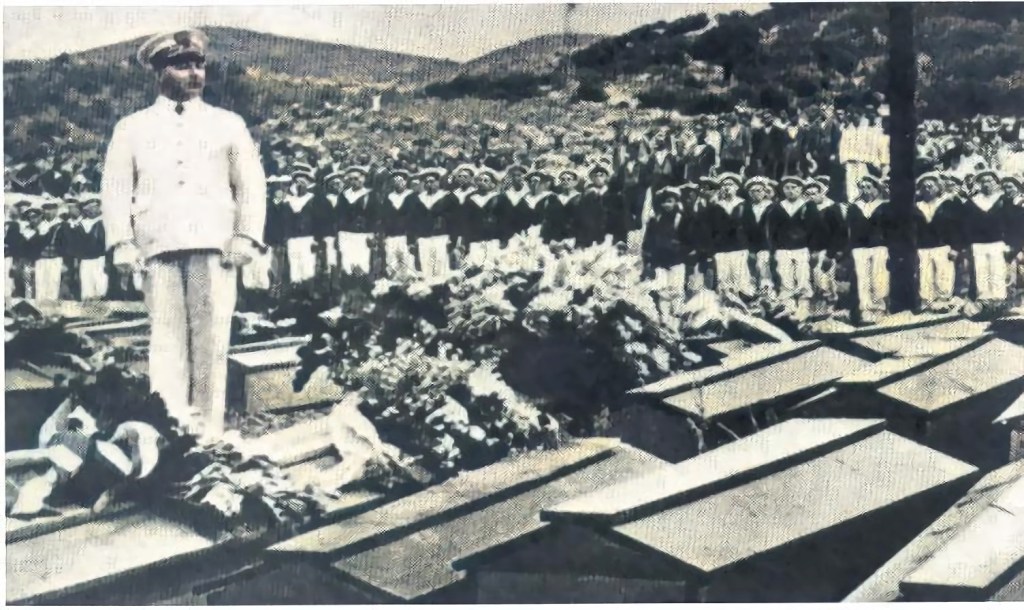
French Admiral Gensoul addressed the survivors: “You promised to obey your superiors, no matter what orders they gave you, to serve for the honour of the flag and for France. If that flag has been soiled today, it was certainly not your doing.“
The above is my own translation. A military historian translates his words as: “If there is a stain on a flag today, it is certainly not on yours.”
Lives lost at Mers el-Kébir 3-6 July 1940
| Officers | Petty Officers | Quarter-Masters & Sailors | Total | |
|---|---|---|---|---|
| Bretagne | 36 | 151 | 810 | 997 |
| Dunkerque | 9 | 37 | 179 | 225 |
| Provence | 1 | 3 | 4 | 8 |
| Strasbourg | 2 | 3 | 5 | |
| Mogador | 3 | 37 | 40 | |
| Terre Neuve | 1 | 2 | 6 | 9 |
| Armen | 2 | 3 | 5 | |
| Esterel | 1 | 5 | 6 | |
| Total | 48 | 205 | 1 042 | 1 295 |
The Reaction
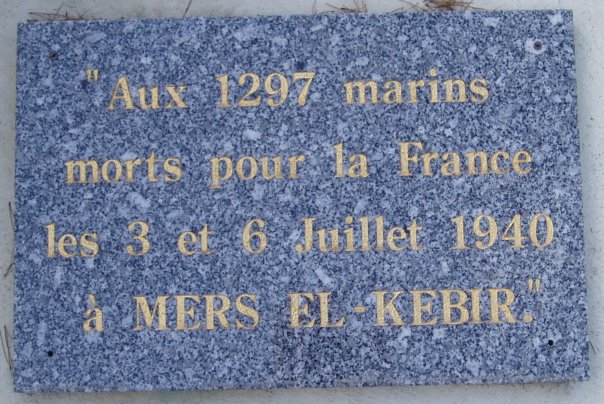
Aside from the loss of the main body of the French fleet, the cost of Britain’s Operation Catapult to the French was 1,295 men killed or missing, with 354 wounded. The British had only suffered two casualties when one of their planes was shot down, but the damage to British-French relations was incalculable. As a result of the attack, Vichy severed diplomatic relations with Britain.
The British attack was almost universally condemned in France and resentment festered for years over what was considered a betrayal by their former ally. The French thought that their assurances were honourable and should have been sufficient.
French aircraft retaliated by bombing Gibraltar and French ships exchanged fire several times with British ships, before a tacit truce was observed in the western Mediterranean.
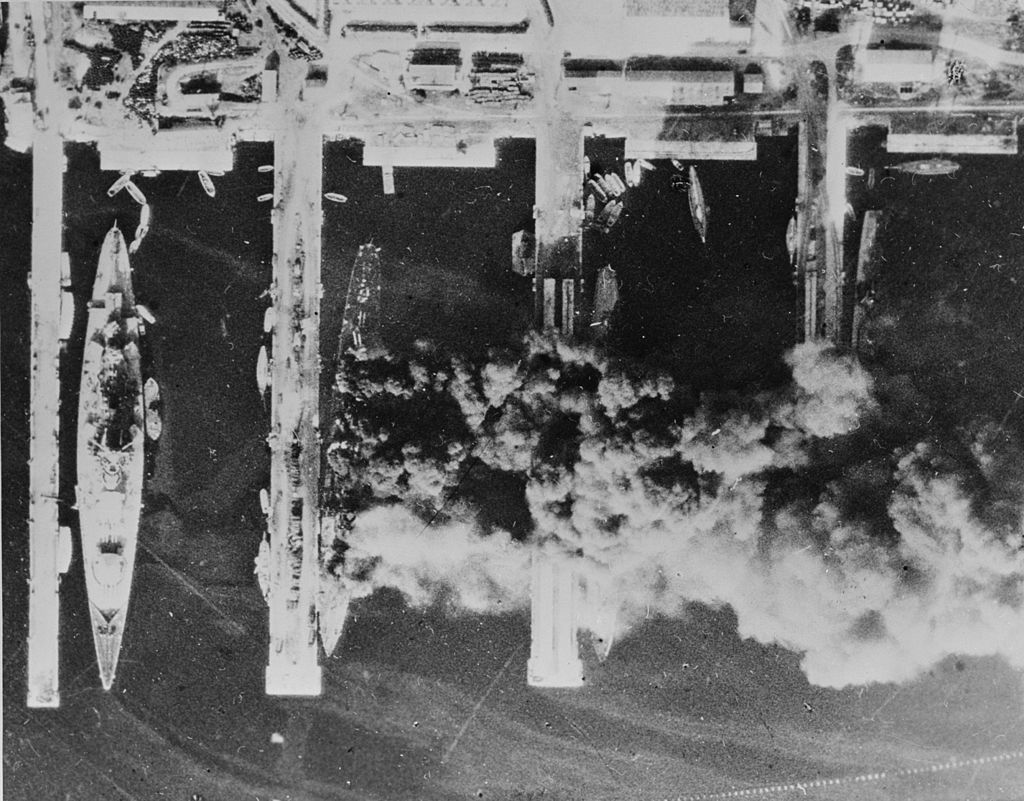
On 27 November 1942, after the beginning of Operation Torch, the Allied invasion of French North Africa, the Marine nationale (French Navy) foiled Case Anton, a German and Italian operation to capture ships of the Marine nationale at Toulon. They efficiently scuttled their ships and denied their use by the Nazis, just as they had assured the British that they would do back in July 1940.
Most senior officers of the Royal Navy were horrified at Churchill’s order to attack naval comrades with whom they and their crews had served and cooperated with for years.
For Admiral Godfrey, Director of Naval Intelligence, the British ultimatum to the French was humiliating, shocking and unacceptable.
“It is necessary to note that Churchill acted against the strongly expressed will of the three admirals present in the area.“
A.J. Marder,. Churchill and Admiralty 1939-1942.
On 9 January 1950, Admiral Cunningham wrote to Admiral Fraser, then First Sea Lord, that 90% of British senior officers including himself, thought Mers el Kebir was a monumental mistake and still believed so: “We made a gross mistake, a serious fault which many of us disapprove of.“
A.J. Marder,. Churchill and Admiralty 1939-1942.
For his part, British Admiral Somerville later commented that the action at Mers-el-Kebir was “the biggest political blunder of modern times and will rouse the whole world against us…we all feel thoroughly ashamed…” In a letter to his wife he predicted (correctly) that he would be criticised for having let the Strasbourg escape, and wrote that, “In fact, I shouldn’t be surprised if I was relieved forthwith. I don’t mind because it was an absolutely bloody business…The truth is my heart wasn’t in it.”
“I can not imagine that the French would deliver their fleet to the Germans. Has London thought of the repercussions if this operation were to be settled by force?“
Admiral Cunningham (Royal Navy).
“Winnie (Churchill) is crazy. I see what he wants but it’s a criminal solution.”
Admiral Sir Dudley Burton Napier North (Royal Navy).
“We would have done better to leave the French alone to devote ourselves to our real task: to fight the enemy! This bombing was damn heinous and stupid.“
Admiral Cunningham in 1952.
“No French admiral and less than any other, a French admiral imbued with a sense of ‘honour’ and dignity, would accept the ultimatum … The French navy was one of the great victims of English propaganda, its officers and men particularly suffered in their flesh as in their spirit.“
A .. Heckstall-Smith.
Churchill’s Follies
In my own personal opinion, Churchill’s decision was the wrong one, and ironically that opinion is supported by many senior Royal Navy officers. Churchill clearly did not trust their judgement and they did not trust his. One thousand two hundred and ninety seven men died in vain because of the paranoia of one man. And history had repeated itself.
This was the same Winston Churchill whose poor judgement had resulted in the Gallipoli campaign, known as “Churchill’s Folly” – another of his madcap ideas and one of the greatest military disasters in history. Some 80,000 Turks and 50,000 British, French, Australian and New Zealand troops died in a failed attempt to take the peninsula.
The Irish Times notes:
“By any standards, Gallipoli was a cynical military and political enterprise. Winston Churchill, then first Lord of the Admiralty, wanted “an alternative to chewing barbed wire in Flanders”, but one cannot help but wonder if what he wanted was in reality a military victory he could claim for himself.
“He helped to pitch Turkey into the arms of the Kaiser by seizing two of their dreadnoughts before they could be delivered from the British shipyards that built them.
“Many in Turkey today feel the Allies wanted the crumbling Ottoman Empire – which would have happily sided with the Allies – vanquished so they could distribute their territory as the spoils of war.“
Conclusion
Other French vessels were given an ultimatum to disarm and remain in port. They did so until 1943 when the French navy joined the allies.
All Churchill’s treacherous attack at Mers-El-Kebir achieved was to prolong the war by reducing the force of their potential allies against the Nazis, and cause considerable ill feelings which endured for decades, even amongst those, such as Free French leader General de Gaulle, who were most opposed to the Vichy regime.
In 1963, the then French President, Charles de Gaulle vetoed Britain’s application to join the Common Market and in 1967, he vetoed Britain’s application for the second time and accused Britain of a “deep-seated hostility” towards European construction. It was only in 1973, after de Gaulle’s death, that the United Kingdom, (along with Ireland and Denmark) finally entered the European Economic Community, which later became the European Union.
The European Union grew over decades from a trade treaty to an organisation that won the Nobel Peace Prize for its part in transforming Europe from a continent of war to a continent of peace.
The confusion and failure of communications that led to Mers-el-Kébir is a stark reminder of how things once were, and how, with Brexit, war in a united and peaceful Europe no longer seems to be an impossibility.

About The Author

Julie Anya Guthrie is from a small hamlet on the west coast of Scotland. She has Scottish, French and Russian ancestry and is married to an Italian. After graduating from Edinburgh University, she worked in France and Switzerland before returning to her native Scotland. Her influences include William Wallace, Gaetano Donizetti and Rosa Luxemburg.
 Vecchio
Thanks for sharing. What a terrible story. I was vaguely aware that Churchill was responsible for the debacle at Gallipoli but not that he had ordered this massacre.
I never understood why General de Gaulle seemed to dislike Brits after all we’d done to help him.
I didn’t realise that we’d murdered almost 1,300 French sailors in cold blood.
We knew that the Nazis committed War Crimes but it seems that Churchill’s war crimes were hushed up!
LikeLiked by 1 person
From Facebook:
Mark Scott
Excellent piece of work. Very well written. Interesting that there is reference to Churchill’s defeat in my home city Dundee in 1922. There is a story that claims the main reason for his defeat was anti-semitic and anti-Irish comments he had made. It is said this resulted in him being literally chased out the city by working class men. He vowed never to return. He kept his word.
LikeLike