

DNA testing is a powerful and relatively new way to confirm family relationships with a number of companies offering various services including ethnicity estimates, health and traits and cousin matching.
Collaborations

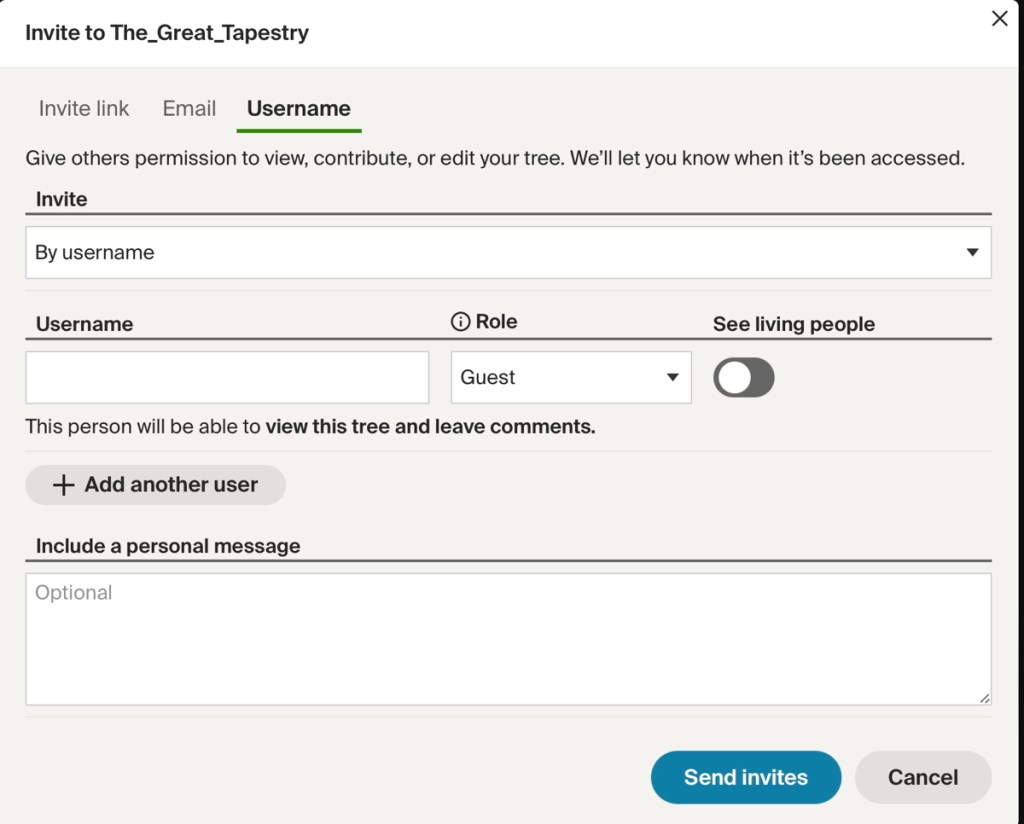
We are happy to collaborate with DNA matches to attempt to work out where we share common ancestry. (If you are a match on Ancestry DNA you will first need to send an invite to user: iainold).
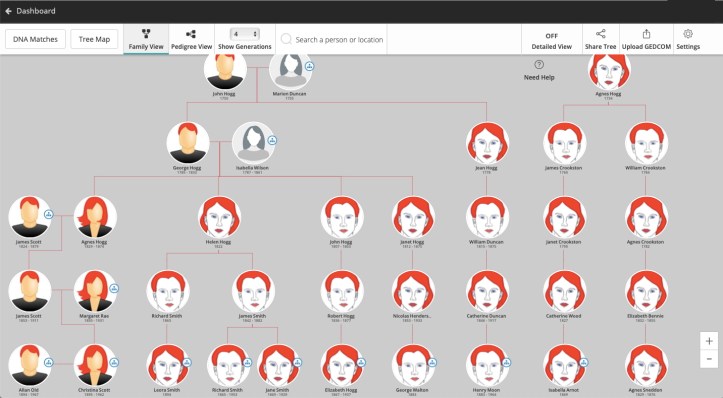
Then send me your username so I can do the same to allow you to view our tree on Ancestry, named “The Great Tapestry“, which currently has 96,269 individuals.
If you do not know your username, then send the e.mail address that you use for your Ancestry account. Good luck!
Recommended Reading

The field can be a daunting one to those who are unfamiliar with the science, but there are excellent guides such as Blaine Bettinger’s The Family Tree Guide to DNA Testing and Genetic Genealogy which is recommended for both beginners and more experienced investigators.
Choosing a DNA Test and getting the most out of it
If you wish to test but do not need the results immediately it is a good idea to wait as special promotions are often available throughout the year for Valentine’s Day, Father’s Day, Mother’s Day, etc etc. E.g. today, Saturday 7th May, MyHeritage has a Spring Sale with DNA kits reduced from £79 to £39.
Buying a DNA test can be a big investment and before you decide which company you wish to test with it is important to have an idea what you want from your test.
- What is your budget? Some tests are more expensive than others and some require an expensive subscription in order to view the trees of your matches.
- Are you primarily interested in health traits or ancestry, or both?
- Are you interested in your deep ancestry or your closer relatives?
- Do you want to know about your father-line (Y-DNA test), mother-line (Mitochondial DNA test) or identify recent DNA relatives (autosomal DNA test)?
- Do you simply have a casual interest, perhaps in your ethnicity makeup, or do you want to carry out in-depth research and create chromosomal maps that will tell you from which ancestor you inherited a particular segment of DNA? (actually easier than it might sound).
Each of the companies below offer a test which may be best suited to your specific needs. It is always worth doing some in-depth research beforehand rather than jumping straight in and buying a test simply because of a plausible TV advert, only to discover later that you have purchased an expensive white elephant.
Also, while the opinion of experts can be invaluable, you should be aware that some receive sponsorship or a bonus if someone buys a test kit via a link on their site or blog. So, sometimes experts and influencers are not always quite as objective as we might hope. (We are not linked to any of the companies and receive no financial backing from them).
The main testing companies
23AndMe

23andMe is great for researching DNA and health matters. 23andMe was primarily concerned with health traits but also provides useful ancestral reports. These include Neanderthal Ancestry, Maternal Haplogroup, Paternal Haplogroup (males only), Ancestry Composition (Ethnicity), an Ancestry timeline and DNA painting of your chromosomes. There is also an all important list of DNA relatives. 23andMe has a chromosome browser so it is possible to carry out chromosome mapping. A useful tree predicting how you are related to your closest matches is provided by 23andMe for verification and expansion. However, user-created trees can not be uploaded so communication and collaboration on common ancestry, always important in family history research, is essential to make the most of your 23andMe genetic matches.
MyHeritage

MyHeritage In a relatively short time the MyHeritage DNA test has become one of the most popular. As with Ancestry and FindMyPast, MyHeritage provides subscription access to billions of historical records. As well as an ethnicity estimate and DNA matches, MyHeritage provides various tools including an all-important chromosome browser and an Autoclusters tool that organises your DNA Matches into clusters that likely descended from common ancestors. MyHeritage looks modern and the results are well-presented using a simple and easy to use interface. Their Theory of Family Relativity™ is useful for automatically working out relationships even via several different and unconnected trees. However, the technology is only as good as the data input and it can sometimes produce false matches where there are inaccuracies in the user-added trees. MyHeritage also has some excellent tools for colourising, enhancing and even animating old black and white photos. GEDComs of any size can be uploaded and MyHeritage is great for building family trees (Tree size is limited to 250 individuals for a guest account). In our experience, (see part 2) MyHeritage’s ethnicity estimates appear to be rather imprecise, but as they are a relatively new testing company no doubt this will improve as their customer base increases.
FamilyTreeDNA

FamilyTree DNA offers not just autosomal, but also mitochondrial DNA and several different Y-DNA tests. The Y-DNA tests look at a varying number – 12, 25, 37, 67, 111 or 700 – short tandem repeats (STRs) on the Y chromosome. The Y-37 test is a good starting point for those on a limited budget, and the test can be upgraded. The Y-111 test provides more results for a higher-resolution comparison. The ultimate test the Big Y-700 test looks at everything that is genealogically relevant on the Y chromosome and works out your placement on the world’s largest Y-DNA haplotree. Various tools including an all-important chromosome browser are provided. User trees can be added. The recently updated interface still appears a little dated compared to the likes of MyHeritage but it remains perfectly functional. FamilyTreeDNA also has the largest Y-DNA database and has a large number of excellent and active user-groups that specialise in surname studies.
Ancestry

Ancestry‘s DNA test has been likened by some wags to a sports car without an engine and by others as an excellent DNA test for sheep. Ancestry has been providing DNA testing since 2012 and its main strength lies in the ease of finding matches as it still has the largest database. Another plus is that many users also have linked trees on the site as being able to work how you are related to a DNA match is essential. There is also no limit on tree size even for guest members, unlike MyHeritage where guest trees are restricted to 250 individuals. However, unfortunately, at the time of writing in May 2022, Ancestry still lacks basic and essential tools such as a chromosome browser so it is impossible to construct chromosome maps or carry out triangulation with your Ancestry DNA matches. Transferring your raw DNA file to another site such as GEDMatch is therefore necessary for any Ancestry customer who wants to carry out such studies. Ancestry has another disadvantage in that it does not accept DNA uploads from other companies contributing to the impression that the company is somewhat backwards, introverted and isolationist. Ancestry once offered Y-DNA and mitochondrial DNA testing, but these are no longer available. Such tests can, however, still be obtained at FamilyTreeDNA, 23andMe and LivingDNA. Ancestry also has a brick wall – in the form of a paywall – as in addition to the relatively high cost of their test, a subscription is required in order to view even what Ancestry somewhat misleadingly describes as “public” trees. This all means that the Ancestry DNA journey can be a rather expensive one and given the lack of basic tools that are available elsewhere, somewhat frustrating and extremely poor value for money.
livingDNA

Living DNA is great for tracing deep ancestry. Founded in the UK in 2016, the company conducts three types of DNA analyses: autosomal, Y-chromosome and mitochrondrial. However, while the DNA test results provide information about the origins of a person, genealogy features such as connecting to relatives are not yet available.
Homedna

HomeDNA. We have no personal experience of this company. PCMag’s review stated: “HomeDNA offers an extremely close look at where your ancestors lived, but it doesn’t offer much else in the way of researching your past or understanding more about your genetics.”
whole genome sequencing
Many years ago when I was visiting Stony Brook University on a lecture tour with some colleagues, the late Professor Sidney Brenner (Nobel prize in Physiology or Medicine in 2002) talked about sequencing the human genome and told us “Rather than cross the Atlantic on the Mayflower, I would prefer to wait for the jumbo jet to be invented.”

Nowadays it is possible to purchase whole genome sequencing for a reasonable price eg from Sequencing for $399. The current problem is possibly rather like owning a copy of every book ever published; how do you analyse the massive amounts of data and find what is of interest to you amongst the “junk” DNA? Having anticipated the problem the company sells a large number of apps and reports such as Complete genome analysis for $189, Medication & Drug Response for $59, Wellness & Longevity for $69, Genetic Counselling for $169, etc etc.
While currently in its infancy, whole genome sequencing for private individuals seems likely to take off and become the norm in the near future.
OTHER Companies


There are also a number of companies such as MyTrueAncestry that will, for a price, allow you to upload your raw DNA file and eg carry out analysis for health traits or compare it to ancient samples. These reports are often well-presented (see above). However with a little practise, you can compare your DNA to ancient samples yourself using sites such as GEDMatch (see below).
Essential Online DNA Tools
gedmatch

GEDMatch does not sell DNA testing kits but has a suite of useful free tools for DNA analysis which includes, amongst many others:
One-to-many DNA comparisons which are a popular and effective way to compare your genetic profile to all other GEDmatch members. Emails of matches are provided for quick contact.
One-to-one DNA comparisons, a comparison to one relative to help narrow all comparison results and confirm how much DNA you share with someone before contacting them.
Admixture, a well-known analysis for identifying biogeographical ancestry, or ethnic background. Like 23and Me, it shows the proportion of your DNA from a particular location.
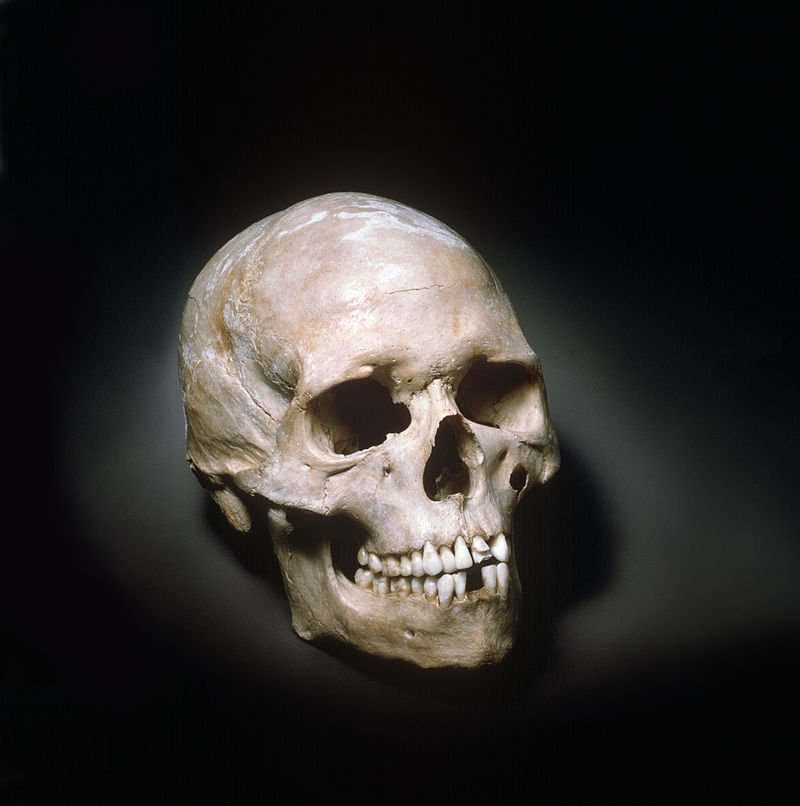
Archaic DNA matches, which compares your kit with various ancient and archaic samples uploaded to GEDmatch by Felix Immanuel. Most these ancient DNA samples are thousands of years old, and often little is known about the individuals from whom the samples were obtained. Although comparing your DNA with ancient samples will not help progress your own family history research, it is fascinating to think that many of us share small but significant fragments of DNA with Neanderthals and other Hominina (the Hominini after the split from the chimpanzees) i.e. members of the human clade.
Tier 1 tools. It is also possible to subscribe to more advanced “Tier 1” GedMatch tools which can help researchers delve deeper in their genealogical research.

Dnapainter

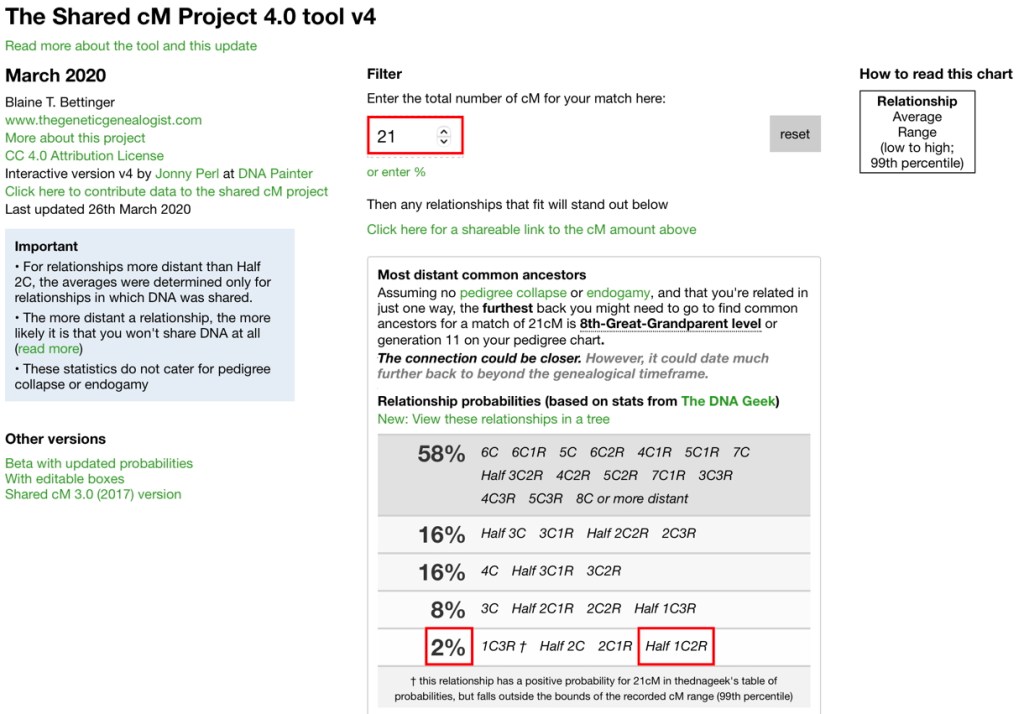
DNAPainter is an award winning suite of tools for mapping segments of DNA to ancestors, visualising your direct line, figuring out how you’re related to a DNA match, and using matches to identify an unknown ancestor.
Blaine Bettinger highly recommends DNAPainter, writing: “DNA Painter is an easy-to-use tool that helps genealogists make sense of DNA testing. By mapping segments of DNA to chromosomes, we can begin to see which ancestors gave us which pieces of DNA, and thus how new matches are related. As a result, DNA Painter has quickly become an essential tool for genealogists!”
DNA Painter is free, but as with GEDMatch, a subscription is required for those who want to create multiple maps and use some advanced features.

Privacy concerns
Nothing in life is risk free and even the most reputable companies have been hacked. Nevertheless, research published in the scientific journal eLife by geneticist Michael Edge from the University of California suggested there could be security concerns with customer DNA data held online by some of the smaller genealogy companies. They suggested that hackers using creative means could easily exploit certain upload-based services. Biostatistician Sharon Browning of the University of Washington stated that if people “care about their DNA’s privacy, then they shouldn’t upload to these databases.“
Consumer Protection
It can also be important to find out about your rights as a consumer – rights which can vary greatly depending upon whether one is a citizen of the UK, the European Union, the USA or other countries. It is also important know what your data may be used for and with whom it might be shared before transferring raw files from the protection of the company where it was originally tested to third party organisations.
GEDMatch was in the news in 2019 when police used the database to prosecute suspected criminals using DNA evidence. Recently, law enforcement agencies have started using DNA taken from crime scenes to identify potential perpetrators. By uploading anonymous samples to public genealogy sites and identifying confirmed relatives of the DNA provider, investigators can sometimes identify suspected criminals.
This technique was used to track down a man believed to be the Golden State killer, who is suspected to have killed thirteen people and committed fifty rapes in the 1970s and 80s. It was also used to identify the suspected NorCal serial rapist, who allegedly assaulted ten women between 1991 and 2006. Both men were arrested and charged using DNA evidence obtained using GEDMatch.
GEDMatch subsequently updated its terms of service and privacy policy, in part to reflect the privacy concerns that some users had raised after suspected criminals were alleged to be using the site. Users now have the option of selecting how they want their DNA to be categorised when a raw DNA data file is uploaded to GEDMatch. Users now have the choice of “opting-in” or “opting-out” of permitting their DNA to be used for criminal investigations. There is also an option to set a kit to “private,” whereby it will not appear in searches performed by other users.
 Vecchio