
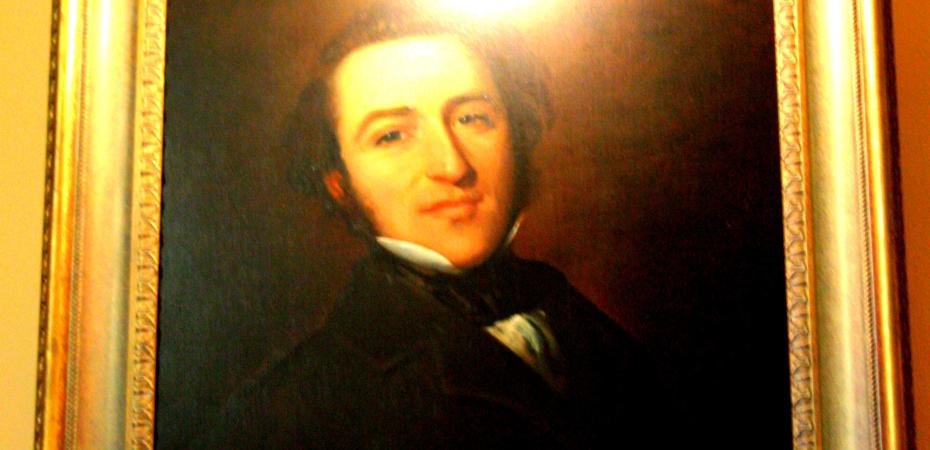
In the first six parts of this series we investigated the statement in Burke’s Landed Gentry that the Rev. Oliver McCausland of Strabane in Ireland claimed to be “Chief of the clan of the Macauslanes, of Glenduglas, in Dumbartonshire”.
There appeared to a number of inaccuracies regarding this statement. His claim may have been based on a misinterpretation of a letter written in 1711 from Wester Kilbride of Glen Fuin by ten senior members (probably tacksmen) of Clan McAusland to Oliver McCausland of Strabane, son of the Alexander McCausland who served with Oliver Cromwell. This letter requested Oliver’s financial assistance in order to redeem the McAusland Barony that had been mortgaged to their feudal superior, the Baron of Luss (Sir Humphrey Colquhoun, 5th Baronet Colquhoun).
We concluded that Oliver McCausland of Strabane had not redeemed the mortgage on the McAusland Barony, and even if he had become Baron, as the senior member of a junior McAusland line, he would not have become the Chief of Clan McAusland.
In this, Part 7, we look into the tangled web of the Colquhoun and Grant successions and the 1707 document of Tailzie. We conclude that even had Oliver McCausland in Strabane decided to respond positively to the 1711 letter and attempt to repurchase the McAusland Barony, this would not have been possible. The ancient McAusland lands had by then been absorbed into the Barony of Luss and in 1707, a Deed of Tailzie meant that the Colquhoun lands could not be split and that no part of them could be sold off.
The Tangled Web of the Colquhoun Succession
Sir Humphrey Colquhoun, 5th Baronet Colquhoun (1649 – 1718) succeeded his father in 1688. He married Margaret Houston, daughter of Sir Patrick Houston of that Ilk, 1st Baronet and Anna Hamilton on 4th April 1684 at Luss. However, the couple only had a daughter, Anne Colquhoun, who was born on 11th August 1685. Anne Colquhoun married the then James Grant of Freuchie, third but second surviving son of Ludovick Grant of Grant on 29th January 1702.

Having no sons, Sir Humphrey Colquhoun needed to attend to the Colquhoun succession. He therefore resigned his baronetcy to the Crown on 30th March 1704 and on 29th April 1704, he obtained a new patent from Queen Anne with the former precedence and limitation, failing heirs male of his body, to James Grant of Pluscardine and the heirs male of the latter’s marriage with his daughter Anne Colquhoun.
In order to ensure that the Grant and Colquhoun titles would not be merged, Sir Humphrey also enacted a deed of Tailzie in 1707, and we will look into this later, and its significance for the McAuslands.
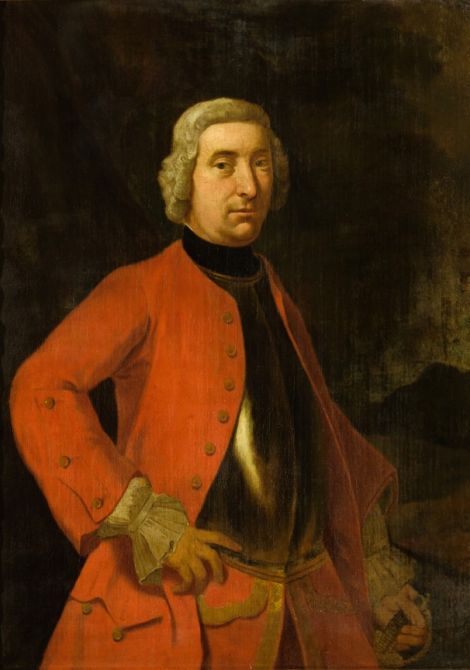
James Grant thus became heir of entail to his father-in-law’s estate and baronetcy by the 1704 patent. In 1718, upon succeeding his father-in-law to the baronetcy, he became, Sir James Colquhoun of Luss. In 1719, however, upon the death of his elder brother Alexander, Sir James succeeded as Clan Chief of the Grants and to the Grant estates. Therefore he reverted to his family name of Grant, but kept the title of baronet. On 24 June 1721 Sir James was created 1st Lord Grant in the Jacobite peerage by James Francis Edward Stuart, King James VIII of Scotland & III of England & Ireland to the Jacobites. These creations were not recognised in English, Scots or Irish law, but the titles were used in Jacobite circles in Continental Europe and were recognised by France, Spain and the Papacy.
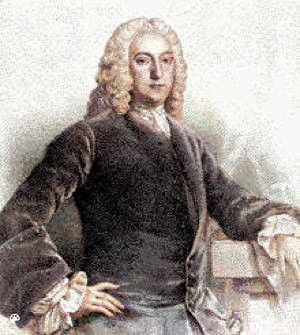
Sir James passed the Colquhoun inheritance by the entail to his second son Ludovick. On 14th August 1719, upon the death of his father’s elder brother, Ludovick became, as second son, the 7th Baronet Colquhoun, with his elder brother Humphrey becoming heir to the Grant estates.

However, in 1732, Upon death of his elder brother, Humphrey, Ludovick in turn became heir apparent to the Grant estates and he was obliged to make over the Colquhoun estates, which he had till then held, to his younger brother James, who became Sir James Colquhoun, 8th Baronet Colquhoun. Later, on 27th June 1786, Sir James was created 1st Baronet Colquhoun, of Luss (a Great Britain baronetcy) by the then Elector (later in 1814, King) of Hanover, who was known as King George III to his supporters in Great Britain & Ireland.
The 1707 Colquhoun Tailzie Including “Couldenoch”
We now return to the McAuslands, and where they fit in to this tangled web.
In their excellent “The history and survey of Cùlanach settlement in Argyll“, Alistair McIntyre (History) and Tam Ward Archaeology)” mention:
“1707 Register of tailzie, referring to Ann Colquhoun, or Grant, and listing a large number of properties, including COULDENOCH. (Fraser: Chiefs of Colquhoun)“.
The fact that Caldenoch was included in a Tailzie is of enormous significance. In Scots law, tailzie is a feudal concept of the inheritance of immovable property according to an arbitrary course that has been laid out, such as in a document known as a “deed of tailzie”. It was codified by the Entail Act 1685.[1] [2] [3]
Tailzie is similar to the common law concept of fee tail, as the “heir in tailzie” is entailed to the property. An “heir in tailzie” could not sell the property so inherited, except to the feu superior (that is, to the holder of the dominum directum of the feu).
If the previous McAusland lands were indeed included in this 1707 Tailzie, then they could no longer be sold to anyone, even the previous holder of the dominium utile (i.e. the McAuslands), apart from the feudal superior (in this case presumably either the Crown (Queen Anne) or her half-cousin, the Duke of Lennox (King Charles II’s illegitimate son by Louise de Penancoët de Kéroualle, Charles Lennox, 1st Duke of Richmond & Lennox).
The Chiefs of Colquhoun and their Country by Sir William Fraser (1869)

Sir William Fraser, KCB (18 February 1816 – 13 March 1898) was a solicitor and notable expert in ancient Scottish history, palaeography, and genealogy. He trained as a solicitor, and his professional involvement with peerage cases initiated a lifetime of research into the genealogy of Scotland’s most prominent landed families. Each of these families had its own charter chest, containing several centuries worth of muniments and letters. Fraser spent decades examining these collections, and used the material to furnish a series of family histories which were to occupy him over the course of a long and productive career. These volumes, produced at private expense, were accompanied by chromolithographic illustrations of the manuscripts in question. Fraser’s two part “The Chiefs of Colquhoun and their Country” contains a wealth of information regarding the Colquhouns.
The document of Tailzie that was referred to by McIntyre and Ward is described on pages 311-313.


Although Caldenoch does not appear to be mentioned specifically by Fraser, the intent of the document is very clear.
Firstly, the Colquhoun lands were to be inherited “without division”.
Secondly, “This bond of tailzie contained the provision that it should not be in the power of the said James Grant and Anne Colqulhoun, nor any of the heirs of tailzie above mentioned, to sell, alienate, and dispone the said lands, etc., or any part thereof, or to grant securities, redeemable or irredeemable, by infeftments or otherwise, nor to contract debts thereupon, except in so far as they had power in the manner therein mentioned, nor to violate or change in any way the order of succession above mentioned.”
The full document is held by National Records of Scotland, and may be ordered and consulted.
We therefore conclude that even had Oliver McCausland of Strabane, or any of the other members of the family, such as Dougald McAuslane the “neirest aire”, wished to repurchase the lands and thus become the 25th Baron McAusland (in our reckoning) this would not have been possible as in 1707 the lands had been entailed and therefore no longer could have been sold, even back to the McAuslands.
In Part 8, we will look into the possible ranks of the McAuslands who signed the 1711 letter and the properties that they may have held.
Thanks to Brian Anton, Matthew Gilbert, Michael Barr, Dave McCausland and others for helpful discussions and sharing their research.
 Vecchio
#/media/File:Portrait_of_Sir_William_Fraser,_Merchants_Hall,_Edinburgh.jpg)