
Questions and Answers and the Opinion of the Current Lord Lyon
Contrary to our conclusions over the previous five articles that the 1711 letter to Oliver McCausland of Strabane had been misinterpreted and that claims of the Irish branch of the family had no validity, it has been suggested that:
- The McCauslands of Strabane in Ireland had the right to declare that they were Chieftains of the McAusland sept of Clan Buchanan
- The 1711 letter was a de facto and de jure offer to Oliver McCausland to become chieftain of the McAuslands and
- There was no requirement for the McCauslands of Strabane to be the senior line in order to become chieftains of the sept
We will examine each of these claims in turn and quote the declarations of the current Lord Lyon regarding such examples.
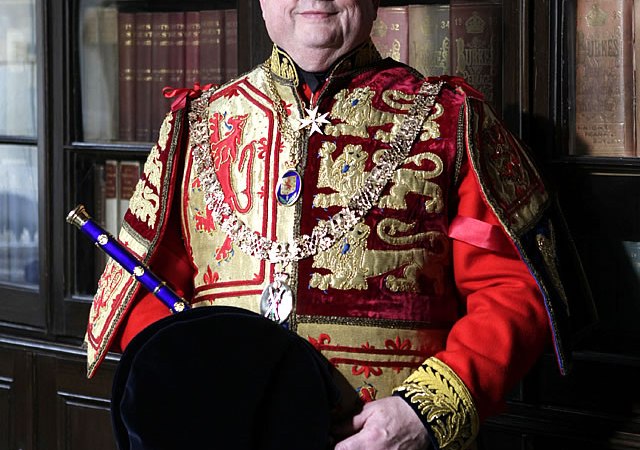
We are fortunate that on 16th December 2021, Dr Joseph Morrow CBE, QC, FRSE, the Rt. Hon. The Lord Lyon King of Arms, and Vice President of the Royal Celtic Society, issued guidance on matters of succession to the chiefship of a clan, looking at the history of clans and how the succession of chiefs has evolved, how chiefs are recognised, and the process for identifying a new chief when the original chiefly line has expired.
Note that the advice quoted is not definitive. (It does not, for example, specifically deal with female line succession, nor does it address a variety of questions currently exercising the lawyers specialising in the field, including adoption, surrogacy, gender reassignment, or legitimacy of birth.) Nor was it issued as a response to the claims of the McCauslands of Strabane, but rather as general guidance. The Lyon Clerk should be consulted for the detail of individual cases and further information can be found at the Court of the Lord Lyon.
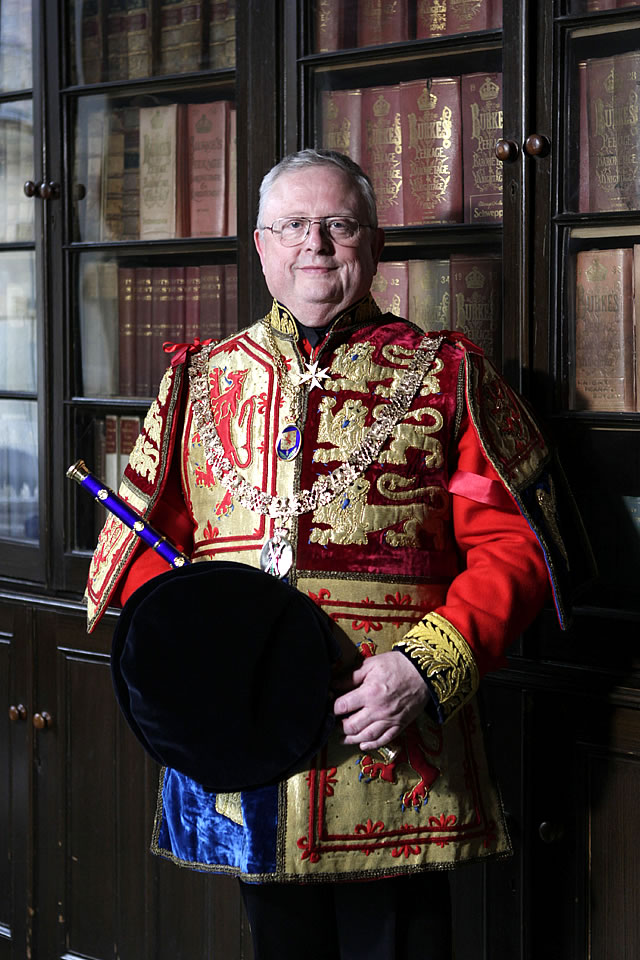
“For a significant part of its long history large parts of Scotland have been organised in clans and families. These clans and families centred upon kindred groups but their power extended further, particularly in the cases of clans, to encompass all those living in the geographical areas they dominated which altered over time.
“These clans and families were led by chiefs, their power sustained by their own personal authority and the support of great magnates and landed gentry all coming to be recognised by the ordinary people. As chiefs came to be granted land by charters from the Crown their power and prestige increased and their position came to be universally recognised.
“Clans and families became a building block of Scottish society encompassing blood, social, marital, martial, commercial, legal, cultural and emotional ties. Over time and at different times in different parts of Scotland economic, industrial, social and political change weakened some of those ties – for example the martial, commercial and legal ties – until the clans and families became principally organisations bound by kindred, social, cultural and emotional ties.
“Scottish clans and families are organic groupings inextricably connected to Scotland, its culture, law, history and society. Many have a chief. Some, at present, do not because the genealogical connection to past chiefs has been lost and await the day a chief is identified or selected.“
Dr James Morrow, Lord Lyon King Of Arms, 6th December 2021.
Question 1. Did the McCauslands of Strabane have the right to unilaterally declare themselves chiefs of the McAusland sept?
Answer 1. It would appear that they did not:
“Since at least the 16th Century to be recognised as chief of a clan or family has required an individual to be entitled to bear the undifferenced arms of the clan or family (i.e. the principal arms of the clan or family that descend from one chief to the next in undifferenced form through the generations) and so be “Chief of the Name and Arms” of the clan or family. It is for the Lord Lyon to determine who has legally succeeded and is entitled to bear the undifferenced arms of a clan or family.“
Dr James Morrow, Lord Lyon King Of Arms, 6th December 2021.
Question 2. Could the 1711 letter of the McAuslands of Glen Fruin to Oliver McCausland of Strabane be considered to be an offer to him to become the McAusland chieftain?
Answer 2. It would appear that it could not:
“The ad hoc derbhfine was an ancient process for choosing a successor to the late head of a royal house or great family. This process was adopted within the Scottish clan system for the purpose of selecting a chief involving selection by the great and the good of the clan of an individual from a group falling within the chiefly bloodline. That group essentially comprised all members of the clan, male or female, who could trace their ancestry to the most recent great grandfather in the chiefly line. With social and economic change this process fell into disuse in or around the 13th and 14th Centuries.“
Dr James Morrow, Lord Lyon King Of Arms, 6th December 2021.
Question 3. Could the McCauslands of Strabane simply assume that all senior McAusland lines had died out and declare that they were the chiefs?
Answer 3. No:
“…where in one generation there were six brothers and the person making the claim is descended from the sixth and youngest brother, that person would require to satisfy the Lord Lyon not only of that person’s own descent but also that all lines descending from the five older brothers – each of whom would have a senior and so superior claim to the undifferenced arms – has been extinguished. This task must be carried out through all the relevant previous generations.”
Dr James Morrow, Lord Lyon King Of Arms, 6th December 2021.
Conclusion
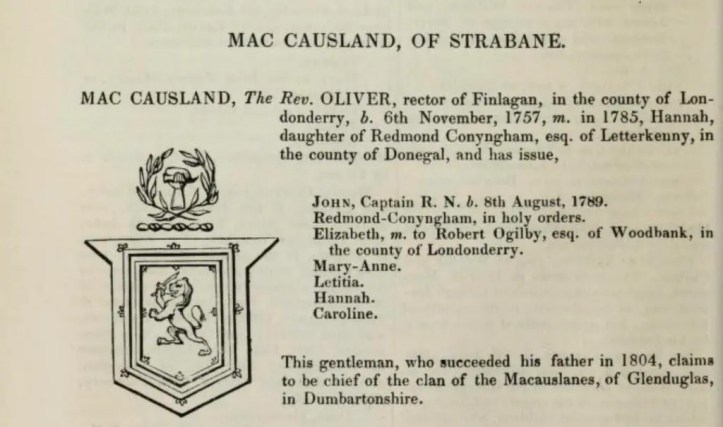
We conclude that the M(a)cCauslands of Strabane had no legal right to back up their alleged claim to be “chief of the clan of the Macauslanes, of Glenduglas, in Dunbartonshire” as reported in Burke’s Landed Gentry.
In Part 7, we will look into the 1707 Colquhoun deed of Tailzie and the consequences for the McAusland Barony.
Thanks to Brian Anton, Matthew Gilbert, Michael Barr, Dave McCausland and others for helpful discussions and sharing their research.
 Vecchio