
In this, the fifth of a series of articles on the McAuslands of Caldenoch, we will examine the unknown possible 13th to 17th Barons of Caldenoch and their part, if any, in the 1421 Battle of Baugé.
Alexander McAusland of Caldenocht, and his part in the 1421 Battle of Baugé

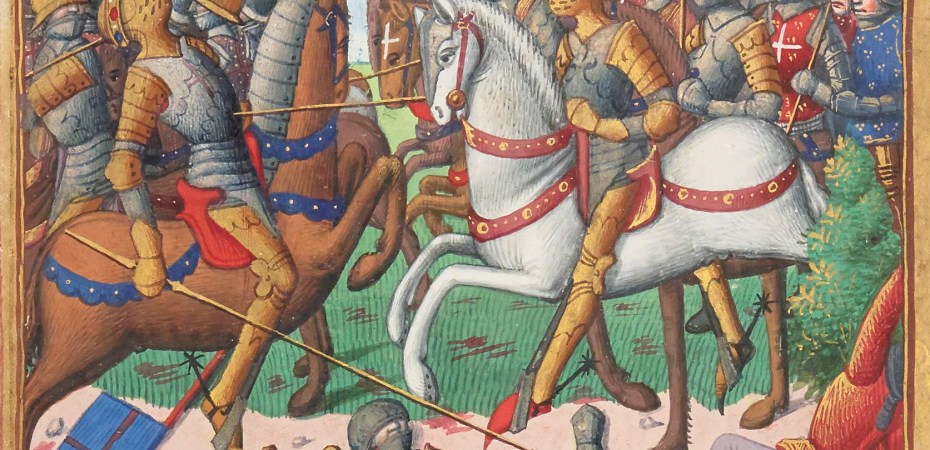
Illustration from the manuscript of Martial d’Auvergne, Les Vigiles de Charles VII, c. 1484.
Who killed the Duke of Clarence at the 1421 Battle of Baugé in France? Was it a McAusland of Caldenoch?
According to some accounts, an Alexander McAusland is one of those recorded as killing Thomas of Lancaster, 1st Duke of Clarence at the Battle of Baugé on 22 March 1421. Clarence was the second son of King Henry IV of England, brother of Henry V of England, and heir presumptive to the English throne, and according to the Treaty of Troyes, also heir presumptive to the French throne, in the event of his brother’s death.
The Battle of Baugé, fought between the English and a Franco-Scots army on 22 March 1421 at Baugé, France, east of Angers, was a major defeat for the English in the Hundred Years’ War and is said to rank only after Bannockburn and Stirling Bridge as a historic (albeit relatively unknown) Scottish Victory. The English army was led by Thomas, Duke of Clarence, the brother of Henry V of England, while the Franco-Scots were led by John Stewart, Earl of Buchan, and Gilbert Motier de La Fayette, the Marshal of France. The total English strength was 4,000 men, although only 1,500 deployed, against 5,000 French and Scots.
There are several accounts of the Battle of Baugé; they may vary in the detail; however, most agree that principal factor in the Franco-Scottish victory was the rashness of the Duke of Clarence.[7] It seems that the Duke of Clarence did not realise how big the Franco-Scottish army was as he decided to rely on the element of surprise and attack immediately. He discounted the advice of his lieutenants, the Earl of Huntingdon and Gilbert Umfraville, to consolidate his own force and position; instead he ordered the Earl of Salisbury to round up all the archers and follow him as soon as possible. Clarence then with only about 1500 men-at-arms available, and virtually no archers, charged the Franco-Scottish lines. The Scots rallied hastily, and battle was joined at a bridge which Clarence attempted to cross. A hundred Scottish archers, under Sir Robert Stewart of Ralston, reinforced by the retinue of Hugh Kennedy, held the bridge and prevented passage long enough for the Earl of Buchan to rally the rest of his army.[4][8]
When Clarence finally forced his way across, he was confronted with the main body of the Franco-Scottish army; its men-at-arms were dismounted and were well defended by the Scottish archers.[7] In the ensuing melée, John Carmichael of Douglasdale broke his lance unhorsing the Duke of Clarence. There are several versions of how Clarence met his death, but, according to Bower, the Scottish knight Sir John Swinton wounded the prince in his face, but it was Alexander Buchanan who is credited with killing the Duke with his mace and holding the dead Duke’s coronet aloft on his lance in triumph.[2][4] Another version stated that a Highland Scot, Alexander Macausland of Lennox, was responsible for Clarence’s demise, whereas the Burgundian chronicler Georges Chastellain has the Duke killed by a Frenchman.[7][9]
The confusion appears to have arisen due the early Buchanans changing their surname from McAusland to McAusland of Buchanan to Buchanan. This change to the territorial surname was gradual with McAusland and Buchanan both being used for several generations. In fact, the knight who killed the Duke of Clarence was not Alexander McAusland of Lennox (presumably of Caldenoch), but Alexander McAusland of Buchanan. Although the son of Sir Maurice Buchanan (aka McAusland) of that Ilk, 10th Chief of Clan Buchanan, & possible 10th Baron of Caldenoch, (also possible MRCA of R-FGC32576) Sir Alexander never succeeded his father to become 11th Chief of Clan Buchanan as he was killed three years later at the 1424 Battle of Verneuil, in which the Scottish army was all but destroyed. Sir Alexander McAusland of Buchanan was likely the first cousin of John McAusland, 12th Baron of Caldenoch.
The unknown possible 13th to 17th Barons of Caldenoch
Nothing is known about the possible successors to the 12th Baron, and they are brought to life on in our imagination as avatars.

Image Copyright Playgroup.
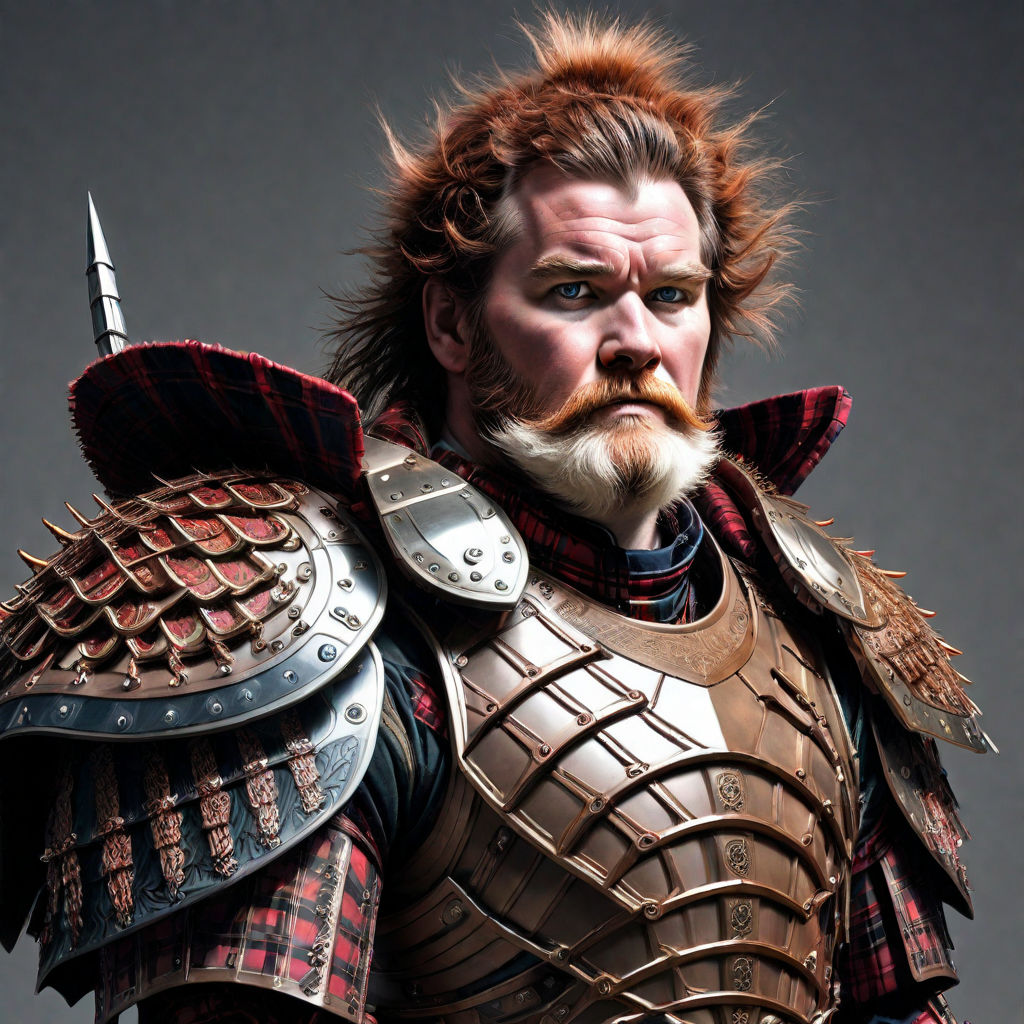
Image Copyright Playgroup.
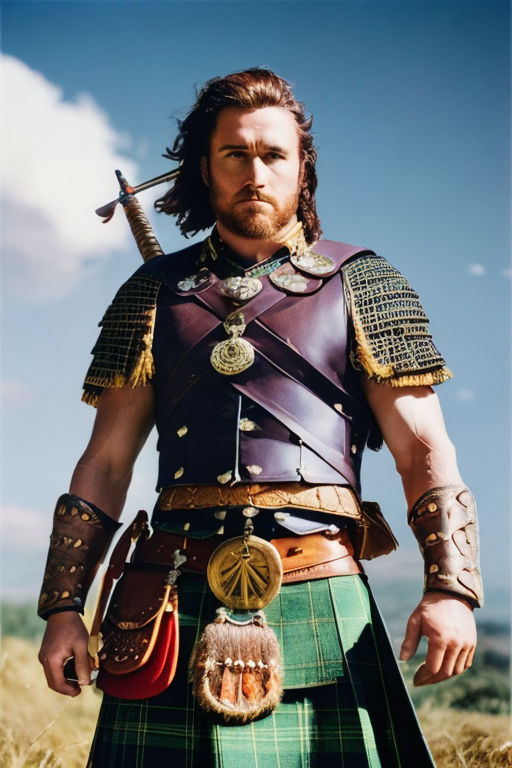
Image Copyright Playgroup.
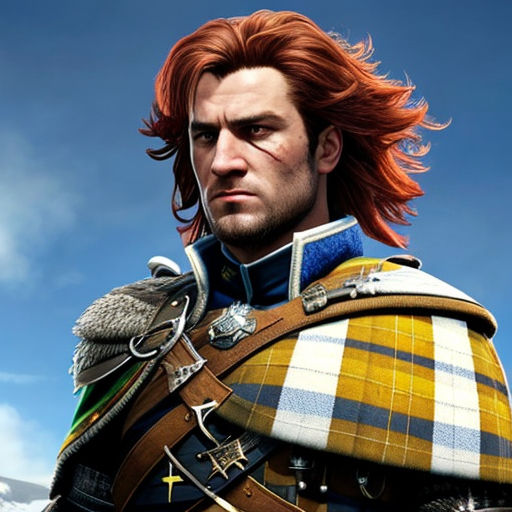
Image Copyright Playgroup.
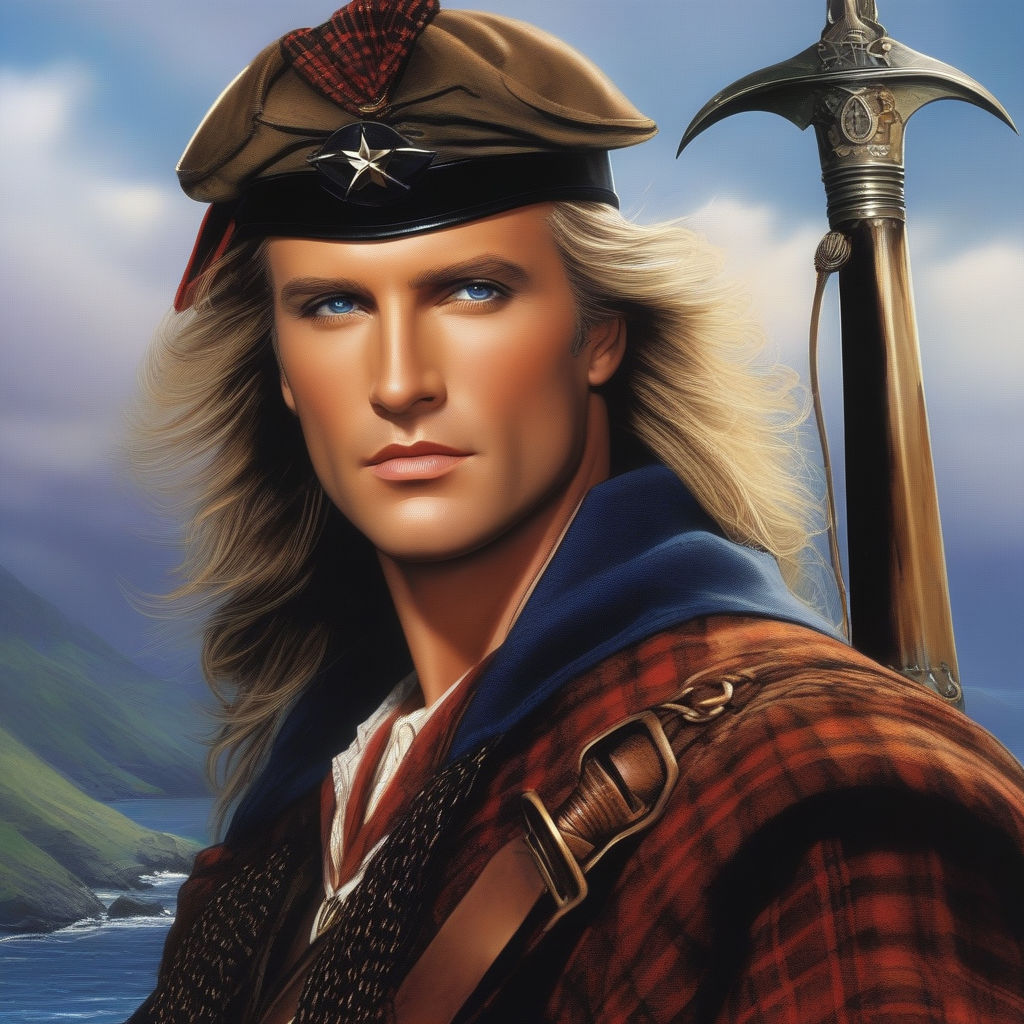
Image Copyright Playgroup.

Assuming that the heir of John McAusland, the 13th Baron, was born circa 1396 and that there was 21 years between the birth of each male heir, we could be missing five generations between 7th February 1429, when Johanne MacAusillane, domino de Callenach was witness to a charter and 10th December 1535 when Patrick McAuslane of Coldynocht is a witness to a charter as Baillie. Exactly who the Barons of Caldenoch were in that 106 year gap, we can only speculate.
Next Article in the Series
In the next article we will look at Patrick McAuslane of Coldynocht, possible 18th Baron, and his wife, Marjory Colquhoun.

 Vecchio