

Unusual Names
In the past there was a relatively small choice of names for boys and girls and in our extended family, the 20 most common boys names were John, James, William, Robert, George, Alexander, Thomas, David, Charles, Andrew, Henry, Peter, Richard, Archibald, Walter, Joseph, Edward, Donald, Francis and Patrick while the 20 most common girls names were Margaret, Mary, Elizabeth/Elisabeth, Janet, Agnes, Helen, Jean/Jane, Catherine, Isabella/Isabel, Marion, Ann/Anne, Christian/Christina, Sarah, Jessie and Barbara.
It was therefore a surprise to discover that our great (x2) uncle William Old (1863-1919), after having an eldest child named Janet Isabella Thomson Old, had chosen to name his three subsequent children Selina Lillian Old, Bertram William Old, and Lydia Frances Old.
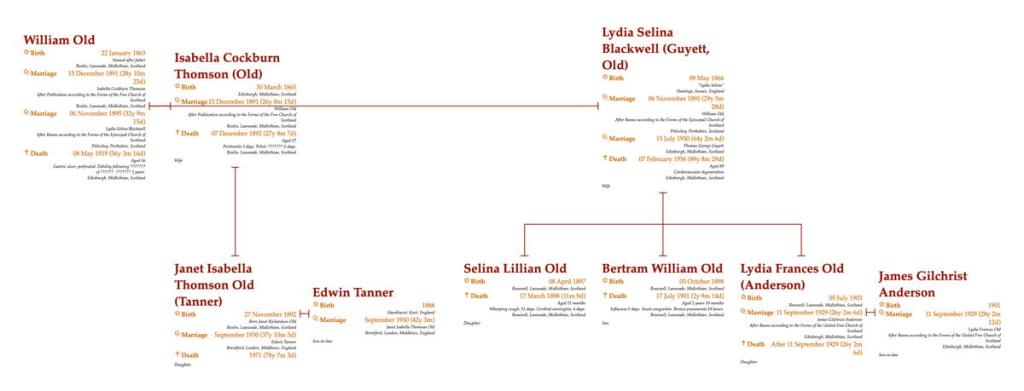
William Old and Isabella Cockburn Thompson
Throughout his career, William Old was described as first a Commercial Clerk, and as a Traveller in coal trade, then as a Colliery clerk, and as a Colliery Cashier. On 02 June 1882, he was the best man at our great grandparents wedding when his elder brother John Craig Old married Elizabeth Selkirk Kidd in Edinburgh.
However, it was not until 15 December 1891 when William Old was aged 28 and working as a Colliery clerk, that he married Isabella Cockburn Thompson at College Hill House in Roslin after Publication according to the Forms of the Free Church of Scotland. A daughter was born to the couple on 27 November 1892 and she was named Janet Richardson Old. However, just a few days after the birth, tragedy struck and Isabella Cockburn Thompson died due to complications, aged just 27. Subsequently, on 12 December 1892, their daughter’s name was changed from Janet Richardson Old to Janet Isabella Thompson Old no doubt to honour her deceased mother.
William Old and Selina Lydia Blackwell
On 06 November 1895, William Old married again, this time at the Holy Trinity (Episcopal) church in Pitlochry, Perthshire. The bride was Selina Lydia Blackwell, a Lady’s maid, and it was from this second marriage that the three children with the relatively exotic names were born: Selina Lillian Old, Bertram William Old, and Lydia Frances Old, with the names likely chosen by the mother. Bertram William appears to have been named after her aunt Lillian’s son, William Bertram Guyette who was born in 1891 in Australia.
Sadly, their elder daughter, Selina Lillian Old died aged on 17 March 1898 when she was just eleven months old, having suffered from Whooping cough for 21 days and Cerebral meningitis, for six days. Their only son, Bertrand William Old, also died young, on 17 July 1901, aged just 2 years and 10 months old of Influenza for five days, followed by Acute congestion and Bronco pneumonia for 14 hours. Their third child, Lydia Frances Old, happily survived, and went on to marry James Gilchrist Anderson on 11 September 1929 at Bruntsfield United Free Church in Edinburgh.
William Old himself died on 08 May 1919 at the relatively young age of 56 at Edinburgh’s Royal Infirmary of a perforated gastric ulcer.
Selina Lydia Blackwell and Thomas Guyette
Selina Lydia Blackwell remained as a widow until 15 July 1930, when at the age of 64, she married Thomas George Guyette, at Horsell, in Surrey, England. He was in fact her her uncle-in-law, being the widower of her aunt, Lillian Blackwell, with whom she was raised as a child, and being just eight years older than Selina, must have seemed more like an elder sister than an aunt.

In 1931, Selina Lydia Blackwell and her second husband emigrated to Australia on the RMS Laconia. Thomas Guyette had previously lived with Australia with his first wife, Selina’s aunt.
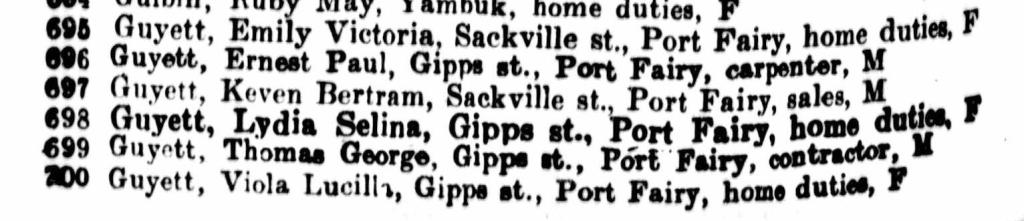
In 1942, the Guyettes were listed on the Australian voters roll, where they were registered as living at Gipps Street, Port Fairy, Moyne, Victoria, with Lydia Selina described as working on “house duties” and her husband described as a contractor.
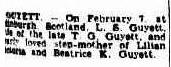
Thomas Guyette he died in Australia, thirteen after his marriage to Selina, marriage on 08 November 1943 at Port Fairy, Moyne, Victoria. Lydia, however, returned to Edinburgh and died aged 89 on 07 February 1956 of cardiovascular degeneration at Mortonhall House, in Newington.
Selina Lydia Blackwell’s Early Life

Selina Lydia Blackwell had actually been named Lydia Selina Blackwell, but by the time of the 1871 census when she was aged 4, she was known as Selina and was living with her paternal grandparents John and Jemima Blackwell and six aunts and uncles at Hawkhurst in Kent, England. Her father, John Blackwell had died on 30 August 1868 at 15 Stone Street in Hastings of Phithisis (tuberculosis) and hemophthisis (anaemia), aged just 27. Her mother, Lydia Harvey had gone on to marry Charles Stephens Small on 11 October 1869 at Bethnal Green and rather strangely, they had named their first daughter, born in 1870, Selina Lydia Small. While it is impossible to be sure, the fact that Lydia Selina’s christian names appear to have been reversed by her paternal grandparents might suggest that they disapproved of Lydia Harvey’s remarriage and possible abandonment of the daughter that she bore with their son.

By 1881, she aged 15 and was known as “Lydia S.” Blackwell and was living with her paternal grandfather and three aunts at Tilden Farm House at Hawkhurts in Kent.
Selina Lydia Blackwell in domestic service
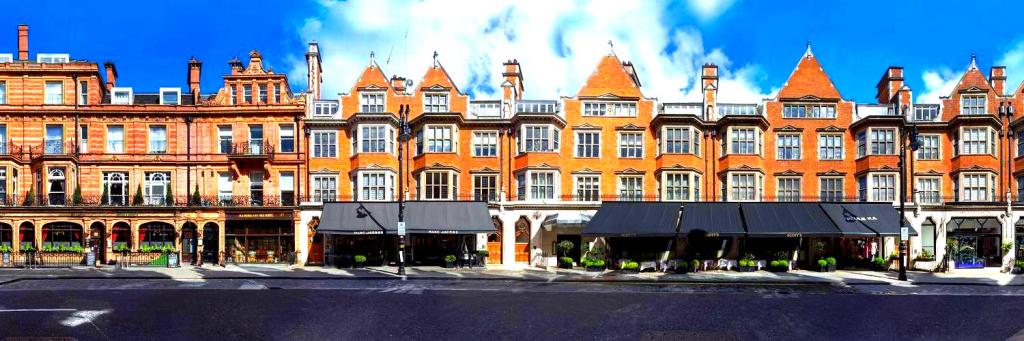

In 1891, she was aged 25 and known as “Selena L.” Blackwell. She was living at a rather grand address – 115 Mount Street, Mayfair, London and working as a House Maid for Louisa S. Cinnard.

At the time of her marriage to William Old on 06 November 1895, she was known as Selina Lydia Blackwell, living at Craigvar near Pitlochry, and working as a Lady’s Maid. This would suggest that she was likely still working for the Honourable Louisa Kinnaird (see below) as Kinnaird House is close to Pitlochry.
The Honourable Louisa Elizabeth Kinnaird
Louisa “Cinnard” appears to have been none other than the Honourable Louisa Elizabeth Kinnaird who was born on 01 November 1848 in Hyde Park Gardens, London and died on 18 March 1926 in London.
She was the daughter of Arthur (Wellesley) Fitzgerald Kinnaird (10th Lord Kinnaird) who was born on 08 July 1814 in Rossie Priory and died 26 April 1887 in Pall Mall East, London. On 28 June 1843 he married Mary Jane Hoare at in Hornsey Church. Mary Jane Hoare was born on 14 March 1816 in Blatherwick Park, Northamptonshire and died on 01 December 1888 in Plaistow Lodge, Bromley, Kent.

Louisa Kinnaird would have no doubt have been very aware of her royal ancestry: Her paternal grandmother was the daughter of the second Duke of Leinster, whose mother was the granddaughter of Charles Lennox, first Duke of Lennox and Richmond. The Duke of Lennox was the illegitimate son of King Charles II and one of his many mistresses, Louise Renée de Penancoët de Kéroualle, Duchess of Portsmouth and Duchess of Aubigné.
Louise Renée de Penancoët de Kéroualle, Duchess of Portsmouth and Duchess of Aubigné

Louise Renée de Penancoët de Kéroualle, Duchess of Portsmouth and Duchess of Aubigné was born at the Château of Kéroualle near Guilers in Brittany, France, in September 1649. She was the daughter of Guillaume de Penancoët, Count of Kéroualle and his wife Marie de Plœuc, who were married in February 1645. The family was old nobility and Louise’s grandfather had received the Order of St Michael from King Henri IV of France for his part in the defence of Brest against the League and the Spanish.
Louise was reputed to be a great beauty and a courtesan once wrote of her, “I have just seen this famous beauty. In my opinion she has the figure of a little girl, a naive figure, child-like.” Indeed, in England, she went by the nick-name of “baby- face”.
She came to the attention of King Charles II, who nicknamed her “Fubby” and was said to enjoy to “conversing” with the “little blonde French girl” who appeared to him to be “so sweet and so sad”. In her portraits, Louise’s hair is brown, however she is portrayed wearing a wig, and her own hair was said to be blonde, or perhaps very light brown.

Louise de Kéroualle was greatly disliked by her biggest rival Nell Gwynn, another mistress of the King, who nicknamed her “Squintabella”. Because she was French, and also a Catholic, she was also very unpopular with the English who believed, perhaps not without some justification, that she was a spy for the French King Louis XIV. The more polite called her “Madame Carwell” as they could not pronounce her name properly, while the less polite repeated scurrilous rhymes about her and the other mistresses of the king.
In n February 1673, Charles II made Louise de Kéroualle Baroness of Petersfield, Countess of Farnham and Duchess of Pendennis; but the latter title was almost immediately changed to Duchess of Portsmouth, but subsequently she also become Duchess of Aubugny.
Although in France, the Stewarts had held Aubigny since 1421 when Sir John Stewrt was created Lord of Aubigny-sur-Nere and Concressault for his part in the Battle of Baugé where the Scots were victorious over the English and Thomas, Duke of Clarence, brother and heir presumptive of the English king Henry IV was killed. The lordship was eventually inherited by Esmé Stewart, who was created Earl of Lennox in 1580, and first Duke of Lennox in 1581 by his distant cousin, King James VI of Scots. The King’s father, Lord Darnley, had been the son and heir of the previous Earl of Lennox. When the 6th Duke of Lennox and 11th Seigneur of d’Aubigny died in 1672, the heir to Aubigny was none other than the King of England and Scotland, Charles II, grandson of James VI. However the French King, Louis XIV was unwilling to allow a foreign sovereign to own important fiefs in France, and refused to acknowledge the inheritance.

To get around this, Charles II transferred Aubigny to his French mistress. Charles wrote to Colbert de Croissy stating his desire for Louise de Kéroualle to be installed in Aubigny and agreed that “every precaution will be taken to ensure that these lands will not leave the Royal House of England and that it will remain the property of the children which I have or will have with this lady.”
So Louise became Duchess of Aubigny in France as well as Duchess of Portsmouth in England. In December 1673, she received “the funds and the property of the land of Aubigny, along with its rights, entails, and dependencies”. The lands were sequestered by the French Crown during the war of the Spanish succession, but were were restored in 1713. In 1684 Aubigny was transformed unto a duchy-peerage by letters patent. However, the letters were not registered by parliament until 1787, so Louise was never, in the strictest of legal terms, Duchess-Pair of Aubigny.
Louise de Kéroualle died in 1734 on the same date, the 14th of November, as her rival Nell Gwynn, who had died exactly 47 years earlier. Louise’s son with Charles II, the first duke of Lennox and Richmond, died before his mother. On the Duchess of Aubigny’s death in 1734 at the age of 85, the title should therefore have passed to her grandson, the second duke of Lennox and Richmond, who introduced FreeMasonry to France, however the necessary Letters patent were not issued within the required delay of a year and the title became extinct.
The story then became rather complicated. Louis XIV of France re-granted the duchy of Aubigny to Louise’s grandson in 1777, but the estate was sequestered for the second time upon the outbreak of war between France and Britain in 1792 and was not returned until 1803. With a new outbreak of war, the estate was finally confiscated in 1806. The duchy of Aubigy, which had not been officially registered by parliament until 1787, was the only lay peerage of the Old Regime not to be confirmed upon the restoration of the monarchy in 1814.
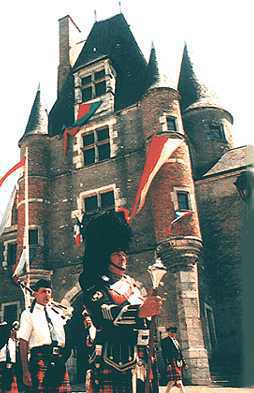
But even this was not the end of the line for the Dukes of Aubigny. The lands were restored later on in 1814, but there were a series of conflicting court cases between the 5th duke and his aunts over the inheritance of the estates under French law, which he finally lost in 1839. In 1840 the community of Aubigny-sur-Nere acquired the castle of Aubigny and turned it into their town hall. Louise’s descendant the 10th Duke of Lennox & Richmond and 5th Duke of Gordon inherited the titles in 1989 and the Dukes of Richmond and Lennox continue to use the style of “Duke of Aubigny” as a courtesy title.
With thanks to Christina de Kéroualle for the section on Louise de Kéroualle.
 Vecchio
Happy to help out and amazed you found a connection to Louise!
LikeLiked by 1 person