
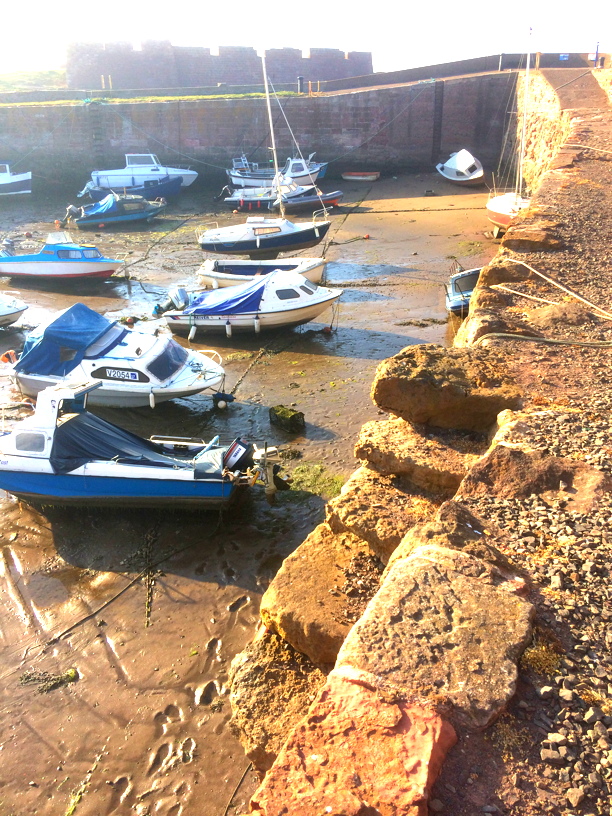
The last time that the people of Dunbar witnessed an invading army was on 17 September 1745, when the Hanoverian general, Sir John Cope, landed at the old harbour, planning to engage the largely Highland army of King Charles III (then Prince Charles Edward Stuart, who was known as the “Young Pretender” to the supporters of the “Wee German Lairdie“, the German Elector of Hanover).
Prince Charles Edward Stuart sailed from France to Scotland in July 1745, landing at Eriskay in the Outer Hebrides on 23 July 1745 with just a few companions, the Seven Men of Moidart. Despite being advised to return to France, the clans were raised with the Camerons of Locheil, Stuarts of Appin, McDonalds of Glengary, Keppoch, Clan Ranald and Glencoe, McGregors, McLachaans, Robertsons, Murrays and Drummonds providing a large proportion of the Jacobite force. The rebellion was formally launched at Glenfinnan on 19 August 1745
The Hanoverian intelligence was poor and the threat from Prince Charles’ army was initially underestimated. Once their location had been confirmed, General Cope left his cavalry and artillery at Stirling under his deputy, Thomas Fowke and marched on the Corrieyairack Pass, the primary access point between the Western Highlands and the Lowlands. Control of Corrievairack would allow Cope to block the route into Eastern Scotland but he found the Highlanders already in possession of the pass, and withdrew to Inverness on 26 August 1745.
In early September, when it became clear that the Jacobites were using the military road network to advance on Edinburgh, Cope realised he had been outmanoevered again and marched his troops his troops to Aberdeen. The Hanoverians embarked onto ships and headed for Dunbar where they disembarked on 17 September 1745. Once again Cope was too late as Prince Charles and the Highland army had entered the Scottish capital earlier on that same day, although Edinburgh Castle remained in government hands.
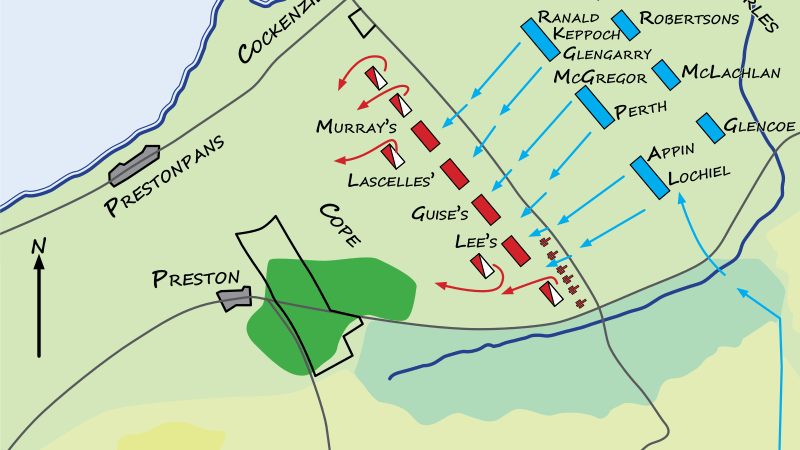
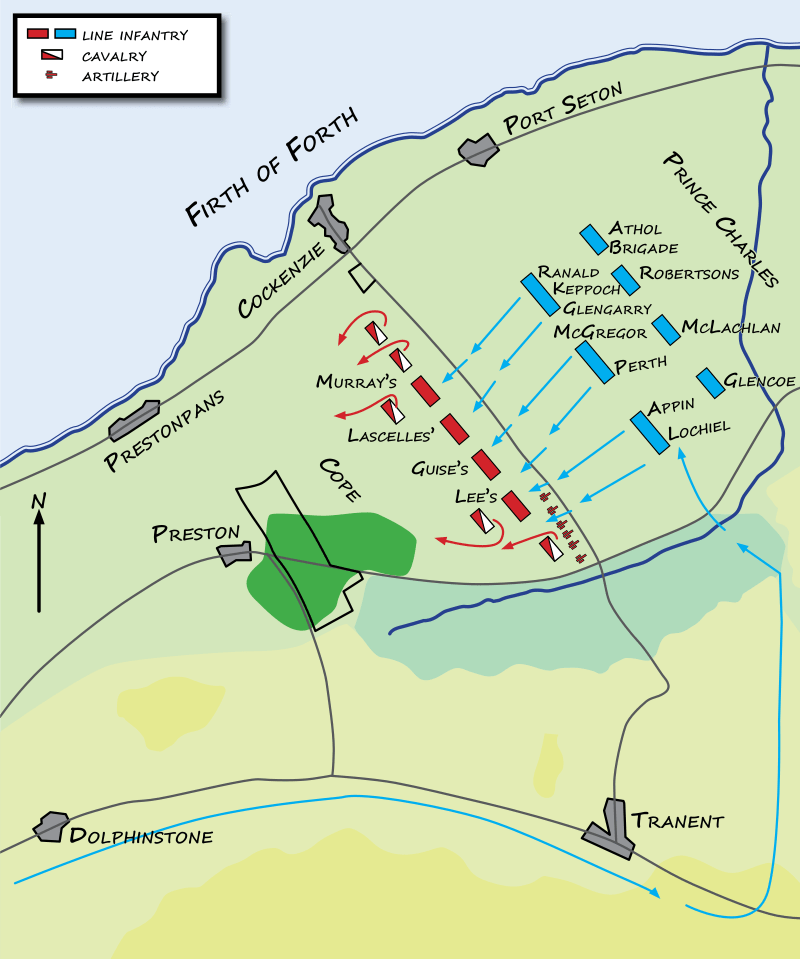
After being joined at Dunbar by Fowke and the cavalry, Cope then marched westward towards Edinburgh, confident that he would defeat the Jacobites. However, it was Cope’s army that was surprised in the early morning near Prestonpans. In less than ten minutes the unprepared Hanoverians were flying in disorder, utterly routed. Col. James Gardiner, was mortally wounded after his dragoons fled and he attempted to rally the foot. The artillery commander, Lt-Colonel Whitefoord, made his escape after being spared by Stewart of Invernahyle. General Cope also escaped and Peregrine Lascelles, Colonel of the 47th Foot, fought his way out, although most of his regiment were captured. Cope and Lascelles reached Berwick-upon-Tweed the next day with 450 survivors including Fowke and the dragoons.
The participants included Allan Breac Stewart, a soldier in Lee’s Regiment; he switched sides after being taken prisoner and joined the Jacobite Stewart of Appin’s regiment. Scots author Robert Louis Stevenson used him as a lead character in his 1886 novel Kidnapped.
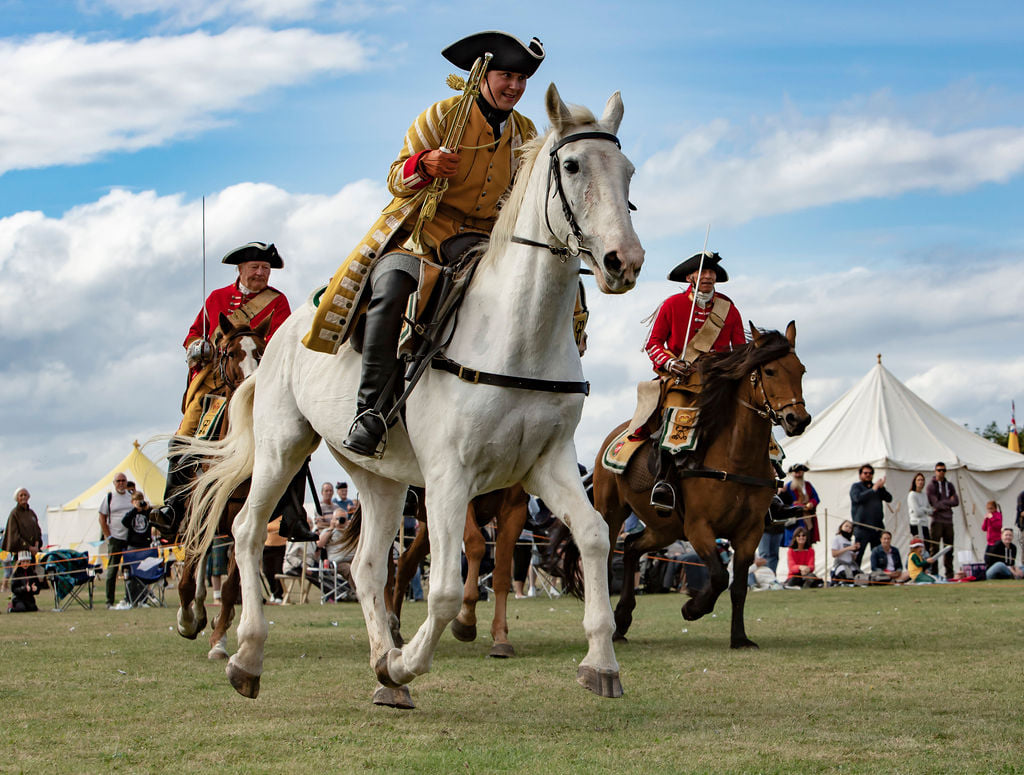
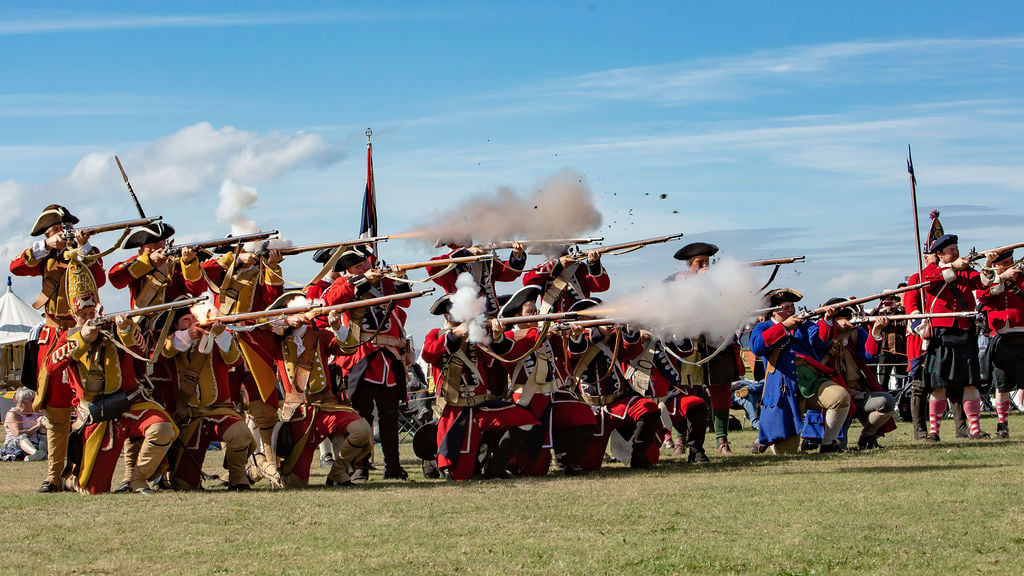
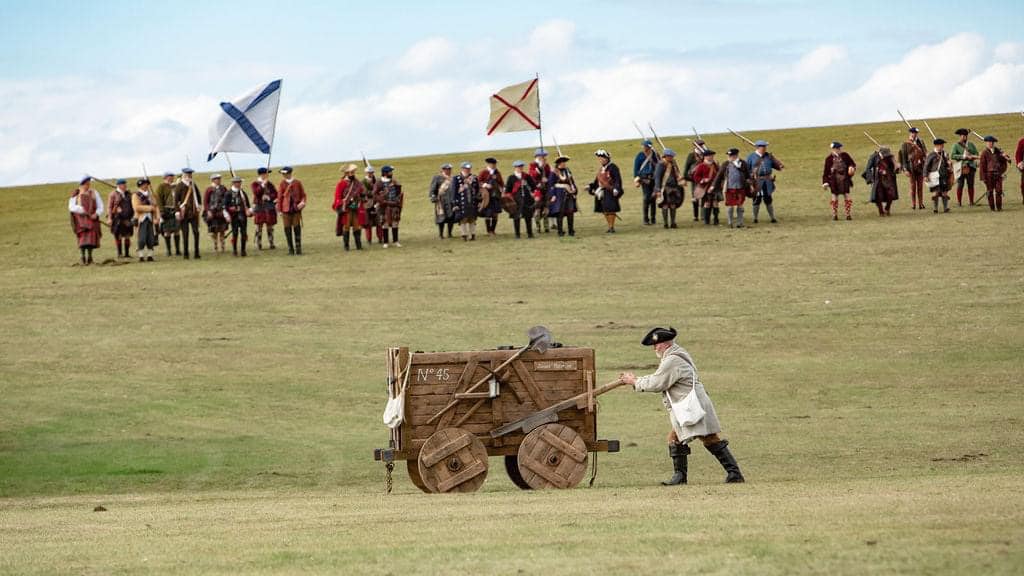
The song “Hey Johnnie Cope” commemorates Cope’s defeat by the Jacobites at the Battle of Prestonpans. It is believed to have been written by Adam Skirving, who was the tenant at Garleton in East Lothian. He is believed to have visited the battle site a few hours after the fighting and may have spoken to some of the many witnesses who had assembled to watched the battle and saw Sir John Cope flee up the road to Birsley Brae, which was reputedly the inspiration for the song. The road that the defeated general took as he fled from the battle was named Johnnie Cope’s Road.
Hey, Johnnie Cope sung by Alastair McDonald.
| Cope sent a challenge fae Dunbar Sayin’ “Charliie meet me if ye daur, I’ll learn ye the airt o’ war, If ye meet me in the mornin’.” Hey Johnnie Cope are ye wauken yet? And are your drums a-beatin’ yet? If ye wer wauken I would wait, Tae gang tae the cauls in the mornin’. Charlie looked the letter upon, He drew his sword its scabard from, “Follow me my merry men, And we’ll meet Johnnie Cope in the mornin’.” Hey Johnnie Cope are ye wauken yet? And are your drums a-beatin’ yet? If ye wer wauken I would wait, Tae gang tae the cauls in the mornin’. “Come now Johnnie be as good as your word, And let us try wi’ fire and sword, Dinna flee like a frichted bird, That’s chased fae its nest in the mornin’.” Johnnie Cope he heard o’ this, He said tae himself “Noo it widna’ be amiss Gang and saddle my horse in readyness, Tae flee awa in the mornin’.” Hey Johnnie Cope. are ye wauken yet? And are your drums a-beatin’ yet? If ye wer wauken I would wait, Tae gang tae the cauls in the mornin’. “Fie now Johnnie get up and rin, The Highland bagpipes mak a din, ‘Tis better tae sleep in a hale skin, It’ll be a bloody mornin’.” Hey Johnnie Cope are ye wauken yet? And are your drums a-beatin’ yet? If ye wer wauken I would wait, Tae gang tae the cauls in the mornin’. Johnnie Cope tae Dunbar came, They spiered at him “Where’s all a’ your men?” “The De’il confound me gin I ken, For I left them a’ in the mornin’.” Hey Johnnie Cope are ye wauken yet? And are your drums a-beatin’ yet? If ye wer wauken I would wait, Tae gang tae the cauls in the mornin’. “Troth now Johnnie ye wirna blate, Tae come wi’ the news of your ain defeat, An’ leave your men in sic a strait, Sae early in the mornin’.” “Faith” quo Johnnie “I got sic flegs, Wi’ their claymores and philabegs, If I face them again De’il brak my legs, So I wish you a’ good-mornin’. Hey Johnnie are ye wauken yet?, And are your drums a-beatin’ yet? If ye wer wauken I would wait, Tae gang tae the cauls in the mornin’. | (you dare) (art of) (wakened) (to go) (muddy riverbank/marsh) (do not) (frightened) (from) (now) (would not) (away) (run) (make a noise) (whole) (enquired) (all) (Devil) (if I know) (all) (were not shy) (with) (own) (such) (so) (such a fright) (broadswords) (kilts) (break) |
JacoBits: the Battle of Prestonpans in 3 Minutes!
Stop motion film by 9-year-old Calum McBean about the Battle of Prestonpans (Scotland). The backgrounds are homemade and the soldiers hand-painted.
The Wee German Lairdie – Early Scottish Jacobite Song. This one is recorded in the The Book of Scottish Song, and is an early Jacobite Song from the first years of the reign of George I of Hanover, whose hobby was to care for his vegetable patch.
 Vecchio