
Robert III of Artois
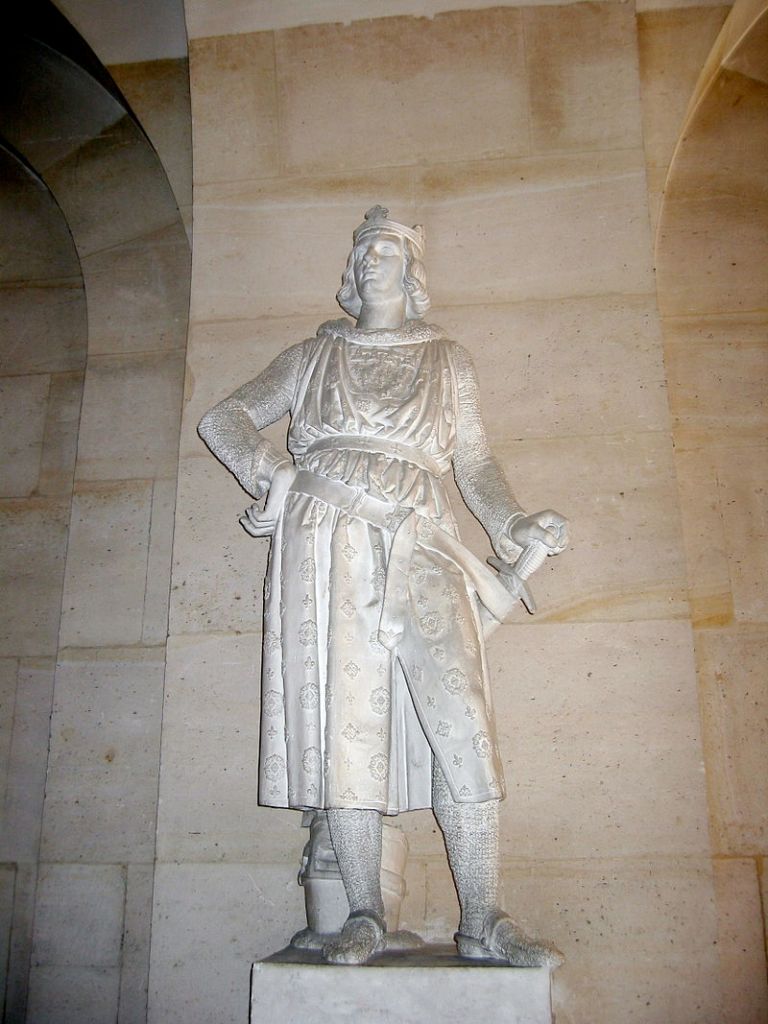
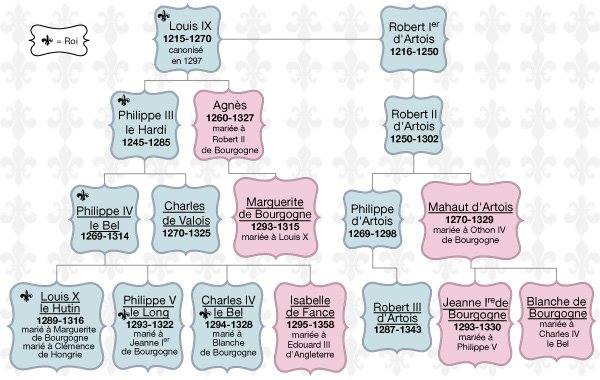
My favourite relation is my fourth cousin 22 times removed, Robert d’Artois, Lord of Conches-en-Ouche, of Domfront, and of Mehun-sur-Yèvre, Count of Beaumont-le-Roger and Earl of Richmond.
Robert III of Artois (1287 – between 6 October & 20 November 1342) was Lord of Conches-en-Ouche, of Domfront, and of Mehun-sur-Yèvre, and in 1309 he received as appanage the county of Beaumont-le-Roger in restitution for the County of Artois, which he claimed. He was also briefly Earl of Richmond in 1341 after the death of John III, Duke of Brittany.
Life
Robert was the son of Philip of Artois, Lord of Conches-en-Ouche and Blanche of Brittany, daughter of John II, Duke of Brittany, both were descended in male line from the Capetian dynasty.
He was only eleven when his father died in September 1298 from wounds he received at the Battle of Furnes on 20 August 1297 against the Flemish people. The early death of his father was an indirect cause of the dispute over the succession to the County of Artois. After the death of his grandfather Robert II, Count of Artois, in the Battle of Courtrai in 1302, his grandfather’s daughter Mahaut of Artois, inherited the County of Artois, in accordance with custom, for she was his eldest child. Because of his age, Robert III could not object to his aunt Mahaut and assert the rights which he inherited from his father. He would do so later. The rancor and intrigues between Mahaut (sometimes called Mathilde) and Robert occurred within a period of strife between France and England, before the Hundred Years’ War.
Robert played an important role in the succession of King Philip VI of France (his wife’s half-brother) to the throne, and was his trusted adviser for some time. From this he drew a certain influence in the royal council which he used to try to wrest from his aunt Mahaut what he considered the county of Artois to be his. At Mahaut’s death in 1329, the claim then passed to her daughter Joan II, Countess of Burgundy. Building on the example of the estate of the County of Flanders, Robert again raised the matter of succession. He was then put under the custody of the King of France. However, in 1331, he used a forgery created by Jeanne de Divion which attested to the will of his father. This deception was discovered and Robert lost any hope of acquiring Artois. The forger Divion was condemned at the stake. Robert’s property was confiscated by King Philip VI in 1331, and consequently his wife and his sons John and Charles were imprisoned. Robert therefore fled France in 1332, to escape arrest and execution, and took refuge with his nephew John II, Marquis of Namur. King Philip VI hence requested that the Bishop of Liège attack Namur. Accordingly, Robert fled again to John III, Duke of Brabant, his nephew-in-law. Again, the influence of King Philip VI stirred up a war against Brabant and Robert was exiled again, this time to England. There he took up with King Edward III of England and urged the English king–whose wife Philippa of Hainault was the half-niece of Robert’s wife–to start a war to reclaim the Kingdom of France. While in England, Robert became a member of King Edward’s royal council and provided extensive information on the French court to the king of England. Numerous contemporary chroniclers relate how Robert’s influence led directly to the start of the Hundred Years War, specifically because King Philip VI cited King Edward III’s unwillingness to expel Robert as the reason for confiscating the Duchy of Aquitaine in May 1337. A vowing poem called the Voeux du héron (Vow of the Heron) circulated in France and England in the late 1340s that depicted Edward III’s invasion of France as the fulfillment of a chivalric oath made to Robert that he would take the French throne, as was his dynastic right.
Robert thereafter followed King Edward III in his campaigns, including command of the Anglo-Flemish army at the Battle of Saint-Omer in 1340. He ultimately succumbed to dysentery after being wounded while retreating from the city of Vannes in November 1342, during the War of the Breton Succession. He was originally buried in the church in Blackfriars, London, though his grave is now in Saint Paul’s Cathedral.
Family
Around 1320 Robert married Joan, daughter of Charles of Valois and his second wife Catherine I of Courtenay. They had six children:
- Louis (1320–1326/29).
- John (1321–1387), Count of Eu.
- Joan (1323–1324).
- Jacques (c. 1325–1347).
- Robert (c. 1326–1347).
- Charles (1328–1385), Count of Pezenas.
In fiction
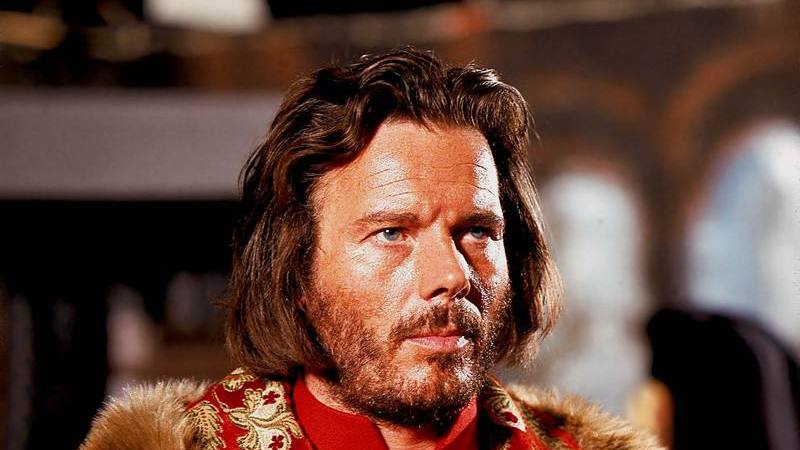
Robert III of Artois is a major character in Les Rois maudits (The Accursed Kings), a series of French historical novels by Maurice Druon in which many of these events are retold. He was played by Jean Piat in the 1972 French miniseries adaptation of the series, and by Philippe Torreton in the 2005 adaptation.
Les Rois Maudits – The Accursed Kings
The Accursed Kings (French: Les Rois maudits) is a series of historical novels by French author Maurice Druon about the French monarchy in the 14th century. Published between 1955 and 1977, the series has been adapted as a miniseries twice for television in France.
American author George R. R. Martin called The Accursed Kings “the original game of thrones“, citing Druon’s novels as an inspiration for his own series A Song of Ice and Fire.
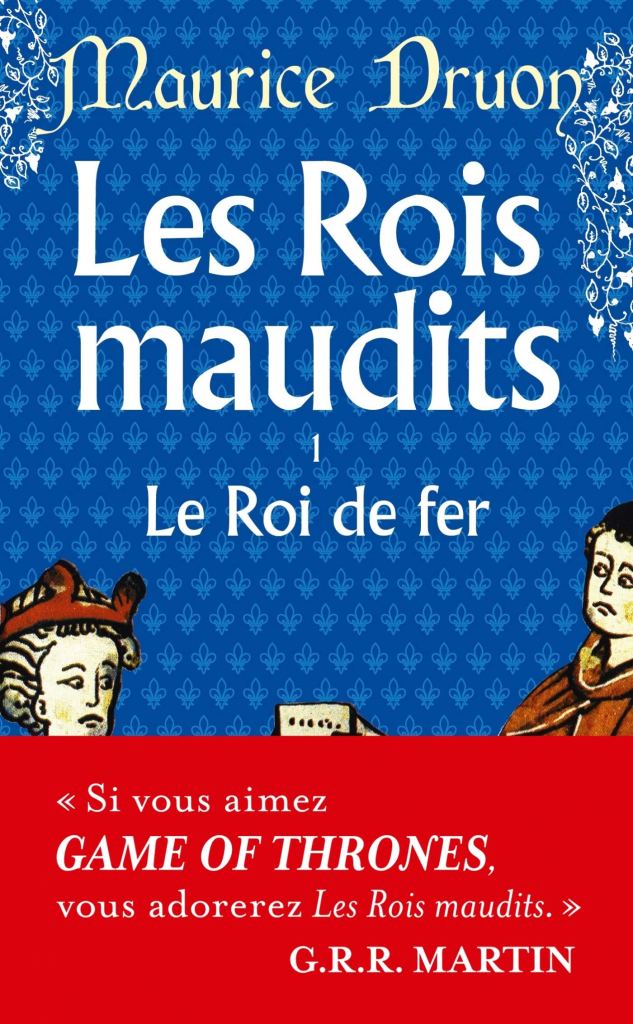
Last night I was reading Les Rois Maudits by Maurice Druon, of the French Academy. There were two TV versions made. In the more recent version Jean Moreau was excellent as Mahaut d’Artois but Philippe Torreton played Robert d’Artois as if he were gayer than a tree-full of monkeys on nitrous oxide. I kept expecting him to mince: “Oh, what a gay day!” Far better was the original 1973/4 version with Geneviève Casile (as Queen Isabelle) and Jean Piat as Robert. It was released (many years later) on video and DVD.
The following, fictional, conversation between Robert and his cousin Isabelle of France, wife of Edward II of England, epitomises his reputation:
”Alors, messire mon cousin, dit Isabelle, avez-vous fait bonne traversée de mer ?”
So, Sir, my cousin, said Isabelle, did you have a good sea crossing?
”Exécrable, madame, horrifique, répondit Robert d’Artois. Une tempête à rendre les tripes et l’âme. J’ai cru ma dernière heure venue, au point que je me suis mis à confesser mes péchés à Dieu. Par chance il y en avait un si grand nombre que le temps d’en dire la moitié nous étions arrivés. J’en garde assez pour le retour.”
Execrable, madame, horrific, replied Robert d’Artois. A storm to rip apart the guts and the soul. I believed my last hour had come, so much so that I began to confess my sins to God. Luckily there were so many that by the time I was half way through, we had arrived. I still have enough for the return journey.
Il éclata de rire, ce qui fit trembler les vitraux.
He thundered with laughter, making the stained glass shake.
”Maurice Druon, Les Rois Maudits, 1955.”’
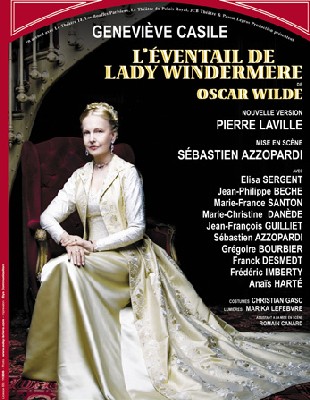
I’ve seen both actors on stage recently: Geneviève Casile in Lady Windermere’s Fan and Jean Piat in Prof, Amadeus and De Sacha à Guitry. Anyway, I digress.The books – and series – begin with the larger than life scarlet-clad from head to toe Robert d’Artois’ arrival at the English court. This is one of the most dynamic scenes I’ve ever seen:Reine Isabelle: Alors, messire mon cousin, avez-vous fait bon voyage?Robert d’Artoi: Exécrable, Madame, horrible. une tempête à rendre les tripes et l’âme. j’ai cru ma dernière heure venue, au point que je me mis à confesser mes pêchés à Dieu. par chance, il y en avais si grand nombre que le temps d’en direla moitié nous étions arrivés. J’en garde assez pour le retour.Queen Isabella: So messire my cousin, did you have a good journey?Robert of Artois: Execrable, Madam, horrible. A storm to rip apart the guts and the soul. I thought my end was near, to the point that I confessed my sins to God. Fortunately, therehad so many that by the time I had confessed half of them, we had arrived. I still have enough for the return journey. On the other hand, if you’ve seen Frou-Frou Les Bains “avez-vous fait bon voyage?” takes on a completely different meaning.
Yulia Anya Guthrie
10 November 2011 · Shared with Your friends

at Comédie de Champs Elysées with Annie to see my fav actor, Jean Piat (born 23 septembre 1924) in “Vous Avez Quel Age ?”

Yulia Anya Guthrie
Sociétaire honoraire de la Comédie-Française, il est notamment connu pour son interprétation de Robert d’Artois dans l’adaptation des Rois maudits de Maurice Druon à la télévision, mais aussi pour sa voix puissante que l’on reconnait immédiatement.
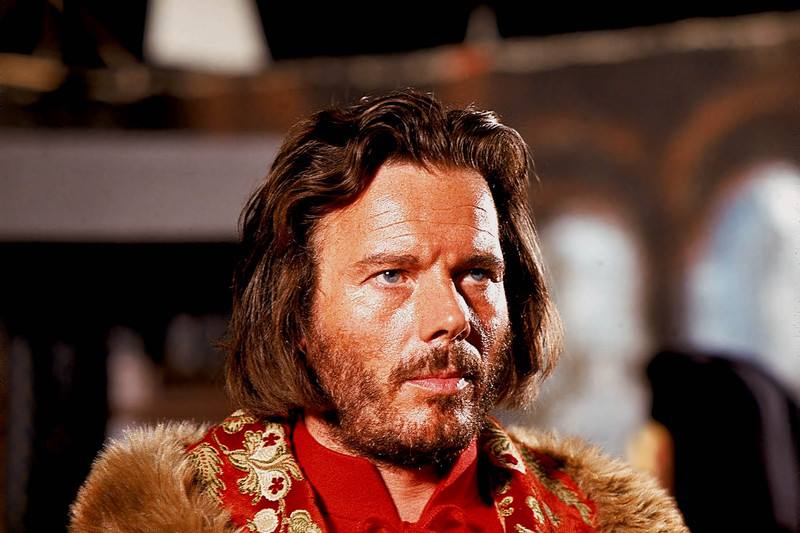
Yulia Anya Guthrie
Yulia Anya Guthrie
22 September 2018 · Shared with Your friendsVery sad to hear of the death, a few days before his 94th birthday, of my favourite actor, Jean Piat, who we had the great privilege to see on stage several times.RIP Jean.
Les Rois Maudits | Série Culte | Archive INA. Avec Jean Piat, Hélène Duc …. Fresque dramatique en 6 épisodes (1973) témoignant des affrontements implacables qui marquèrent le XIVème siècle de l’Histoire de France sous le règne de Philippe le Bel et de ses descendants. Une des premières grandes réalisations en vidéo de la télévision française. Premier épisode d’une série de six témoignant des affrontements implacables qui marquèrent le XIVe siècle de l’Histoire de France sous le règne de Philippe le Bel et de ses descendants. Dominé par la raison d’Etat, le règne de Philippe le Bel fut marqué par la persécution des Templiers dont le Grand Maître, Jacques de Molay, supplicié, maudit la race des Capétiens du haut de son bûcher. C’est aussi l’histoire de la tour de Nesle où Marguerite de Bourgogne, belle-fille du roi se livre à la débauche en compagnie de ses deux belles-soeurs.
 Vecchio