

Guthries of Guthrie, Guthries of Gagie, Guthries of Taybank and Guthries of Craigie.
Anonymous old rhyme.
There are many buildings associated with the Guthries. Julie Anya Guthrie looks at some of them.
Castles, churches and other buildings associated with the Guthries
Guthrie Castle
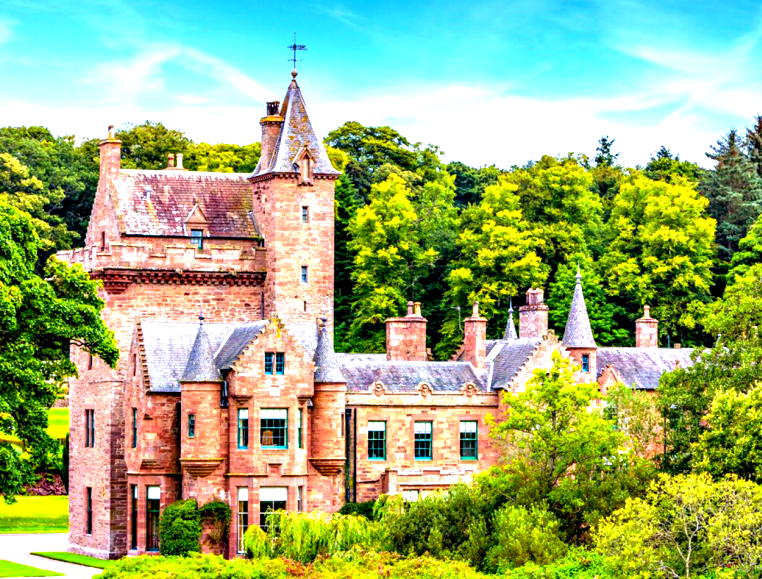

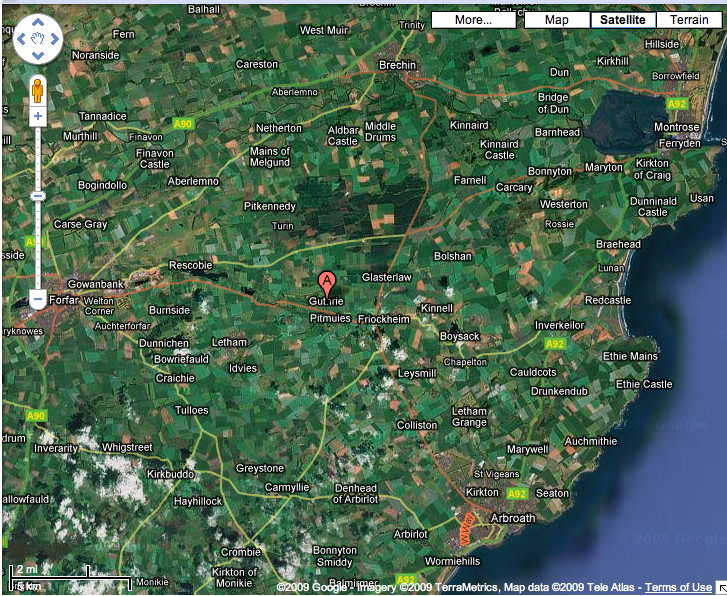
The original tower house was built in 1468 under a warrant granted by King James III of Scotland to his Treasurer and Lord Justice-General, Sir David Guthrie (1435–1500). Guthrie Castle remained in the Guthrie family until 1983. It is currently a wedding venue.
Collegiate Church of Guthrie
Alexander II, who died in 1249, confirmed to the abbey of Aberbrothoc, the church of Moniekyn (now Monikie), the church of Gutheryn [Guthrie], and the church of Abirnethyn with the chapels, lands, tithes, and offerings of every kind.
Torosay Castle


Torosay castle was built in the Scots Baronial style in 1858 for John Campbell of Possil to replace a Georgian House which he had had demolished.
The castle and estate, which was then called Achnacroish was sold by John Campbell of Possil to Arburthnot Charles Guthrie in 1865. He and his wife, Anne, spent several months at Torosay for the next 32 years and changed the name to Duart House.
On the death of her husband in 1897, Anne moved to London, taking the furniture and contents of the castle interior with her. Thus, Walter Murray Guthrie, her nephew and partner of Chalmers Guthrie, inherited an empty castle.
Walter Murray Guthrie immediately put it up for sale but withdrew it after a visit to the island with his wife, Olive.
They realised the potential of the site and commissioned Robert Lorimer to lay out the gardens to form a link between the Victorian castle and the Georgian walled garden.
Over the next ten years, there were many important visitors to the castle including Sir Winston Churchill, who stayed here often.
The castle later passed to Walter’s grandson, David Guthrie-James MP.
Like Guthrie Castle, Torosay is no longer owned by the Guthries, having been sold in 2012.
Gagie House
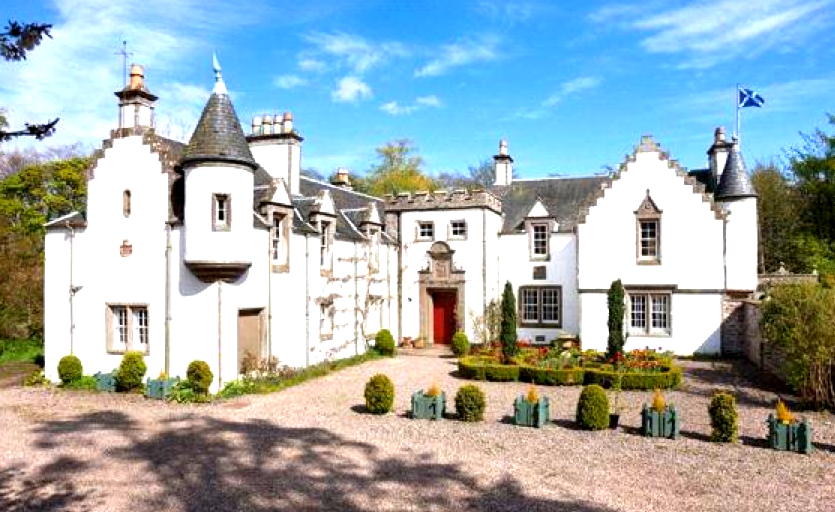

The Guthries of Gagie were a junior line of the Guthries of Guthrie, but inherited the Barony of Guthrie through marriage.
Gagie House became the dower house of the Guthries of Guthrie. It was originally given to the eldest Guthrie son upon his marriage. Contrary to common belief, many of the children of the Guthries of Guthrie were actually born at Gagie House rather than at Guthrie Castle.
The house was originally a small fortalice built around 1614, with 3-feet thick walls (which are still evident in the central part of the house) by William Guthrie, son of Sir Alexander Guthrie of that Ilk, and his wife, Isabella Leslie of Balquhan, whose coat of arms is still on the front of the house, together with a later senior Guthrie crest. Additions have been made to the house in every century.
The mid-eighteenth century saw much building work, carried out by John and Jean Guthrie, who were given Gagie upon their marriage in 1732. They added the simple but elegant Georgian wing, containing the dining room and morning room (now the kitchen) and the old kitchen, and built the charming summer-house (1762) and the stable block (1759). Following a fire, in 1893 alterations were carried out to the central part of the house by James Maclaren & Sons, including the battlemented neo-Jacobean porch.
The novelist and historian Nigel Tranter described Gagie House as a mansion incorporating a small early 17th century fortalice on the T plan, harled and whitewashed, with two long angle turrets at the south gable. It has been much altered, at roof level especially, but remains a pleasing composition.
In the late 19th century, Gagie House was described as a small but interesting mansion house… Although it has been slightly altered in parts… it still retains a certain old fashioned aspect both regards the house and its surroundings.
In 1993, the house was described as The turreted gable of this petite mock-military country house projects into its walled garden, as a guardian of the delightful two-bay Doric summer house, a garderobe in the far corner of the garden, and the fine 17th century baluster sun-dial… Much extended in the later 18th century…. The present owners have restored the stables and summer house, the main house, the garden cottage, gate lodge and laundry in a continuous programme of work. To the complex they have added the Grange, a new brick and block building with turrets re-using a church roof.
In 2012, Gagie was described as a two storey laird’s house, the property of the Guthries from the 17th century until the 20th century, the walls covered in white harling and dressings of grey sandstone.
Like Guthrie and Torosay castles, Gagie House is no longer owned by the Guthries. it has been a private home since the 1970s and went on the market in 2012 for £1,250,000.
Duart Castle

The building currently known as Duart Castle was part of the estate that was purchased by Arburthnot Charles Guthrie in 1865. At that point, it was the current Torosay castle that was known as Duart Castle.
The Guthries decided to rename their Duart Castle as Torosay, which was the name of the parish and in 1911, Olive Guthrie took the decision to return the current Duart castle to Clan McLean.
As the day draws near for you to formally hoist your banner on the Castle of Duart, so long the property of your ancestors, I feel strongly that I ought to change the name of my house and estate to what I believe it was formerly called, ie Torosay (after the parish – Torrrasach, meaning shrub-clad hill). I wish to leave the name of Duart to you alone, who have certainly the senior right to it. I shall be glad if you will announce this desire on my part to your clansmen.
Country Life Torosay Castle
Flichity House
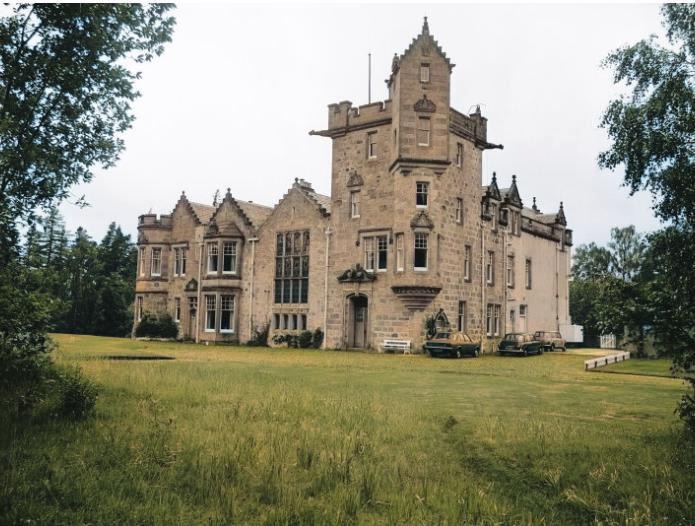
The Guthrie building that is most familiar to me is Flichity House near Daviot in old Inverness-shire, the home of James Stirling Guthrie.

The current house was largely remodelled in 1907 for Lord Strathnairn. An earlier house can be seen on the 1871 Ordnance Survey map. (Flichity, British Listed Buildings).


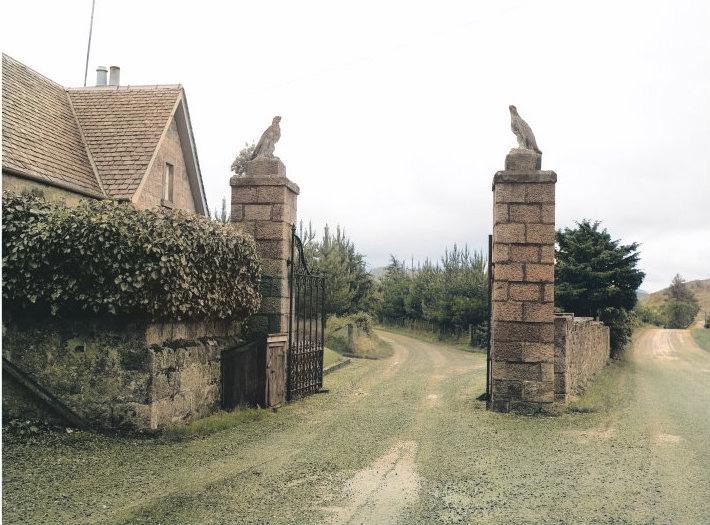
On 24 October 1666, a testament was registered for William McPhail in Flichitie. (The Commissariot Record of Inverness. Register of Testaments. 1630-1800. Edited by Francis J. Grant, Carrick Pursuivant of Arms. Edinburgh 1897.)
Colonel Duncan MacPherson of Bleaton (ca. 1735 – 12 December 1810 was proprietor of Gask and of Flichity, both in Strathnairn; but his affairs became embarrassed, and both were sold. (Glimpses of church and social life in the Highlands in olden times and other papers by Alexander MacPherson, FSA Scot. (1816))
In the Inverness county directory for 1887, the Official List section mentions Macandrew, Sir H. C., factor for the trustees of the late James A. Guthrie of Flichity. (Inverness county directory for 1887) It seems likely that this referred to James Alexander Guthrie, 4th Baron of Craigie, who died on 17 January 1873.
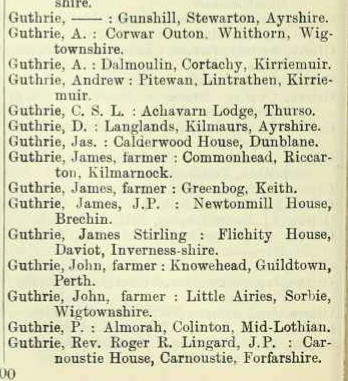
In the County Directory of Scotland (1901-1904), James Stirling Guthrie is listed as owning Flichity House near Daviot in Invernessshire, Scotland. Inverness county directory for 1901
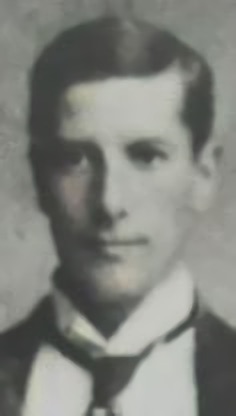
Flichity received a number distinguished visitors, including William Gladstone. On 26 July 1895, on page 7 of The Westminster Budget from London, there was a report that:
Mr. and Mrs. Gladstone are to leave Hawarden early next month on a visit to Mr. Armitstead, at Flichity House, Inverness-shire, which place he has rented for the season from Mr. J. S. Guthrie. Flichity is in the upper part of Strathnaira, about eleven miles from Inverness, and the house, a fine modern building, which stands on a high gravel terrace, is surrounded by woods and plantations. The scenery in the neighbourhood is very pleasing, and there is excellent grouse and low-ground shooting over 5,000 acres. (The Westminster Budget from London).
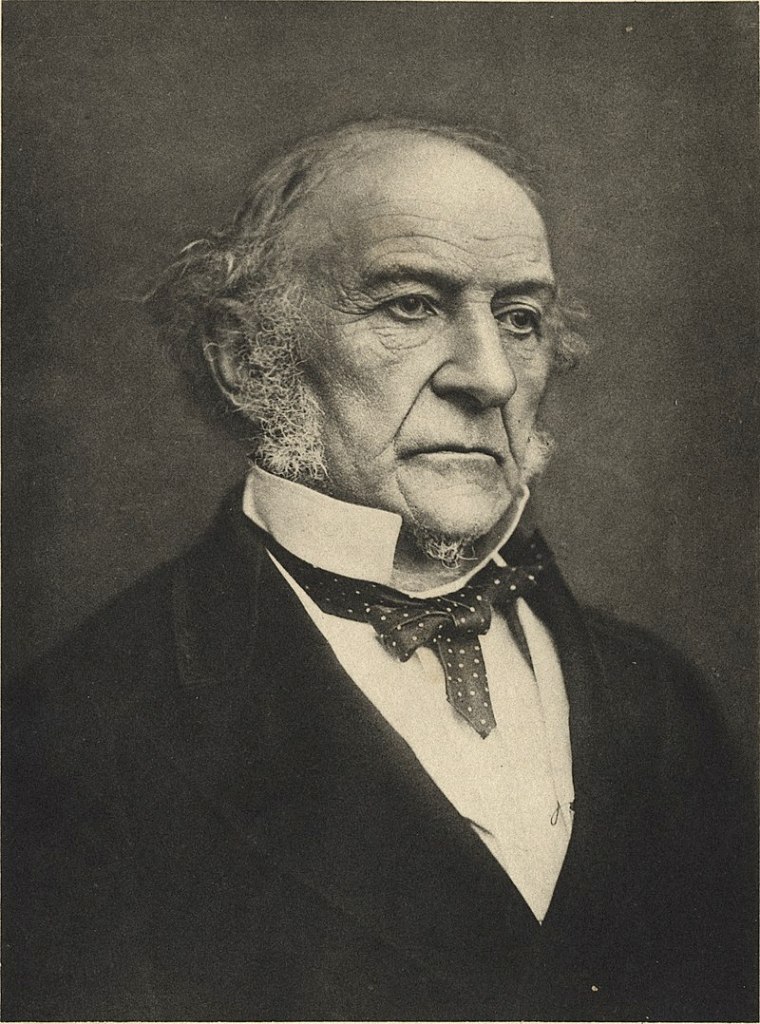
After the death of James Stirling Guthrie in 1903, Flichity was purchased by the newly married Sir William Beardmore, Lord Strathnairn. (Sir William Beardmore, Lord Strathnairn).

On 23 May 1957, an advert was placed in Country Life Supplement 1. Vol. CXXI No. 3149 by Knight, Frank & Rutley concerning the sale of the Flichity Estate, Strathnairn by the Executors of the late Lady Invernairn.
In 2017, the Flichity estate was sold for £2.5 million. (Money men want to be monarchs of the glen).
About The Author

Julie Anya Guthrie is from a small hamlet on the west coast of Scotland. She has Scottish, French and Russian ancestry and is married to an Italian. After graduating from Edinburgh University, she worked in France and Switzerland before returning to her native Scotland. Her influences include William Wallace, Gaetano Donizetti and Rosa Luxemburg.
 Vecchio