

Robert Cossar and the Saint George Hotel, Dunbar
Robert Cossar
Robert Cossar was born on 01 November 1792 in the parish of Coldingham in Berwickshire and baptised there on 22 November 1792. He was the eldest child of James Cossar, a farmer and Alison Margaret Bird.
Robert Cossar’s next appearance in the records was on 22 August 1828 at Haddington Sheriff Court in the case of “William Paul, trustee and manager for the East Lothian Banking Company, against Robert Cossar, vintner in Dunbar, Peter Cockburn, flesher in Dunbar, and Andrew Murray, vintner in Dunbar; Summons for payment of mails and duties for lands and property which had previously been owned by John Burnet and, as the result of an adjudication, were now owned by the pursuer.” (NRS SC40/20/137/6).
According to local historian, Roy Pugh, by 1837, he was owner of The Saint George Hotel, which was known as Cossar’s Inn.
At the census of 06 June 1841, he was recorded as an Innkeeper, aged 40 and living at the Saint George Hotel, High Street, Dunbar, while at the census of 30 March 1851, he was recorded as an Innkeeper, aged 52, and living at the George Hotel in Dunbar.
On 15 March 1854, he was mentioned in the records of Haddington Sheriff Court in the case of “John MacDonald, sometime innkeeper in Haddington, against Robert Cossar, innkeeper at Dunbar.” (NRS SC40/20/218/12).
On 28 April 1859 he was once more mentioned in the records of Haddington Sheriff Court in the case of “Philip Denholm, prisoner in the Tolbooth of Haddington, against Robert Cossar, innkeeper at Dunbar.” (NRS SC40/20/226/28).
At the census of 07 April 1861, he was recorded as an Inn Keeper, aged 62, and living at the George Hotel, High Street, Dunbar.
According to local historian, Roy Pugh, in 1867, Robert Cossar “was operating a postal service, the hotel having long been a stop for mail and passenger coaches plying between London and Edinburgh.”
Robert Cossar died on 02 October 1875 at the High Street in Dunbar of constriction of Pylerus as certified by David James M.D. He was aged 83 and single.
The Saint George Hotel, Dunbar


“The Saint George Hotel, first built in 1625, was rebuilt in 1826… Where it had once been the resting place of mail-coaches which ran between Edinburgh and Berwick, it now became a commodious holiday residence.“
Dennison, Stronach and Coleman, E P, S and R. (2006) The Scottish Burgh Survey, Historic Dunbar: archaeology and development. Haddington. Page(s): 54-55 RCAHMS Shelf Number: D.7.13.DUN.
“Until the coming of the railway, which opened on 22 June 1846, there were few options open to the traveller arriving at Dunbar. There was the town’s only real inn, the George. But it probably accommodated as many horses as people – it had large stables and offered posting facilities: a change of horses for onward journeys.“
Dunbar hotels, John Gray Centre.
Cossar’s Wynd
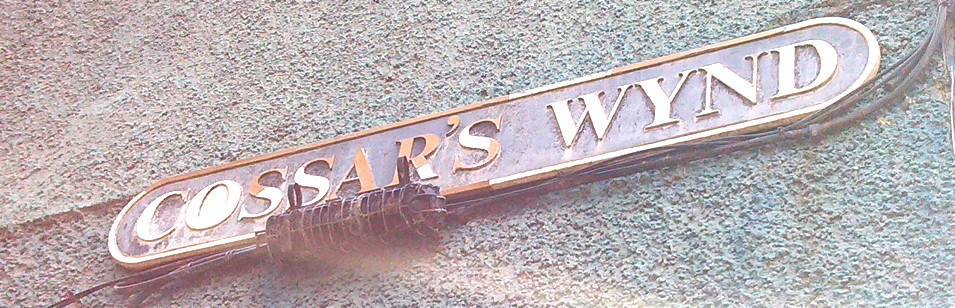
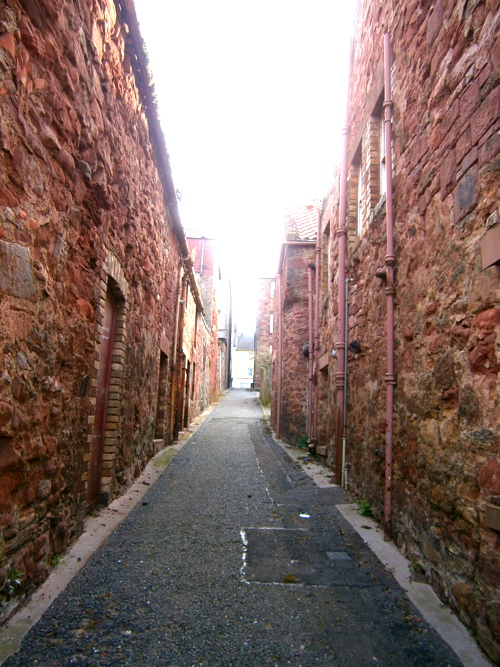

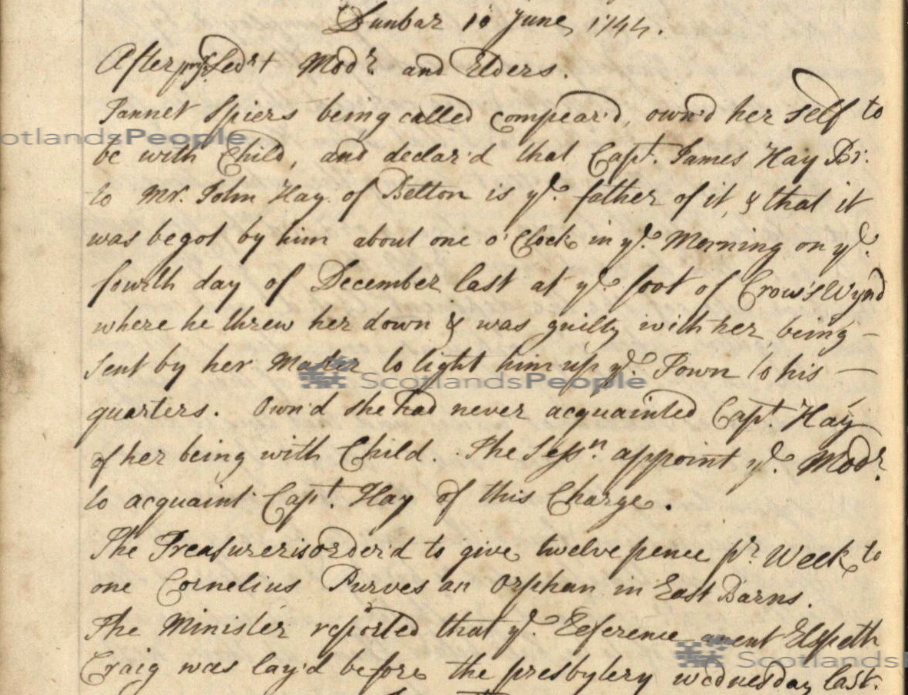
“We next encounter Cossar’s Wynd adjacent to Bowe Sports & Leisure at no. 67 High Street. The wynd or small street was once known as Crow’s Wynd, named for the proprietor of the St George Hotel; the wynd was mentioned in a case of rape in 1744, in the Parish Kirk Session Minutes. By 1837, the hotel was owned by a Robert Cossar who by 1867 was operating a postal service, the hotel having long been a stop for mail and passenger coaches plying between London and Edinburgh.“
Discover Dunbar, Historic Closes and Wynds, by Roy Pugh.
Dr George Cossar, CBE, MC
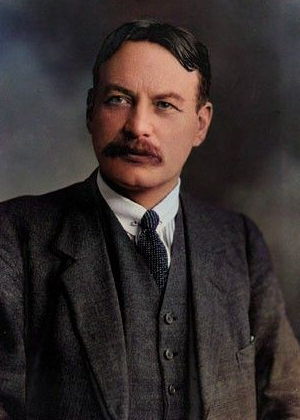
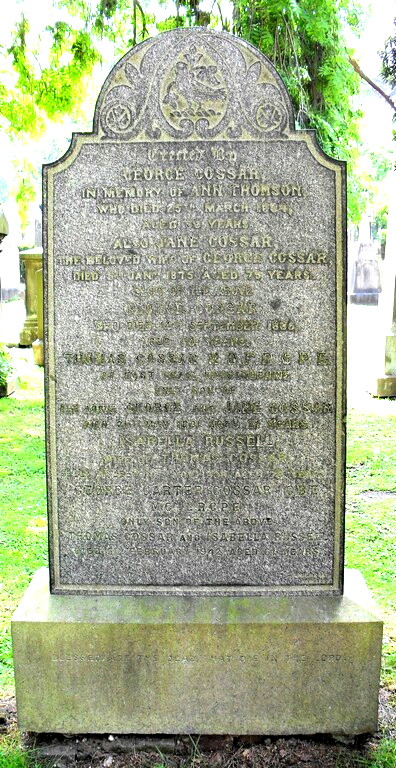
George Cossar of the Saint George Hotel was the great uncle of the philanthropist Dr George Carter Cossar, CBE, MC.
George Carter Cossar was born on 16 September 1880 at 14 Regent Terrace in Edinburgh. He was the son of Thomas Cossar and Isabella Russell.
Dr Cossar died in February 1942 at Dunoon and was buried in Edinburgh.
About Dr. George C Cossar Geni
“George Carter Cossar
Birthdate: September 16, 1880
Birthplace: 14 Regent Terrace, Edinburgh, Scotland (United Kingdom)
Death: February 1942 (61)
Dunoon, Scotland (United Kingdom)
Immediate Family:
Son of Thomas Cossar and Isabella Cossar
Brother of Margaret Jane Cossar
In 1910 he secured a lease of Girgenti House in Ayrshire. It had 53 acres of arable land where 160 boys were taught market gardening, pig farming, poultry farming and dairying in the first year.
In 1911 Dr. Cossar because his farm in New Brunswick needed him to be absent from Scotland he arranged with the Scottish Labour Colony Association, of which he was a director, to take over Girgenti as a labour colony for boys.
He later worked with the Scottish Council for Women’s Trades on a scheme for training city girls who wished to go to Canada to take up farm or domestic work.
In 1914, when war broke out, George Cossar entered medical school. After he completed his medical degree he went to France where he was awarded the Military Cross for valour while under fire.
John J Jackson and his wife managed the New Brunswick Cossar Farm.
In 1922 George Cossar bought a farm called Craigielinn, near Paisley in Scotland.
see http://paperspast.natlib.govt.nz/cgi-bin/paperspast?a=d&d=HNS192312…
In 1929 new regulations regarding minimum height requirements caused many of Cossar’s boys to be rejected and he felt that he was unable to continue with his emigration work.
Further Reading
British Home Child International
Extract
http://journals.hil.unb.ca/index.php/acadiensis/article/view/10831/…
Cossar’s Colonists: Juvenile Migration to New Brunswick in the 1920s
Marjory Harper – University of Aberdeen
[Much more to read at this link]
Born into a wealthy Glasgow family in 1880, Cossar attended Rugby School and Oxford, where he graduated in civil and mining engineering before taking up a temporary post in Peru. His charitable conscience had been aroused in his student days, when he saw the plight of homeless men sleeping on the Thames Embankment. But it was disadvantaged juveniles whom he sought to rehabilitate on his return to Glasgow, opening missions, soup kitchens and clubs in the city centre. He also purchased a training farm in Ayrshire, Todhill, to instruct and then place boys in farm service at home or abroad.30 To facilitate Canadian placements, he purchased a 700-acre farm — which included a 18th-century colonial farmhouse — at Gagetown in 1910. Recruits were sent there for training, either directly or via Todhill, before being placed with individual farmers in the province. Cossar managed to persuade the Canadian immigration authorities to grant him the statutory commission of £1 per head, on the grounds that the boys were legitimate agricultural labourers required to work on his farm. In 1911 he escorted his first recruits to Gagetown, along with a man and wife from Stirlingshire, hired to superintend the venture. He subsequently purchased three adjacent farms to increase his holding to 1,000 acres. By 1913, when G. Bogue Smart submitted a report on the farm, 250 boys had passed through its doors, and by 1922 this had risen to 800. Although Smart suggested that Cossar was naive in expecting his recruits to repay their fares, he reported that each boy, when interviewed individually, had expressed enthusiasm for his work, and concluded that “Mr Cossar’s plan of supplying a good class of young Scotch immigrants is not only commendable but advantageous to Canada and deserving of encouragement”.
Extract
http://www.historicplaces.ca/en/rep-reg/place-lieu.aspx?id=15943
The Cossar Farm Site is designated a Local Historic Place for its association with pre-Loyalist settlement and for its continuous agricultural use. The land was granted to General Thomas Gage in the latter third of the 18th century. It is significant that he actually lived in a splendid pre-Loyalist house here. Images of this house are extant, for it existed here until 1929 when it burned. The current Dutch Colonial residence was constructed in 1930 by Dr. Cossar. For about a hundred years this land was farmed by a Scot, George Fox, and his descendants. In 1910 another Scot, Dr. George Cossar of Glasgow, was visiting in the Saint John River valley and was charmed and delighted by the wonderful scenic arable farm land in this spot. He purchased a large tract of it immediately and began his Canadian farm. Cossar began to introduce modern farming practices and expanded the apple orchards there, as well as beginning a herd of dual purpose Shorthorn cattle. But probably he is best remembered for his practice of bringing Scottish boys from difficult financial circumstances to his farm where they lived and learned Canadian farming practices. Then they went on to work on other farms, many becoming farmers themselves. The Cossar Farm operated until sometime in the 1940’s and, after a period of limited activity, it was purchased in 1954 by the Nova Scotia orchardist, A. R. Stirling. It has been in their family ever since. Some of the outbuildings that exist today were there in Cossar’s time.
Source: Queens County Heritage Archives – Gagetown Historic Places files
References, Sources and Further reading
- One-Name Study of this name – http://www.one-name.org/profiles/cossar.html
- Portrait – http://www.mccord-museum.qc.ca/en/collection/artifacts/X10074?Lang=…
- http://news.google.com/newspapers?nid=2507&dat=19420207&id=U1pAAAAA…
- http://www.historicplaces.ca/en/rep-reg/place-lieu.aspx?id=15943
- http://www.rubycusack.com/issue80.html – one of the boys who went to Canada
- http://journals.hil.unb.ca/index.php/acadiensis/article/view/10831/…
- http://paperspast.natlib.govt.nz/cgi-bin/paperspast?a=d&d=HNS192312…
- http://www.nla.gov.au/openpublish/index.php/australian-studies/arti…


Thanks to Diane Rogers for her help in finding information regarding Dr George Cossar.
Saint George Hotel, Dunbar on fire, 1958. Film by Robert Aitken, owner of neighbouring Aitken the Chemist across Cossar’s Wynd.
 Vecchio