
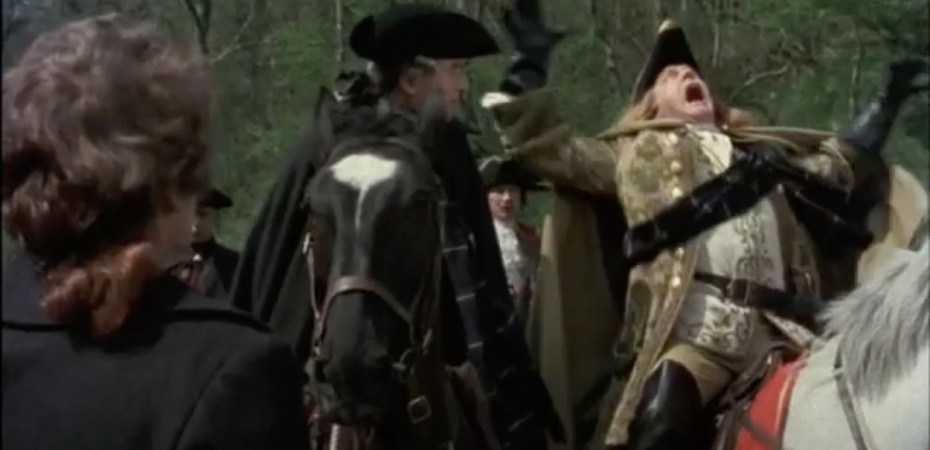
On this day 269 years ago, the notorious Appin Murder took place at the Lettermore Woods near Ballachulish.
Colin Roy Campbell of Glenure (ca. 1708-14 May 1752), nicknamed “The Red Fox“, was the government-appointed factor to the forfeited lands of the Clan Stewart of Appin in north Argyllshire. During the Highland Clearances, a series of reprisals against Jacobite sympathizers in the aftermath of the rising of 1745, Campbell had ordered several evictions of members of Clan Stewart. On 14 May 1752, Campbell was shot in the back by a marksman in the wood of Lettermore near Duror.
Colin Campbell of Glenure
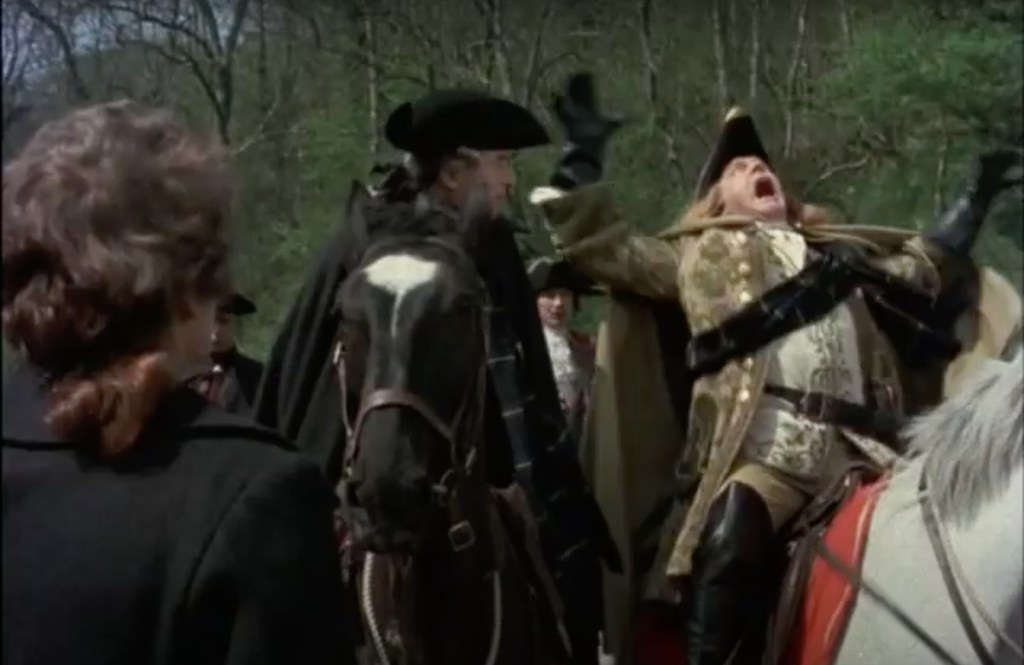
Colin Campbell of Glenure, (c. 1708 – 14 May 1752) also known as “Red Colin”, was not present at the Battle of Culloden, on 16 April 1746, although he held a commission in Lord Louden’s regiment during the uprising. In February 1746 as Cumberland’s army marched north through Perthshire, pursuing the Jacobite army, some of the Hanovarian forces were stationed behind the main army to guard strategic locations. Colin Campbell of Glenure commanded two companies stationed in Rannoch. In April 1746, Glenure was stationed at Aberdeen, and hence missed the Battle of Culloden.
After resigning his commission, Glenure became one of the Factors on the estates of Stewart of Appin. Glenure held the Cameron lands of Lochaber and Stewart lands in Appin.
Colin Campbell of Glenure was regarded as a traitor by some of his own Clan for forsaking the Royalist cause and the zeal with which he carried out the evictions of his “clansmen” from the estates. However, he was not entirely trusted by the Hanovarians. There were a considerable number of attempts on his life. It was one of these, on 14 May 1752, at the Lettermore Woods near Ballachullish that he was killed in an event which became known as the Appin Murder. He was said to have been 44 when he was killed.
James Stewart of the Glen
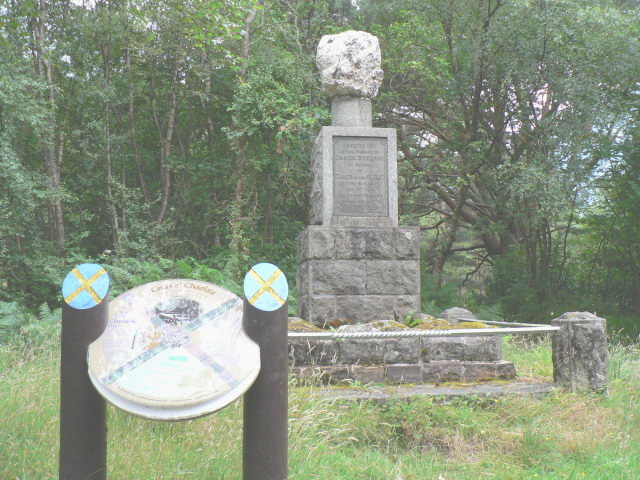
James Stewart of the Glen, (Gaelic: Seumas a’ Ghlinne; c. 1698 – 08 November 1752) also known as James of the Glens, was a leader of the Scottish Clan Stewart of Appin. He was wrongfully accused and hanged as an accessory to the Appin Murder, the assassination of Colin Roy Campbell.
James of the Glens was the younger brother of Dugald Stewart, 9th Chief of Appin, who had been created Lord Appin in the Jacobite peerage on 6 June 1743. At the Battle of Culloden in 1746, the Appin Regiment, led by Charles Stewart of Ardsheal, had suffered 92 killed and 65 wounded out of a fighting force of approximately 300. After Culloden Lord Appin and Charles Stewart of Ardsheal escaped to in France with their lands being confiscated by the Hanovarians. James of the Glens remained in Appin to represent his brother and chief.
Colin Roy Campbell, a government factor of estates forfeited by pro-Jacobite clans following the Rising of 1745, was shot in the back on 14 May 1752. The search for the killer targeted the Clan Stewart as Campbell had ordered several evictions of members of Clan Stewart. The chief suspect, Alan Breck Stewart had fled. James Stewart of the Glens, the tanist of the Stewarts, and foster father of Alan Breck, was arrested for the crime and tried for the murder in a trial dominated by the pro-Hanoverian Clan Campbell with their chief, Archibald Campbell, 3rd Duke of Argyll being the presiding judge and the 15-man jury containing Campbell clansmen. William Grant, Lord Prestongrange was the chief prosecutor. Although the trial showed that James was not directly involved in the assassination (he had a solid alibi), he was found guilty “in airts and pairts” (as an accessory; an aider and abetter).
James Stewart of the Glens was hanged on 8 November 1752 on a specially commissioned gibbet above the narrows at Ballachulish, now near the south entrance to the Ballachulish Bridge. He died protesting his innocence, lamenting that people of the ages may think him capable of a horrid and barbarous murder.
In 2001 a descendant of the Stewarts of Appin, 89-year-old Anda Penman, identified young Donald Stewart of Ballachulish as the real killer, having allegedly kept a secret that was passed on by word of mouth through generations of her family.
The Appin Murder in Literature and Film
Several accounts of the Appin Murder have published since 1752, the most recent being Culloden and the Last Clansman (2001) by Dr James Hunter.
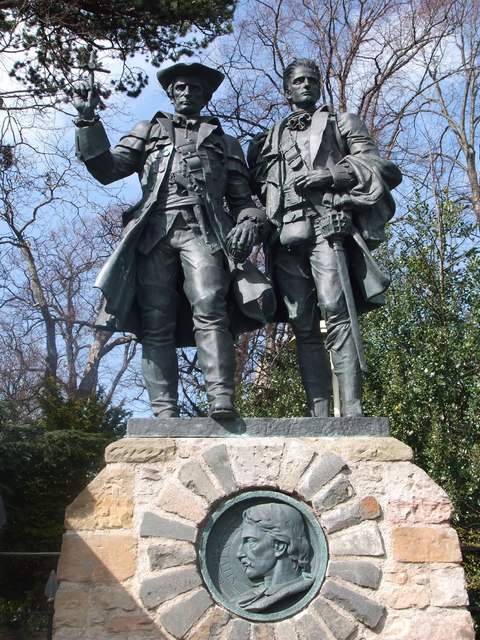
The Appin Murder features in the novel Kidnapped by Robert Louis Stevenson. 17-year-old David Balfour, heir to the House of Shaws, is kidnapped by order of his uncle Ebeneezer and is to be sold into slavery in the Carolinas. He escapes his kidnappers with the help of Alan Breck Stewart. David tells his tale to Alan, who in turn states that his birthplace, Appin, is under the tyrannical administration of Colin Roy of Glenure, the King’s factor and a Campbell. Alan, who is a Jacobite agent and wears a French uniform, vows that should he find the “Red Fox” he will kill him. Separated from Alan Breck, David Balfour encounters none other than the Red Fox (Colin Roy) himself, who is accompanied by a lawyer, a servant, and a sheriff’s officer. When David stops the Campbell man to ask him for directions, a hidden sniper kills the King’s hated agent. David is denounced as a conspirator and flees for his life, but by chance reunites with Alan. The youth believes Alan is the assassin, but Alan denies responsibility. Alan and David then begin their flight through the heather, hiding from government soldiers by day.
There have been over 20 film and TV versions of the novel including a 1978 German version Die Abenteuer des David Balfour (ZDF 08.12 1978) with David McCallum as Alan Breck Stewart, Bill Simpson as James of the Glen and Frank Windsor as Colin Campbell of Glenure.
James’s memorial and Ballachulish are also mentioned in Liam McIlvanney’s crime novel “The Quaker” by his detective Duncan McCormick who is also from Ballachulish though the novel is set in Glasgow.
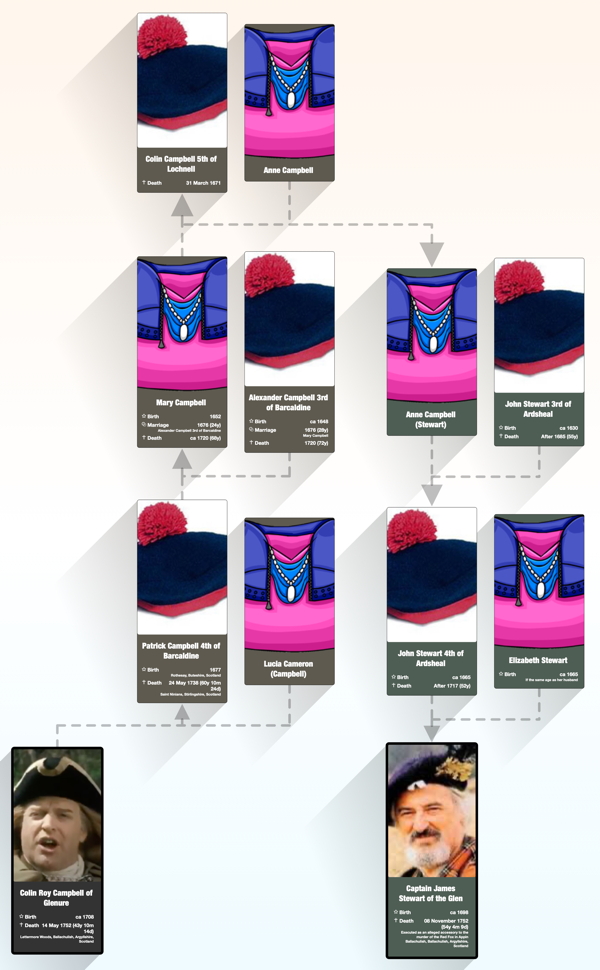
The Connection between Colin Campbell of Glenure and James Stewart of the Glen
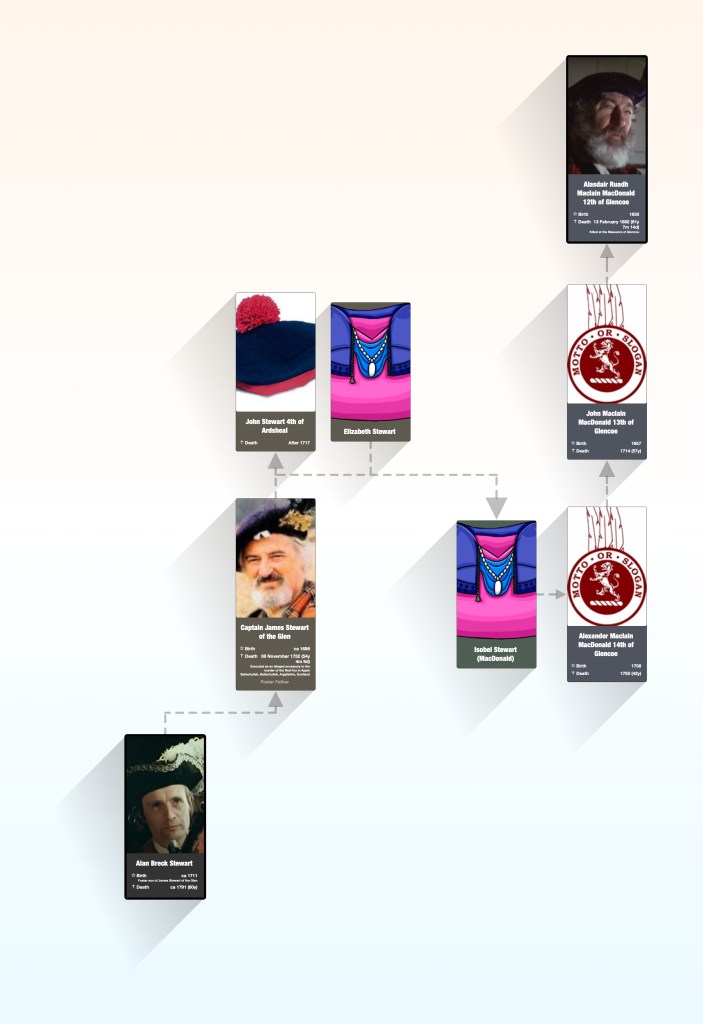
The Connection between the 1692 Massacre of Glencoe and the Appin Murder of 1752
 Vecchio