


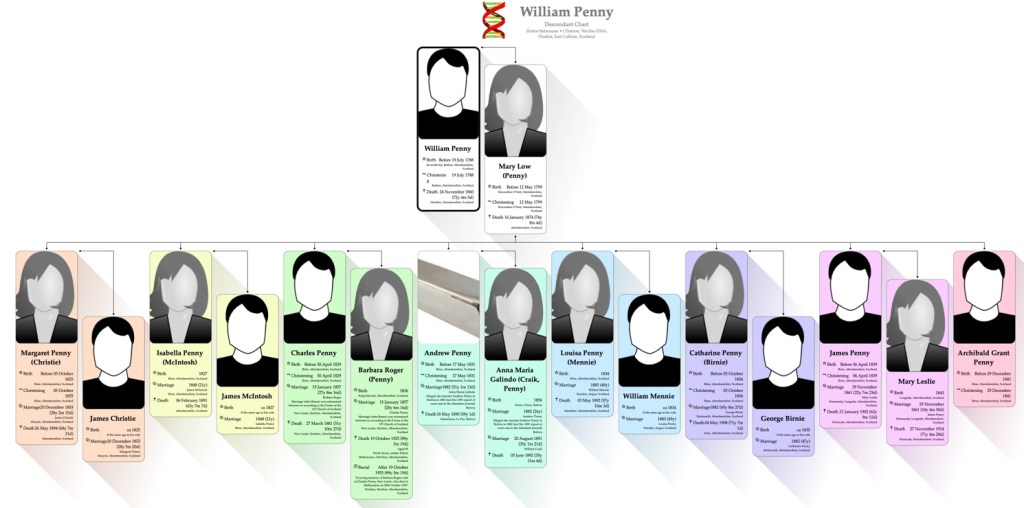
Andrew Penny, known as the Silver King of Bolivia, died on 18 May 1890 at Huanchaca in La Paz province in Bolivia. He died intestate and without issue. While his brother and heir-at-law, James Penny inherited Park House, his remaining Bolivian and Scottish estate was contested by his four sisters in Scotland and his widow in Bolivia.
The San José mine in Oruro, Bolivia
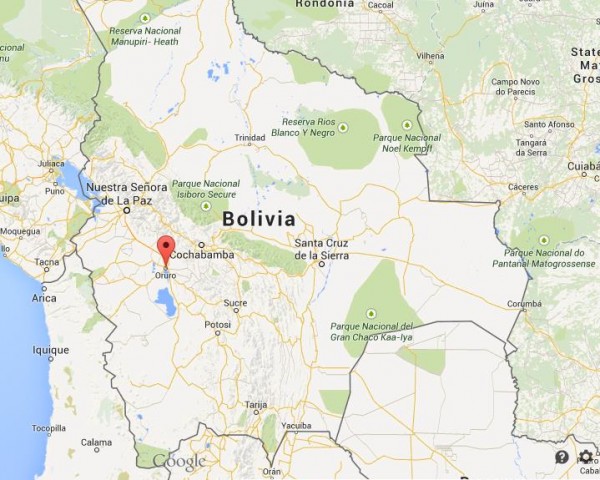
Oruro (Hispanicized spelling) or Uru Uru is a city in Bolivia with a population of 264,683 (2012 calculation), about halfway between La Paz and Sucre in the Altiplano, approximately 3,709 meters (12,169 ft) above sea level.
It is Bolivia’s fifth-largest city by population, after Santa Cruz de la Sierra, El Alto, La Paz, and Cochabamba. It is the capital of the Department of Oruro and the seat of the Roman Catholic Diocese of Oruro. Oruro has been subject to cycles of boom and bust owing to its dependence on the mining industry, notably tin, tungsten (wolfram), silver and copper.

Green: Bronce vein, San José Mine, Oruro City, Cercado Province, Oruro, Bolivia
Tours of the San José mine can be booked: “The San José mine is currently in operation, dating from the time of the 1800s, we can meet and share with the mining workers and enter the depths of the mine, share, meet the famous uncle of the mine the protector of the miners, perform the traditional acullicu and meet different mining sites. also at the end of the tour, we can know the famous monument to the Virgin of Socavon erected in lomas alto del cerro and where it is possible to appreciate the city of Oruro in all its magnitude.”


The Penny Judicial Case


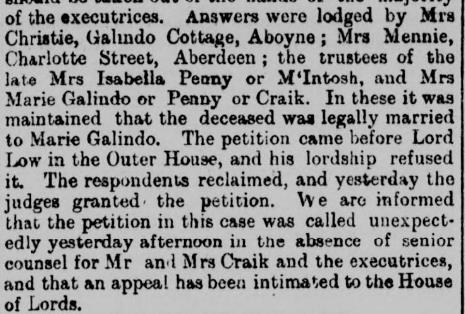


BIRNIE AND OTHERS V. PENNY AND OTHERS
Facts:
The majority of certain executrices-dative, in consideration of a sum of money, agreed to take measures to vest the executry estate in a person who alleged herself to be the widow of the deceased intestate. The minority of the executrices and certain other relatives of the deceased denied that the alleged widow was entitled to that character, and an action of multiplepoinding had already been raised to have part of the moveable estate distributed at sight of the Court. The objectors further alleged that a large portion of the executry estate was still to be ingathered.
Held that as the majority of the executrices had agreed to use their powers adversely to the general interests of the executry estate, the administration thereof could not be left in their hands, and a judicial factor appointed.
Headnote:
Andrew Penny, a native of Scotland, died intestate on 18th May 1890 at Huanchaca in South America, leaving considerable heritable and moveable estate in Scotland and Bolivia.
Senora Maria Galindo de Penny obtained the administration of his estates in Bolivia from the Courts there. She averred that she was the widow of Andrew Penny, that he died a domiciled Bolivian, and that by the laws of that country she was entitled to the heritable estate there, and the whole moveable estate wherever situated.
The four sisters of Andrew Penny – Mrs Birnie, Mrs Christie, Mrs Mennie, and Mrs McIntosh (who subsequently died) – were on 10th October 1890 decerned executrices-datives quaqua four of the next-of-kin. They denied the averment of Senora Maria Galindo de Penny both as to the marriage and as to the domicile of Andrew Penny, which they maintained had remained a Scottish domicile.
qua
A large portion of the moveable estate in Great Britain consisted of a sum of £36,636, 7s. 9d., the proceeds of mineral ores consigned for sale by Andrew Penny during his lifetime, and which was in the hands of Messrs Gibbs & Sons, his London agents.
This sum the executrices claimed, and Messrs Gibbs & Sons thereupon raised an action of multiplepoinding, calling the executrices and Senora Maria Galindo de Penny as defenders, and consigned the fund in medioin medio into the hands of the Court of Session.
in medio
On 20th August 1891 Senora Maria Galindo de Penny was married to William Craik, a Scotsman, and on 12th September 1891 he, as in right of his wife’s whole estate under their marriage-contract, entered into an agreement with the agents of Mrs Christie and Mrs Mennie, by which they, as executrices and beneficiaries, withdrew their denial of the marriage of the late Andrew Penny, and agreed to accept £25,000 as in full of the claims of the next-of-kin.
The fourth article of the agreement was in the following terms—“Fourth. To enable the said first party (Craik) to be vested in the foresaid personal estate quam primumquam primum, the second parties bind and oblige their constituents (the said Mrs McIntosh’s trustees being bound only to the extent foresaid) to procure and deliver to the first party the necessary decree and authority of the Court of Session for his uplifting the sum consigned by the pursuers and real raisers in the said action of multiple poinding, and also all assignations, conveyances, or transfers necessary for vesting in him the remainder of the personal or moveable estate belonging to the said deceased Andrew Penny; and in the event of the said Mrs Catherine Penny or Birnie not becoming a consenter to this agreement, the second parties bind their constituents as aforesaid to adopt and pursue all such competent judicial steps as the first party may direct, with the object of effectuating this agreement and arrangement.”
quam primum
Shortly afterwards Mrs Christie and Mrs Mennie raised an action in the Sheriff Court at Aberdeen against the agents of the executry for delivery of all papers connected therewith.
Mrs Birnie, who had refused to accede to the agreement, and the children of a predeceasing brother of Andrew Penny, thereupon presented this petition to the Court for sequestration of the estate and appointment of a judicial factor. They averred—“That it is essential that the administration should be taken out of the hands of the majority of the executrices and entrusted to a judicial factor. By entering into the agreement above referred to, the said executrices have acquired an interest adverse to the rights of the petitioners, and they have undertaken obligations which incapacitate them for properly discharging the duties which they owe to the petitioners with reference to the administration and recovery of the estate both in this country and in Bolivia.” There was a large amount of property besides the sum consigned in the multiplepoinding, which had not yet been recovered. Answers were lodged for the other executrices, a brother of Andrew Penny, and the trustees of the deceased executrix, in which they denied that the agreement in any way prejudiced the petitioners or any of the next-of-kin in any steps they might take to assert their rights, as it only affected those who consented to it. They further averred that the application for a judicial factor was unnecessary, as most of the moveable estate was already in the hands of the Court, and they were about to raise another action of multiplepoinding and consign the remainder. Answers were also lodged in similar terms for Mr and Mrs Craik. On 7th November 1891 the Lord Ordinary ( Low) refused the petition. “Opinion.—I am of opinion that the petitioners have not made out a case for the appointment of a judicial factor. In the first place, as regards the moveable estate of the late Mr Penny in this country, a judicial factor is unnecessary, because the whole estate has been thrown into Court in a multiplepoinding, in which the petitioners will have an opportunity of establishing their claim. In regard to any moveable estate which may be in Bolivia, I think that the petitioners can themselves take such steps as may be necessary to protect their rights. The only other ground upon which the appointment of a judicial factor is asked is, that an action has been instituted in the Sheriff Court of Aberdeenshire against the Messrs Collie, advocates in Aberdeen, who were the executors’ agents, for delivery of all papers in their hands connected with the executry. The action is said to be truly in the interests of Mr and Mrs Craik, and the petitioners say that it would be greatly to their prejudice if Mr and Mrs Craik were to be put in possession of documents and information which were obtained with the view of opposing Mrs Craik’s claim to any part of Mr Penny’s estate. Counsel for the majority of the executors, however, undertook that they would not attempt to proceed further in the action pending the process of multiplepoinding, and I think that this is sufficient to safeguard the petitioners’ interests in regard to the documents in Messrs Collie’s possession.” The petitioners reclaimed—The arguments of the several parties were substantially a repetition of the averments already stated. At advising—
They averred—“That it is essential that the administration should be taken out of the hands of the majority of the executrices and entrusted to a judicial factor. By entering into the agreement above referred to, the said executrices have acquired an interest adverse to the rights of the petitioners, and they have undertaken obligations which incapacitate them for properly discharging the duties which they owe to the petitioners with reference to the administration and recovery of the estate both in this country and in Bolivia.” There was a large amount of property besides the sum consigned in the multiple poinding, which had not yet been recovered.
Answers were lodged for the other executrices, a brother of Andrew Penny, and the trustees of the deceased executrix, in which they denied that the agreement in any way prejudiced the petitioners or any of the next-of-kin in any steps they might take to assert their rights, as it only affected those who consented to it. They further averred that the application for a judicial factor was unnecessary, as most of the moveable estate was already in the hands of the Court, and they were about to raise another action of multiplepoinding and consign the remainder. Answers were also lodged in similar terms for Mr and Mrs Craik.
On 7th November 1891 the Lord Ordinary ( Low) refused the petition.
“Opinion.—I am of opinion that the petitioners have not made out a case for the appointment of a judicial factor.
Opinion
In the first place, as regards the moveable estate of the late Mr Penny in this country, a judicial factor is unnecessary, because the whole estate has been thrown into Court in a multiple poinding, in which the petitioners will have an opportunity of establishing their claim.
In regard to any moveable estate which may be in Bolivia, I think that the petitioners can themselves take such steps as may be necessary to protect their rights.
The only other ground upon which the appointment of a judicial factor is asked is, that an action has been instituted in the Sheriff Court of Aberdeenshire against the Messrs Collie, advocates in Aberdeen, who were the executors’ agents, for delivery of all papers in their hands connected with the executry. The action is said to be truly in the interests of Mr and Mrs Craik, and the petitioners say that it would be greatly to their prejudice if Mr and Mrs Craik were to be put in possession of documents and information which were obtained with the view of opposing Mrs Craik’s claim to any part of Mr Penny’s estate.
Counsel for the majority of the executors, however, undertook that they would not attempt to proceed further in the action pending the process of multiplepoinding, and I think that this is sufficient to safeguard the petitioners’ interests in regard to the documents in Messrs Collie’s possession.”
The petitioners reclaimed—The arguments of the several parties were substantially a repetition of the averments already stated.
At advising—Judgment:
Lord President—I think that the executrices cannot be allowed to remain in office, and that a factor must be appointed. I can quite well understand beneficiaries being unwilling to face a legal difficulty and preferring to take a sum of money instead; but here the agreement pledges all the powers of the executrices, quaqua executrices, against the estate they represent. This is plain from the agreement, which says that upon payment of £25,000 to the next-of-kin “to enable the first party to be vested in the foresaid personal estate quam primumquam primum, the second parties bind and oblige their constituents (the said Mrs McIntosh’s trustees being bound only to the extent foresaid) to procure and deliver to the first party the necessary decree and authority of the Court of Session for his uplifting the sum consigned by the pursuers and real raisers in the said action of multiple poinding, and also all assignations, conveyances, or transfers necessary for vesting in him the remainder of the personal or moveable estate belonging to the said deceased Andrew Penny; and in the event of the said Mrs Catherine Penny or Birnie not becoming a consenter to this agreement, the second parties bind their constituents as aforesaid to adopt and pursue all such competent judicial steps as the first party may direct, with the object of effectuating this agreement and arrangement.” It is on account of that condition that this opposition is made.
qua
quam primum
When we look at the position of this estate there is a special reason why the beneficiaries interested in the residue of the estate have cause for alarm. It is true that a large amount of the estate is in the hands of the Court in the multiplepoinding, but it is not denied that there is some more, as Mr Campbell has told us, still to come in. It is further significant that this condition binds the majority of the executrices to allot all their rights to the widow, and the result therefore is that under this agreement so far as concerns the estates in Bolivia, both heritable and moveable, and the remittances which ought to come to London, the widow is entitled to demand the whole of them. That is not a position for executrices to be in, and the Court cannot allow it, for they are bound to diminish the rights of the executry estate.
I am therefore of opinion that we should recal the Lord Ordinary’s judgment and appoint a judicial factor.
Lord Adam concurred.
Lord McLaren—I am of the same opinion. It is not a ground for displacing executors that they have interests which conflict with their duty to the executry estate, but it is different where they bind themselves to use their powers for one party and against the estate. That is a wrong position for them to be in, and the Court has no option except to give effect to an application for their recal and for the appointment of a judicial factor. Lord Kinnear—I concur. The appearance for the widow at the bar is conclusive against continuing the executrices in office.
Lord Kinnear—I concur. The appearance for the widow at the bar is conclusive against continuing the executrices in office.
Additional Press Articles



 Vecchio