


John Muir (21 April 1838 – 24 December 1914) also known as “John of the Mountains” and “Father of the National Parks“,was an influential Scottish-American naturalist, author, environmental philosopher, botanist, zoologist, glaciologist, and early advocate for the preservation of wilderness in the United States of America.

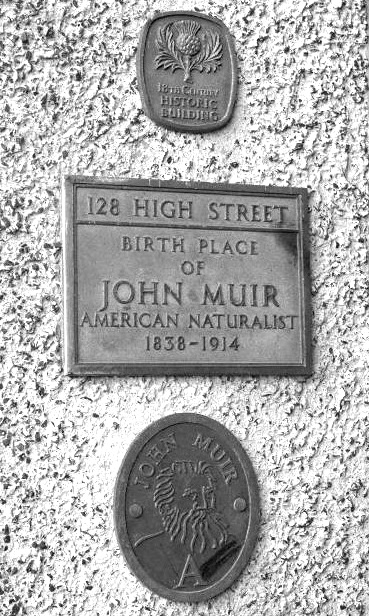
John Muir was born in the building to the right of the museum.
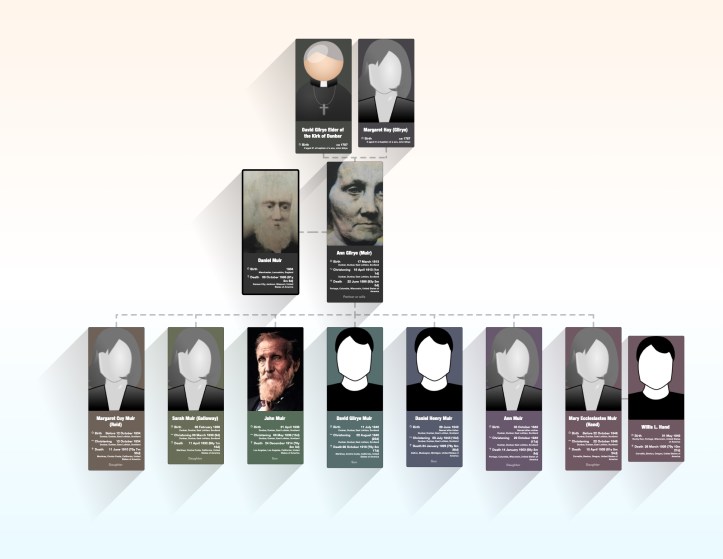
John Muir’s Birthplace is a four-story stone house in Dunbar, East Lothian, Scotland. His parents were Daniel Muir and Ann Gilrye. His maternal grandfather was an elder of Dunbar Kirk session.
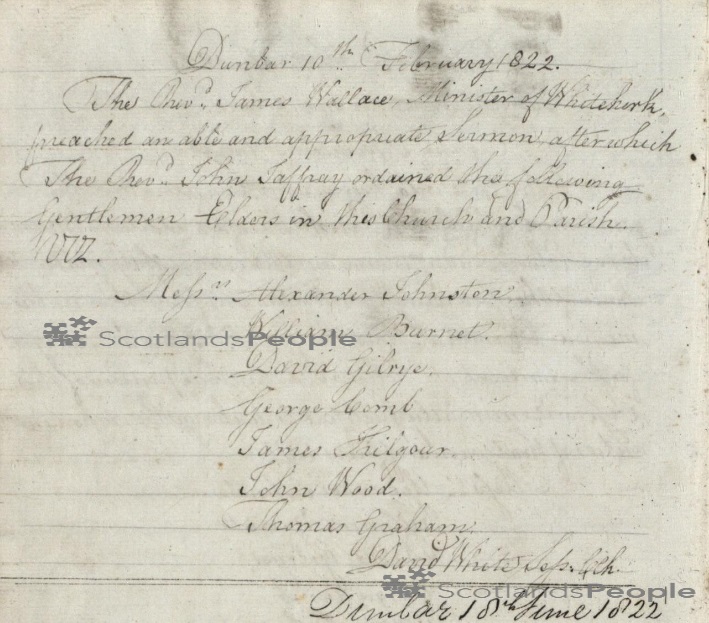
Dunbar Kirk Session Records (CH2/647/6) by courtesy of the National Records of Scotland and the Church of Scotland.
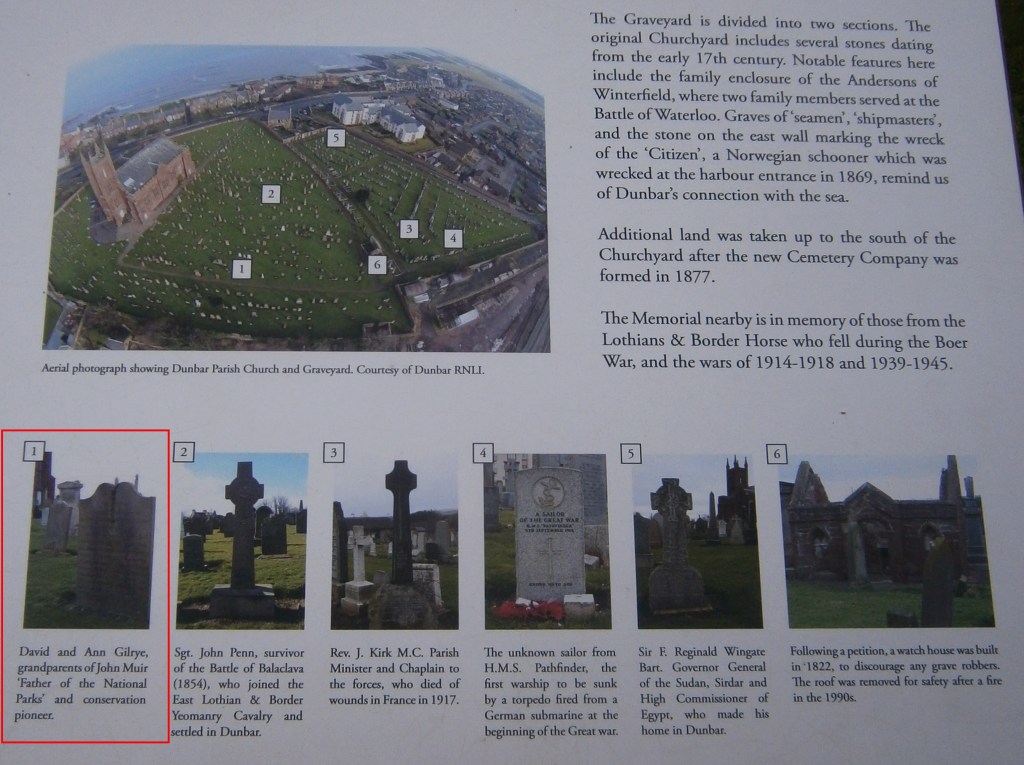
Dunbar Parish Churchyard, 21st August 2017
John Muir was the third of eight children: Margaret, Sarah, David, Daniel, Ann and Mary (twins), and the American-born Joanna. His earliest recollections were of taking short walks with his grandfather when he was three. In his autobiography, he described his boyhood pursuits, which included fighting, either by re-enacting romantic battles from the Wars of Scottish Independence or just scrapping on the playground, and hunting for birds’ nests (ostensibly to one-up his fellows as they compared notes on who knew where the most were located). Author Amy Marquis notes that he began his “love affair” with nature while young, and implies that it may have been in reaction to his strict religious upbringing. “His father believed that anything that distracted from Bible studies was frivolous and punishable.” But the young Muir was a “restless spirit” and especially “prone to lashings“. As a young boy, Muir became fascinated with the East Lothian landscape, and spent a lot of time wandering the local coastline and countryside. It was during this time that he became interested in natural history and the works of Scottish naturalist Alexander Wilson.
Although he spent the majority of his life in America, Muir never forgot his roots in Scotland. He held a strong connection with his birthplace and Scottish identity throughout his life and was frequently heard talking about his childhood spent amid the East Lothian countryside. He greatly admired the works of Thomas Carlyle and poetry of Robert Burns; he was known to carry a collection of poems by Burns during his travels through the American wilderness. He returned to Scotland on a trip in 1893, where he met one of his Dunbar schoolmates and visited the places of his youth that were etched in his memory. He also never lost his strong Scottish accent despite having lived in America for many years.
For more information, visit the the excellent and informative website of the John Muir Birthplace Museum.
 Vecchio